Support the show with a monthly or one-time donation!


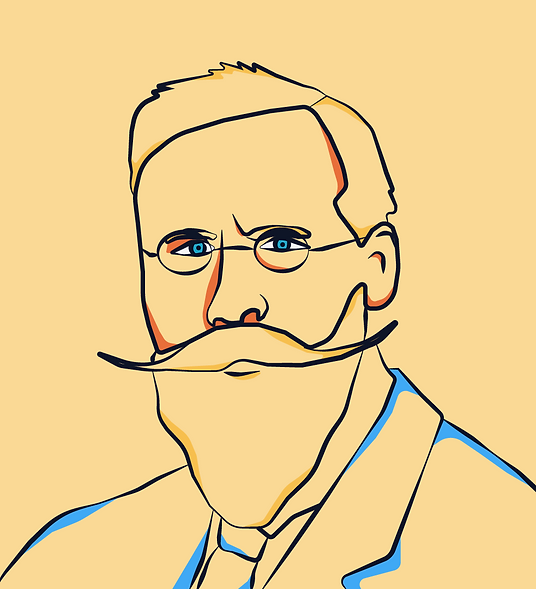
WILLIAM CROOKES
Spirits, Plasma, and Thallium
Episode 70
October 21, 2026
Halloween energy, but make it scientific! Aarati tells the story of a chemist who discovered thallium and the fourth state of matter, plasma. But he also used science to investigate spirits, believing he could explain the unexplainable supernatural phenomena he observed.
Listen


Episode
Transcript
Aarati Asundi (00:12) Hi everyone, and welcome back to the Smart Tea Podcast, where we talk about the lives of scientists and innovators who shape the world. I'm Aarati. Jyoti Asundi (00:19) And I'm her mom, Jyoti. Aarati Asundi (00:22) So Halloween is just around the corner. Jyoti Asundi (00:25) Spooky! Aarati Asundi (00:26) It's traditionally a day where people believe that the line between the living and the dead are blurred and that spirits can come into our world and haunt us. Jyoti Asundi (00:36) Open portals Aarati Asundi (00:38) Do you believe in that? Do you believe in ghosts or that the dead can send us signs or signals? Jyoti Asundi (00:45) I think there is some fluidity, but I don't believe there is malice from beyond. Aarati Asundi (00:51) Evil spirits is not a thing for you. Jyoti Asundi (00:53) I don't think so. I think the universe always aligns to make each person be the best that they can be. According to me, the universe is very benevolent. It is always working to push each person closer to their own divine source. And it's your own mind which becomes your own enemy and sees problems and shadows and dark forces where there are none. This is my personal way of approaching life. Aarati Asundi (01:25) So think positive thoughts and positivity will come back to you. Jyoti Asundi (01:29) Positivity is always around you. However, when you think positive thoughts, you align with those forces now there is synergy. Aarati Asundi (01:37) Well, I was curious because as a scientist, I feel like a lot of times we're not supposed to believe in stuff like that. But you know, there are quite a few scientists who I think do believe in, you know, something beyond. And so today we are going to be talking about one of those scientists, a scientist who did deeply believe in spiritualism and the occult. And maybe that there could be a way to pierce through the veil between the living and the other world. Jyoti Asundi (02:08) Yes, I do know quite a few scientists who do believe in spirituality. I don't know whether they believe in the occult, but definitely I know there's a lot there. Aarati Asundi (02:19) Well today we're gonna be talking about spirituality in the Victorian sense. We're gonna be talking about a scientist named William Crookes. Jyoti Asundi (02:27) Okay. Aarati Asundi (02:28) And it might sound like he's a little bit weird, but he did some very important, very real science also. So it wasn't all Jyoti Asundi (02:35) Alright. Aarati Asundi (02:35) about, yeah, it wasn't all about... Jyoti Asundi (02:36) Occult or whatever, yeah. Aarati Asundi (02:37) Yeah it wasn't all about that. Jyoti Asundi (02:38) Spirits and occult. Okay, okay. I'm excited. Aarati Asundi (02:43) So let's start at the beginning, as we always do. William was born in London in 1832. His father, Joseph Crookes, was a very successful wealthy tailor. In Joseph's early twenties, he had partnered with another tailor and he had set up a shop which quickly became the leading tailor for wealthy men. Joseph married his partner's daughter, June Atkinson, and eventually when her father retired, Joseph took over sole ownership of the shop. Jyoti Asundi (03:12) Got it. Aarati Asundi (03:13) And he also started using the money that he earned to invest in real estate as the area around his shop began to develop. And so very quickly he was doing very well. He and June had five children together, but in the late 1820s, June died during childbirth. Jyoti Asundi (03:31) Oh no. Aarati Asundi (03:31) Joseph quickly got remarried to a woman named Mary Scott and went right back to producing babies. Mary, shockingly, had 16 children total, Jyoti Asundi (03:42) Wow. Aarati Asundi (03:42) but only eight of them survived past infancy. Jyoti Asundi (03:45) That's quite a stamina for her. Oh my God. Aarati Asundi (03:48) I know. I was like, are you kidding me? Sixteen? Jyoti Asundi (03:53) So there are totally 21 children at this point because there are five from the first wife. Aarati Asundi (03:59) But eight of the sixteen that she had passed away very shortly, yeah. Jyoti Asundi (04:02) Sorry. Yes, you did- right, right. You did say that. So there's actually 13 children now in that household. Aarati Asundi (04:09) Yes. And William, whose story we're talking about today, was the eldest of these eight children. Jyoti Asundi (04:15) So he's from the second wife. Aarati Asundi (04:17) Correct. Yeah. Jyoti Asundi (04:18) Got it. Okay. Aarati Asundi (04:20) So he was surrounded by quite a large family. He had older half siblings... Jyoti Asundi (04:24) Yes. Aarati Asundi (04:24) ...but then a lot of younger full siblings. And then his mother's sister and her husband lived right next door and were booksellers, so he just had family everywhere. Jyoti Asundi (04:36) Can you imagine like, let's have a small family get together. What's the size of... they need three houses and four tables to make this all work. Aarati Asundi (04:43) Yeah, it's like thirty people for just the immediate family. Jyoti Asundi (04:47) That's right. you need multiple dining tables to fit everybody at the same time. Oh wow. This is a really large family. Aarati Asundi (04:53) Yes. Jyoti Asundi (04:54) I don't know if it's a blessing or bit of a drag, but... Aarati Asundi (04:58) Well, it was good for him. He liked it. He was happy with it. Jyoti Asundi (05:01) That's awesome. Aarati Asundi (05:02) That being said, we don't know too much about his childhood, but overall it was like a very good, very loving one. He didn't receive much of a formal education, but his family was wealthy enough to afford private tutors. And funnily enough, because they had thirteen kids that actually turned out to be cheaper than sending each kid to private school. Jyoti Asundi (05:25) That makes sense right? Yeah. Aarati Asundi (05:27) Yeah And then of course with his aunt and uncle right next door being booksellers, and there were other extended family who was also in the book business, he was able to get his hands on a lot of reading material, so he could learn that way as well. Jyoti Asundi (05:39) Mmm. Yes, yes. Aarati Asundi (05:42) So ultimately two of his older half-brothers ended up taking over the father's tailoring business. And so that left William free to pursue whatever he wanted. And pretty early on he developed an interest in science, which was very strange for his family. Jyoti Asundi (06:00) For his background, because in general I think that's one of the things I do notice. You do tend to follow tracks that you observe while you're growing up. For example, for me, I wanted music some level, but never saw it in my family. There was not much exposure. And so finally, much later in life, I'm trying to connect to music not exposed to certain things, you don't even see those things as viable options. Aarati Asundi (06:31) Yeah, exactly. So it was interesting that he kind of fell into science because no one in his family even touched science or even thought about science. Jyoti Asundi (06:40) Yes. Aarati Asundi (06:41) from an interview much later in his life, he said, "From my earliest recollections I was always trying experiments and reading any book of science I could find. A little older and I fitted up a cupboard as a sort of laboratory and caused much annoyance and trouble in the house by generating smells and destroying furniture. I don't suppose any of my family even knew the meaning of the word 'science', and I was always regarded as a bit of a fool who would never get on. It is a great satisfaction to me to think that my parents lived long enough to change their opinion and to feel proud of the reputation I was making." Jyoti Asundi (07:19) That is so sweet. That is really nice. That is so heartening. I'm going to enjoy this story. That is nice. Aarati Asundi (07:25) Yeah, it I thought it was cute. Cute little teaser. Jyoti Asundi (07:28) I like it. I like it. Thank you for the teaser. It really makes my hearing experience better, actually. Aarati Asundi (07:34) Yes. Yeah, and in fact only one of his other siblings showed any interest or aptitude in science. His younger brother Philip, who showed an interest in physics and engineering. So naturally William and Philip got along really well. Jyoti Asundi (07:52) Yes, they spoke the same language. That's right. Aarati Asundi (07:54) Yeah, they had a special bond. Jyoti Asundi (07:57) Yes. Aarati Asundi (07:57) William also developed a strong interest in photography, which was just starting to become popular. So the chemicals that he would have needed to use to develop and tone and fix photographs was like a science to him. And probably got him interested in chemistry in particular. Jyoti Asundi (08:15) That makes a lot of sense and it is true the chemicals that are used to develop and make films you can substitute them for different endpoints. Aarati Asundi (08:25) Yeah. So at the age of sixteen, he enters the Royal College of Chemistry to study organic chemistry. To be clear, this wasn't college like we think of it today. He would go there to attend lectures and study, but there was no graduation or degree that he would get at the end of it. Jyoti Asundi (08:41) Okay. Aarati Asundi (08:42) The college was very new and it was just three miles away rom home. Jyoti Asundi (08:46) Vry comfortable. He probably could just stay at home for that then. Aarati Asundi (08:50) Yeah, I think he did, and he just traveled there every day. William excelled in his classes. In his first year, the director of the institution, Dr. August Wilhelm Hoffman, awarded him the Ashburton Scholarship, which not only gave William free tuition for the following year, but also made him Dr. Hoffman's personal assistant. Jyoti Asundi (09:10) Nice. Aarati Asundi (09:11) William really admired Dr. Hoffman, but he never had the same interest in organic chemistry as him. But as his assistant, William had the opportunity to attend meetings at the Royal Institution with Dr. Hoffman, and there he met the great Michael Faraday and George Stokes, among other scientists, I'm sure. Jyoti Asundi (09:31) Ooh, big names, yes, yes, yes. Aarati Asundi (09:36) And the influence of these scientists started to sway William towards optical physics and spectroscopy, which at the time was not really a field at all. It was like very much in its infancy. Jyoti Asundi (09:46) Aha. That is always exciting be at the very beginning of something. Exciting, exciting terms. Aarati Asundi (09:53) Yes, and Dr. Hoffman was like, Yeah, go for it. Jyoti Asundi (09:56) Yes. Aarati Asundi (09:57) And it also made sense given that he's still very much into photography. In 1851, his father even built him a lab in the garden to continue experimenting with photography and other research when he was, you know, home for the weekends and on vacation. Jyoti Asundi (10:13) Ah nice, the needle is slowly moving, they are not just calling him a fool and a weirdo at this point, they are actually providing support. Aarati Asundi (10:21) They're very supportive. Yeah. Jyoti Asundi (10:22) Tangible support, yes, very nice. Aarati Asundi (10:25) When he was in the lab, he used spectroscopy and photography to analyze various crystal compounds, and in fact his first publication was related to studying new compounds of selenium called selenocyanides using these methods. By 1854, so six years later, he was very anxious to start his independent career. And he heard of a professor of astronomy at the Radcliffe Observatory at Oxford, who was planning to start a meteorological department to look at whether astronomical events influence the weather. Jyoti Asundi (10:58) Okay. Aarati Asundi (10:59) So it's a bit of a departure. But William began to think about maybe getting a degree at Oxford and so he thought maybe if he joined this observatory, it would make the path getting into Oxford a little bit easier. Jyoti Asundi (11:15) Ah okay. Aarati Asundi (11:15) Cause if he's already at the observatory at Oxford, then he would have connections there and things. Jyoti Asundi (11:20) Got it. Aarati Asundi (11:21) So this department was looking at how to automate certain measurements like temperature, air pressure, rainfall, rather than having somebody, you know, look at all the instruments and note them down every hour of what's happening to the temperature, what's happening to the air pressure, can we automate this? Jyoti Asundi (11:37) Yeah, makes sense. Aarati Asundi (11:39) And William's photography and experience with working with light sensitive chemicals actually was a pretty good fit for this because he could adapt what he knew about photography to make a machine that could continuously record changes in weather conditions. Jyoti Asundi (11:54) That's a big improvement, right? It's extremely labor intensive for someone to sit there and watch all the changes that are happening in the weather at every moment. Yeah. Aarati Asundi (12:04) Yes. And also like the person who was doing that would only come like every hour so and check. So if there was a very quick fluctuation in something, they wouldn't catch it probably. Jyoti Asundi (12:16) That's right. Aarati Asundi (12:16) So having a continuous record is very useful. Yeah. Jyoti Asundi (12:16) Yes, that definitely leads to higher accuracy. Aarati Asundi (12:22) Yes. However, after only a few months here, William started to get depressed. He realized that in order to get into Oxford, he had to show proficiency in Latin and Greek and have read classic literature in its original form. Jyoti Asundi (12:38) Oh those were the times. Yeah. So science itself was highly nascent. And the emphasis on the classical languages and philosophy....And that's why even today, you know, a PhD is a doctor of philosophy because that's the origin. That's how you start. Aarati Asundi (12:58) Yes. I think there was like a heavy emphasis on being very well rounded which I think is still there today, but like, you know, if you're interested in science, back then you also had to know so much of like the classics and the languages and everything that went along with it, which is not really as much of a requirement today. Jyoti Asundi (13:18) I think also, overall the knowledge base of this world has increased a lot. So now when they say broad understanding for a scientist, a broad understanding could be understand biology to its depth, understand chemistry to its depth. Aarati Asundi (13:34) Yes. Jyoti Asundi (13:34) But in those days, I think the knowledge body was not as vast. And so when they said broad, they really meant languages and everything. Those things are covered in core curriculum for high schools these days, actually. Literally like you have to learn a couple languages, you have to... that's- that's where it all stops. And then and then the funnel starts to narrow. Aarati Asundi (13:57) But even then in high school, if you like fail French or something, there's still hope for you to become a scientist. It's not like... Jyoti Asundi (14:03) Absolutely Aarati Asundi (14:04) You're not gonna get into any school now. Jyoti Asundi (14:06) Absolutely. Aarati Asundi (14:07) So he did try. He tried and even paid for language classes, but he just couldn't get into it. He said, "I am sick of it, and the worst of it is that nobody will understand my situation. They all say how fortunate I ought to feel myself and say I'm lazy and do not like the work." Jyoti Asundi (14:27) This is so sad and it really reminds me of my own dad. Aarati Asundi (14:32) Mm-hmm. Jyoti Asundi (14:32) The national language of India is and the regional language different everywhere. In South India, however, there seems to be almost a political movement against Hindi saying, "Hey, you know, that's the language of those people." Again, people try to find so many ways to make it us versus them and South Indian politicians have found a way to instigate the regular public to say Hindi is not ours, Hindi belongs those other people up north. So what happens is in a South Indian education system which my dad went through, Hindi is not emphasized at all. In fact, it is demoted very strongly. Nobody exposes you to Hindi. And then my dad comes along and he gets a government job and everything is going swimmingly for a long time. And then all of a sudden there is this push that all government servants should know Hindi. And my poor dad at the age of like 50 or something had to sit there and learn Hindi and... Aarati Asundi (15:41) Oh man. Jyoti Asundi (15:42) It was sad and funny at the same time. He was a very good sport about it Hindi is one of the languages where the whole sentence structure can change based on the gender that you're referring to. So he address masculine things in the feminine way and the feminine things in the masculine way and we would all correct him and work really hard at it. And he just came home triumphant saying "I passed! I passed! I passed the exam!" Aarati Asundi (16:09) Yes! Oh my God. Jyoti Asundi (16:14) And I think I think even the examiners were kind of compassionate towards him here is this. 50 year old bald guy, very sincere scientist, he is a physicist and he is really good at his job, he knows what he is doing. Don't use this stupid technicality to upend his life. Aarati Asundi (16:31) Yeah, so frustrating. Yeah, I don't know what I would do. Oh my god, that'd be so difficult. Jyoti Asundi (16:38) I totally relate to William at this point. I really do. Because I went it with my dad. On his behalf, I mean. Yeah. Aarati Asundi (16:47) Yeah. It sounds so difficult. Yeah, I was I was also relating to him. I'm just like, I'm so bad at languages and for that to be the sticking point for your scientific career, that's tough. Jyoti Asundi (17:00) Yeah, yeah, and that's what he's facing right now. Aarati Asundi (17:04) Yeah, so I mean in the end he decided screw this, I'm not getting a degree, and he decided to quit his job at the observatory since it wasn't going to lead to him entering Oxford anyway. Jyoti Asundi (17:16) Yes. Aarati Asundi (17:18) So he got a teaching job as a lecturer in chemistry at the Chester Diocesan Training Center. Jyoti Asundi (17:25) Okay. Aarati Asundi (17:25) And he set up a lab there to give demonstrations of various chemical reactions. Around this time he went to Yorkshire to visit some cousins and he met one of their school friends, Ellen Humphrey. Ellen and William soon became inseparable, despite some people saying that Ellen was a bit more common and not as intellectually clever as William. But they didn't care. In 1856... Jyoti Asundi (17:50) Good for them. Aarati Asundi (17:51) they decided to marry, which meant that William had to quit his job because for whatever reason the rule was that all the staff at the training college had to be bachelors. Jyoti Asundi (18:03) It might have been one of those monastic institutions. Aarati Asundi (18:06) Yeah, it was some church thing for sure. Jyoti Asundi (18:08) Okay, okay. Aarati Asundi (18:10) Yeah. So they got married in London, and then William, Ellen, and Ellen's mother all settled down in Brompton in London. Jyoti Asundi (18:18) Okay. Aarati Asundi (18:19) And like his parents, William and Ellen started having kids almost immediately. They had nine altogether, seven of which survived past infancy, and four of which survived into adulthood. Jyoti Asundi (18:31) But you haven't told me about a job yet. Aarati Asundi (18:34) Yes, exactly. So now he's married. He has a growing family. William needs to figure out a job. Jyoti Asundi (18:41) Yeah. Aarati Asundi (18:41) But after he quit the Radcliffe Observatory and he quit the training college that he was teaching at, he didn't have many prospects or connections that would get him a university job. Jyoti Asundi (18:55) Yeah. Aarati Asundi (18:56) So he started working as an independent photographic chemist. Jyoti Asundi (19:01) Okay. Aarati Asundi (19:02) And he set up a little shop where he worked to develop photography by experimenting with different chemicals and patenting his methods. He also took on clients who wanted him to test materials for them or take photographs of difficult things like flying projectiles or objects in the dark. He also started writing about photography and became the editor for the Liverpool Photographic Journal and the Journal of the Photographic Society. Jyoti Asundi (19:29) Okay. Aarati Asundi (19:30) And then in 1859, he founded a science magazine called Chemical News, which was published weekly and talked about the latest discoveries in chemistry, but it also made chemistry more accessible to the public so that they could understand why these discoveries were important. Jyoti Asundi (19:50) That is nice. You know, he has the property of water. Big blocks, come on his path and he just circles around, finds multiple paths to move forward and keeps going, He doesn't let anything stop him. Aarati Asundi (20:05) And he had the support of his family, you know, like his family's very wealthy and well off also, so he could rely on some support from his father's tailoring business also to kind of get him through some of the tough times. Jyoti Asundi (20:17) But if you think about it, he could easily have taken it another way that, my family is there. I don't have to do anything. Aarati Asundi (20:24) Yeah, I don't have to do much. But he did his own thing. Jyoti Asundi (20:28) Yes! Aarati Asundi (20:28) Yeah. Oh yeah, so back to his magazine. Michael Faraday even gave permission for him to publish some lectures of his in the magazine. Jyoti Asundi (20:38) Wow, yes. Aarati Asundi (20:38) And because this magazine was so accessible and, you know, told about the latest chemistry news, it became profitable fairly quickly and stayed strong well after William's death. So he he really built something there. Jyoti Asundi (20:52) Oh nice, nice! That's wonderful, wonderful. Aarati Asundi (20:56) So he settled down into life as the editor of The Chemical News and the Photographic Journals, but on the side he was still experimenting with different chemical spectra. By this time, two other scientists, Robert Bunsen of the Bunsen burner... Jyoti Asundi (21:10) Bunsen burner fame! Aarati Asundi (21:13) Mm-hmm...and Gustav Kirchhoff, had shown that when elements are heated, they emit a characteristic wavelength of light. Jyoti Asundi (21:22) Yes. Aarati Asundi (21:23) When that light is passed through a prism, it produces a distinctive pattern of colored spectral lines. So it's kind of like a fingerprint that can be used to identify an element and potentially find new ones. Jyoti Asundi (21:37) This basis of spectroscopy. Aarati Asundi (21:40) Exactly. In 1860, using this technique, they analyzed a sample of mineral water and discovered a new element which they called caesium from the Latin word caesius meaning sky blue because the element had two distinctive blue spectral lines. Jyoti Asundi (21:57) Okay. Aarati Asundi (21:59) So William, of course, heard about this, and knowing how prestigious it was to discover a new element, he started going on the hunt for one. He tried several times, he was testing various samples of anything that he thought might contain an element that people had not seen before. Jyoti Asundi (22:18) Correct. Something unique, looking for something unique. Aarati Asundi (22:20) Yeah, Bunsen and Kirchhoff had found it in mineral water, so he was also trying mineral water. He was trying all sorts of random things. No luck. Until one day he found a leftover sample of selenium from his college days. And he knew it wasn't pure selenium. It had come from a mine. and so it was mixed with other elements. So he tried it. And he discovered that it gave off a green spectral line that he had never seen before. In 1861 he published his finding in the Chemical News, so in his own magazine, writing that he had confirmed that this was a new element by carefully studying the spectra of other known elements... Jyoti Asundi (23:03) Okay. Aarati Asundi (23:04) and "many of them give rise to spectra of great and characteristic beauty, but none give anything like the green line." Jyoti Asundi (23:14) Ah okay. Aarati Asundi (23:15) He named the element thallium after the Greek word thalos for the color of young green plant shoots. Jyoti Asundi (23:24) Oh so beautiful. Okay. Aarati Asundi (23:25) Yeah, kinda poetic. Jyoti Asundi (23:27) Yeah. Aarati Asundi (23:28) Side note that may be of interest and is on theme with our Halloween episode, thallium turned out to be a highly toxic element nicknamed the Poisoner's Poison because it is a colorless, odorless, and tasteless element, and it was used by Agatha Christie in one of her novels. Although I'm not gonna tell you which one, no spoilers. Jyoti Asundi (23:50) Okay. Okay, okay, okay. Aarati Asundi (23:53) Coincidentally, right around the same time, a French scientist, Claude Auguste Lamy, had also made the same discovery. Jyoti Asundi (24:03) Oh-ho! Aarati Asundi (24:04) He also discovered thallium. Initially they weren't aware of each other, but in 1862, both of them went to the International Exhibition in London. And there William was shocked to find that Claude Lamy was being given medals and accolades for the discovery, and he was being completely ignored. Jyoti Asundi (24:23) Oh wow. Aarati Asundi (24:24) In fact, it turned out that Lamy had noticed the green line later than William Crookes, but he had succeeded in isolating it, whereas William had thallium sulfide, not pure thallium. Jyoti Asundi (24:38) Got it. Aarati Asundi (24:39) But this turned into a bitter conflict over who would receive credit. Is it the one who saw the spectrum first or the one who isolated it first? Jyoti Asundi (24:47) That's right. Aarati Asundi (24:48) And then this in turn turned pulled in the pride of both of their nations. William Crookes is from Britain, Lamy is from France, and so this kind of turned into a big like British versus French scientists thing. Jyoti Asundi (25:00) Yes I think they were constantly at war at some point in history. Aarati Asundi (25:08) And William started using The Chemical News magazine to take shots at Lamy and kind of like try to drag down his reputation. So it turned into a whole thing. Jyoti Asundi (25:15) Yes, drama! Aarati Asundi (25:17) Yes. In the end, the awards committee ended up splitting the credit, which of course made nobody happy. So... Jyoti Asundi (25:26) But the fairest thing. That's the fairest because obviously they did not copy each other. Aarati Asundi (25:30) Yeah. Jyoti Asundi (25:30) They independently found it and each had merit in their own way so I think- I think that's fair. Aarati Asundi (25:37) Yes, it's fair, but you know, everyone's unhappy when it's fair. Jyoti Asundi (25:42) That's how life works Aarati Asundi (25:43) Yes. However, in 1863, at the age of 31, William was invited to become a Fellow of the Royal Society, which is the UK's version of the National Academy of Sciences. Jyoti Asundi (25:56) Yeah! Aarati Asundi (25:56) And so that pleased him enough that he could finally let go of the whole thallium controversy. Jyoti Asundi (26:02) Okay. Mm-hmm. Aarati Asundi (26:03) Yeah. But despite this, you know, honor that he's received, he's still not able to get a university job or an academic position. He's applying to them, but he's just not able to get it because he doesn't have a degree and he doesn't have university connections. Jyoti Asundi (26:21) Correct. Aarati Asundi (26:21) And then, moreover, because he's this independent chemist, he's getting involved in industry and commercial trade. He's patenting things, so that kind of counted against him because he's... Jyoti Asundi (26:33) Yes, there is collective bias against commercialism of science. Aarati Asundi (26:39) Yeah, he's too commercial. He's not an academic, like in pursuit of pure knowledge type of person. Jyoti Asundi (26:44) Correct, correct. That bias still exists to some extent today, actually. Aarati Asundi (26:48) Yeah, which I was like, but he has to earn money. Like what do you want him to do? Jyoti Asundi (26:52) Yeah, but they think that you are selling your soul for it and... Aarati Asundi (26:55) Yes. Jyoti Asundi (26:56) ...that is part of the reason why even today science gets a bad rap because many people feel that scientists kind of wrap themselves up kind of purism and saying no commercialization of science and they are hiding in their own ivory towers basically with no real connection to what makes the world go round in real time. So this is why science often gets a bad rap because scientists have this purism in their mindset. Aarati Asundi (27:26) Yes, some scientists do. Jyoti Asundi (27:28) Some scientists do and it gives a bad rap to everybody actually. Aarati Asundi (27:32) Yeah, so because he couldn't get a university job, he had to continue as an independent scientist. But that did mean that he had more freedom to explore different areas of science that piqued his interest. In 1865, for example, a plague broke out in Britain's cattle farms, killing hundreds of thousands of cattle. As an independent chemist, William was hired by the government to sanitize farms, sheds, and other infected areas. Jyoti Asundi (28:00) Okay. Aarati Asundi (28:01) This is exactly around the time that Louis Pasteur, Robert Koch, and other microbiologists are verifying germ theory. Jyoti Asundi (28:09) That's right. Aarati Asundi (28:10) And Joseph Lister's doing his very, very first experiments with sterilization in surgery. So, although we don't know of any direct connection between William and these scientists, William's investigation of the cattle plague did lead him to believe that this sickness must also be caused by some sort of germ. And he started advocating for the use of carbolic acid, otherwise known as phenol, and cresylic acid as disinfectants, which earned him great recognition and acclaim. He also started getting involved in projects that would allow him to commercialize his chemistry knowledge. For example, in the 1860s, gold miners would use mercury to bind gold so that it could be easily separated from the surrounding rock. Jyoti Asundi (28:55) Yeah? Aarati Asundi (28:56) However, if the gold was in rocks that contained a lot of iron or copper pyrites, the mercury would often break apart into tiny little droplets and disperse, making capturing all of the gold very difficult. Jyoti Asundi (29:09) Yeah. Aarati Asundi (29:10) William found that if you added a small amount of sodium to the mercury, that greatly improved its ability to capture gold. Unfortunately for him, though, once again, another scientist, an American chemist named Henry Wurtz, had independently discovered the same thing. This, however, did not turn into a big fight. William clearly couldn't patent the method, it had already been patented, but it just kind of goes to show that he's, you know, he's exploring microbiology, he's exploring chemistry, like commercializing these methods, mining. He's just interested in all sorts of things. Jyoti Asundi (29:46) Yeah, I think he has a very curious mind and he keeps himself informed. He's abreast of everything that is happening. He's connecting dots and basically his thought process is highly interdisciplinary so that he's connecting chemistry to biology and to physics and everything else and of course commercializing all of it. So it's a very good mindset actually. _______________________________________________________________________________________ Aarati Asundi (30:17) Hi everyone, Aarati here. I hope you're enjoying the podcast. If so, and you wish someone would tell your science story, I founded a science communications company called Sykom, that's S-Y-K-O-M, that can help. Sykom blends creativity with scientific accuracy to create all types of science, communications, content, including explainer videos, slide presentations, science, writing, and more. We work with academic researchers, tech companies, nonprofits, or really any scientists. To help simplify your science, check us out at sykommer.com. That's S-Y-K-O-M-M-E-R.com. Back to the story. _______________________________________________________________________________________ Aarati Asundi (31:03) Then in 1867 William got some devastating news. His younger brother Philip, the one that had shown an interest in physics and engineering... Jyoti Asundi (31:13) Yes. Aarati Asundi (31:13) ...was on an expedition in the Caribbean laying cables for telegraphs when the crew was struck by yellow fever. Jyoti Asundi (31:22) Oh no. Aarati Asundi (31:22) Philip, who was only twenty-one years old, died. Jyoti Asundi (31:26) Oh that's horrible. Aarati Asundi (31:28) Mm-hmm. Jyoti Asundi (31:29) That is truly horrible. Aarati Asundi (31:31) William was devastated and he blamed the commander of the expedition for allowing the crew to spend so much time in Havana during the peak of yellow fever season. Jyoti Asundi (31:42) Didn't we have another episode about this? Aarati Asundi (31:44) We did Carlos Finlay, who... Jyoti Asundi (31:46) Yes, that's right, that's right. Yeah. Aarati Asundi (31:48) ... yeah, has not quite yet made the connection that yellow fever is due to mosquitoes. Jyoti Asundi (31:52) Ah! It's just before this time. Okay, yeah, yes. Aarati Asundi (31:55) Yeah, it's before this, yeah. So unfortunately Philip was a victim of this yellow fever. But I mean they knew that there were seasons that yellow fever was worse and... Jyoti Asundi (32:08) Yes. Aarati Asundi (32:09) ...William is like, You knew that this was a time when a lot of people die from yellow fever. Why did you let the crew spend so much time in Havana and let my brother succumb to this? Jyoti Asundi (32:19) That's right. Aarati Asundi (32:21) In his search for accountability and answers, William met a telegraph engineer, Cromwell Fleetwood Varley, who was a member of the Royal Society also. Cromwell Varley was also a big believer in spiritualism, and he convinced William and his wife Ellen to attend a seance to try and contact Philip. Jyoti Asundi (32:42) Oh my goodness! Okay. Aarati Asundi (32:44) Mm-hmm. So William claimed that he was scientifically curious about this possibility of a world beyond the living and whether we could communicate with the dead. And although he said he would remain impartial, that's pretty hard to do when you're grieving the loss of, a beloved family member. Jyoti Asundi (33:05) Yes, grief leads you into very unusual paths actually. Aarati Asundi (33:10) Yes. So he claimed he was going to try and approach this scientifically, but you know, I don't really think he could. Sure enough, at the seance, the medium, Frank Herne, claimed to make contact with Philip and "began to be controlled by Philip, who seemingly spoke so effectively to Crookes that Crookes was moved to tears and reached the conviction that he really was receiving a message from his deceased brother." Jyoti Asundi (33:38) Okay. Hmm. Aarati Asundi (33:40) From then on, William became deeply interested in spiritualism. He continued to say that he was approaching it scientifically. He claimed that sometimes he had witnessed phenomena that, "appeared beyond the domain of any known physical force." But while other mediums and spiritualists were happy to just chalk these things up to being unexplainable, William insisted that they should be investigated. He began interviewing people who said that they had psychic abilities. Jyoti Asundi (34:11) Mm-hmm. Aarati Asundi (34:12) In 1871, he said that he had "been working at the subject for two years and have found nine or ten different persons who possess psychic power in more or less degree." One of the most impressive mediums he met was a teenage girl named Florence Cook, who was trained by Frank Herne. Jyoti Asundi (34:34) Frank Herne was the medium who supposedly made contact with the brother. Aarati Asundi (34:38) Correct. Jyoti Asundi (34:38) Okay. Aarati Asundi (34:39) Supposedly Florence would go into a closet and go into a trance, which allowed a spirit named Katie King to materialize and step out of the closet. Jyoti Asundi (34:50) I see. Aarati Asundi (34:51) So of course people said she was a fraud and that it was the same woman who's going in and out of the closet, disguising herself as a spirit. Jyoti Asundi (34:56) Yeah. Yeah. Aarati Asundi (34:58) So William devised experiments to try and verify if they were two different people or not. He weighed both Florence and Katie King. Jyoti Asundi (35:07) Okay. Aarati Asundi (35:07) He took measurements and recorded their physical characteristics. He also claimed to have verified that while Katie King was outside of the closet and walking around, he could hear Florence moaning inside the closet at the same time. Jyoti Asundi (35:23) Okay. Aarati Asundi (35:24) And today there's actually a photograph that William Crookes took that he claims is of Katie King materialized. Jyoti Asundi (35:33) Okay. Aarati Asundi (35:34) To be noted, these experiments are far, far from unbiased. Jyoti Asundi (35:38) Yeah, a lot of missing data here. So I'm not able make a comment, actually, because there's too much information missing. Aarati Asundi (35:47) Yes, and also he did these experiments in his own home with a few select people that he himself invited to be witnesses, so you know. Jyoti Asundi (35:54) Hmm. Yeah. Yeah. I think grief really pushes you into a different mindset. And there are people who will take advantage of that. Very, very sad. Aarati Asundi (36:04) Yes. And I can see that. He so, so wanted to believe, I think. Jyoti Asundi (36:09) Yes, I can see that. Absolutely. He, he absolutely wants to believe that he hasn't lost his brother. Yeah. Aarati Asundi (36:15) And then even a few years later when Florence was outed as a fraud, William stood by her and was convinced that the things that at least he had observed were genuine. Jyoti Asundi (36:24) Yes. Okay. Aarati Asundi (36:26) And I think by the time that she was outed also, he had done so many "scientific observations" and like kind of had staked his scientific reputation on this being real that he couldn't he felt like he couldn't back down and say he had been wrong. Jyoti Asundi (36:40) That's right. Yeah, he couldn't back away. Yeah, he has hitched his wagon to her star. So now he is tied to her reputation. So there's no graceful way out for him. Aarati Asundi (36:54) But I was thinking about it and I was like, especially for the time that he was in, his belief in spirits as a scientist was not really that far-fetched. Jyoti Asundi (37:07) Yeah. Aarati Asundi (37:07) Because he's seeing germ theory take off. The fact that there's these tiny invisible organisms that can have profound effects on our world. Jyoti Asundi (37:15) That's right. Aarati Asundi (37:16) And, you know, there's all sorts of like strange phenomena that scientists are witnessing. And it's like, why couldn't this just be one more? You know, like something that we haven't scientifically investigated yet, but it's true, you know? Jyoti Asundi (37:32) But you know, even today where we much more informed there's a high dose of skepticism, even today people still believe in those, what is it called, supernatural phenomenon. Aarati Asundi (37:44) Yeah. Jyoti Asundi (37:44) I do remember where very soon after I lost my dad, my sister and I would often talk about him and observe a rainbow in the sky while we are talking and say, "Hey, look, dad with us." You know, that kind of thing. So today with all the scientific curiosity that we have, need for everything to be explained and clear, even with we still took a lot of comfort in these small things. This is what a human being needs in order to mitigate grief and get through those hard times. Aarati Asundi (38:20) Yeah. Jyoti Asundi (38:20) But when somebody is able to catch you in that very vulnerable state and say, I can connect you to your dad, that's very dangerous. Aarati Asundi (38:29) Yeah. And I think for him also it was just like as a scientist, maybe he felt a little bit like I can use my scientific knowledge and my scientific methods to probe this question and get at something true, get at a true answer that... Jyoti Asundi (38:44) Yes. That's right. Aarati Asundi (38:47) ...we haven't been able to find before. Because that is what scientists were doing all the time. Now we have like these little germs that cause disease. Who knew? You know, like, and in his lab, even personally, he's observing weird things sometimes. Like, for example, he was trying to determine the atomic weight of thallium. And so, in order to weigh it very precisely, he built a balance inside of a vacuum so that no air currents or anything would disturb the reading. Jyoti Asundi (39:17) Yeah, yeah. Aarati Asundi (39:18) But he noticed that if the thallium was hot, it seemed to weigh less than when it was cold. So he started to wonder if heat itself could have some sort of force. Jyoti Asundi (39:28) Yes. Aarati Asundi (39:29) So to get at this question, he created a radiometer, which essentially is a vacuum tube with a small weather vane looking thing with four arms in a cross and it could spin around. Two of the arms were black and the other two were polished. And then when he shined a light on it, the weather vane type thing started to rotate. What's more, the black pieces seem to move faster than the polished ones because they are absorbing more heat from the light. Jyoti Asundi (39:59) I see, I see. Aarati Asundi (40:01) So he thought that that must mean that the light must be radiating some sort of matter, which was striking the arms of the weather vane. Now we know that's not true. What was actually happening was although he was doing this in a vacuum tube, it wasn't a complete vacuum. There was still some residual gas inside the tube. Jyoti Asundi (40:23) Okay. Aarati Asundi (40:23) And so The air around the black arms heated up more than the air around the polished arms. And those thermal forces is what was causing the movement. Jyoti Asundi (40:35) Hmm. Yes, makes sense. Aarati Asundi (40:35) But the radiometer, I mean, really captured people's imaginations and attention because if you didn't understand the science, the radiometer looked like a perpetual motion machine where you just shine this light and all of a sudden, without any external forces, his weather vane looking thing inside this glass tube is spinning and there's some invisible force that's doing it. Jyoti Asundi (40:59) Yeah, yeah, looks like magic. Aarati Asundi (41:01) Yeah. So there is this kind of overlap between, you know, these unexplainable phenomena and science that, you know, which I think lends some, I don't want to say credibility, but you know, understanding, like I understand... Jyoti Asundi (41:17) Yes, yes. Aarati Asundi (41:18) ...where he was coming from with like maybe I can explain this. Jyoti Asundi (41:22) Yeah it is easy to see how his thought processes all aligned towards believing in being able to cross that dimension, crossing over into another world. Yes. Aarati Asundi (41:33) Yes, yeah. but speaking of vacuum tubes, the other big thing that people were studying at the time was what electricity was doing inside cathode tubes. And so now we're getting into X-ray territory and Rontgen. Jyoti Asundi (41:47) Hmm yes, yes, yes, we have done that. Aarati Asundi (41:50) Yeah, so if you remember from our episode on Rontgen, cathode tubes are glass tubes coated with phosphor with a negatively charged cathode on one end and a positively charged anode on the other. And in between there was a small amount of air, and when you applied voltage, the air in the tube seemed to glow or fluoresce. And scientists noticed that as you pumped the air out of the tube and created a vacuum, the glass tube itself seemed to start to glow. Jyoti Asundi (42:21) Oh my goodness, all of these really, really is driving his belief. I can see this. Uh-huh, uh-huh. Aarati Asundi (42:26) Mm-hmm. Yes. Glowing things, spinning things. It's like... Jyoti Asundi (42:30) Yeah, yeah. Things moving by themselves in a vacuum, yeah. Aarati Asundi (42:32) Yeah, physics is crazy. Why not...? Why not ghosts? Jyoti Asundi (42:36) Absolutely. Aarati Asundi (42:37) So the question is, what's causing this? Was there something coming out of the cathode? Was it electrical discharge? Was it matter? Like what what's happening? William came to understand that this could only be properly studied if scientists could reliably create a vacuum inside the tube. If there was even a little bit of air or gas inside the tube, you wouldn't get that phenomenon of the glass glowing. So he developed powerful methods for creating vacuums inside the glass tubes and created a bunch of differently shaped glass tubes so that they could start to get at questions like: Is the ray that's coming off of the cathode traveling in a straight line? Yes it is. Could the cathode ray strike a tiny paddle and cause it to move? Yes. So he thought that that implied that there was some sort of matter that's striking the paddle and making it move, not electrical discharge. Jyoti Asundi (43:31) Yes. Aarati Asundi (43:32) Then the other question he asked was could the cathode ray change direction if you applied a magnetic field to the tube? That was also a yes, and it looked like whatever was being carried had a negative charge. Jyoti Asundi (43:44) That interconnectivity between mass and energy has not been found yet and that's why he's...energy is being, it can behave a real particle, yeah. Aarati Asundi (43:56) And he also found that when the cathode ray was aimed at a small piece of metal, the metal would heat up. So in 1879, William concluded that the cathode ray was shooting out a new type of matter, which he called "radiant matter". That was a term that was actually first used by Michael Faraday, but it was popularized by William. Jyoti Asundi (44:16) Okay. Aarati Asundi (44:17) It ended up that he was kind of right and kind of wrong. So he didn't know about electrons. And so he thought that the cathode ray was made up of molecules and they were just behaving in a different way. So the way I understood this was like if you think of any molecule, you know, you can take water, for example. Jyoti Asundi (44:37) Yeah, Aarati Asundi (44:37) As a solid, all the atoms are locked together in a fixed kind of crystal structure. And then when you heat it up, it becomes liquid and they're much more fluid, but they still have some sort of form. And then as a gas, they separate out and they're bouncing around a lot more freely and independently. Jyoti Asundi (44:55) Yes. Aarati Asundi (44:55) And William thought that the cathode ray was like that. The molecules have gone beyond gas and now they're acting in a totally new way. It's a new type of matter. Jyoti Asundi (45:06) like one more phase, solid, liquid, gas and then beyond that this is what it is. Aarati Asundi (45:11) Radiant matter, yes. Jyoti Asundi (45:11) Got it. Uh-huh, uh-huh. Yes. Aarati Asundi (45:13) Today we know that the cathode ray is actually made of negatively charged electrons that are coming off the atoms. But we do still consider that a fourth state of matter, which we call plasma. Jyoti Asundi (45:26) Yeah. Aarati Asundi (45:28) And we can find plasma naturally in lightning or in the sun. Jyoti Asundi (45:33) That's right. Aarati Asundi (45:34) And just to tie everything together now, the Crookes tube is what Rontgen used when he discovered X rays. So actually, a lot of people credit William Crookes with being the first person to create x-rays. Jyoti Asundi (45:49) Yes! Aarati Asundi (45:49) But since he didn't know to look at it or he wasn't looking at it, he didn't actually discover x-rays. He didn't actually investigate that. But he is probably the first person who ever made them for real. Jyoti Asundi (46:02) And he created that fertile land on which these ideas could now be implanted and you could develop them further. He set the foundation. Aarati Asundi (46:11) Yeah, So I thought that was interesting. Jyoti Asundi (46:13) Very, very cool, very cool. Aarati Asundi (46:15) By this time, William had settled down into a routine of taking care of his commercial business stuff in the morning and then having scientific meetings and working in his lab in the afternoon and at night. In 1884, when his father eventually passed away, William got a big piece of inheritance which made him very well off. Jyoti Asundi (46:34) Okay. Aarati Asundi (46:35) In 1886 he was elected to the American Philosophical Society, which is an intellectual society that was founded by Benjamin Franklin. And he was knighted in 1897. Jyoti Asundi (46:48) Wow! That is such a lovely trajectory. Aha! Aha! Aarati Asundi (46:52) Yeah. Okay. So at in the last few decades of his life, we are going to rapid fire some of his interests here, because like I said, he was just into everything. Jyoti Asundi (47:04) Okay. Aarati Asundi (47:04) So he studied the spectra of helium and argon, which eventually helped scientists realize that there was a category of elements called the noble gases. This was after Mendeleev had come up with his design of the periodic table in 1869. So the table was actually expanded to include a new column for the noble gases. Jyoti Asundi (47:27) Wow, okay, okay. Aarati Asundi (47:28) So he had a small part in that. At the turn of the century, when I'm sure a lot of people were looking at how far they've come and what the 1900s would hold, William realized that if the world's population continued to grow, both due to more births and people living longer, thanks to medical advances, people would eventually run out of food, unless we could synthesize a nitrogen-based fertilizer and stop relying on naturally occurring nitrogen to grow our crops. Jyoti Asundi (47:58) Oh wow! Okay, okay, okay. That's a huge contribution. Aarati Asundi (48:02) He made a speech in his 1898 presidential address to the British Association and his remarks were turned into a very popular book called The Wheat Problem. Jyoti Asundi (48:13) Hmm. Aarati Asundi (48:14) And then of course later on, Haber and Bosch came along and solved that, so we're good. Jyoti Asundi (48:21) Yes. Aarati Asundi (48:21) But he identified that this is a problem, so... In 1903 he was studying radioactivity and radioactive decay, and he found that when tiny particles released by radioactive materials struck zinc sulfide, they produced tiny flashes of light, and this gave scientists a simple but very powerful way of detecting radioactivity. Jyoti Asundi (48:44) In so many diverse fields, he's got a finger in every pie practically. Aarati Asundi (48:49) Yeah. But the one that we can relate to the very most today is that he also got interested in the problem that many glass factory workers seemed to develop cataracts because they spent so much time around intense heat and molten glass. So William started experimenting with creating lenses for glasses to block the heat, glare, and infrared and ultraviolet radiation while still allowing visible light to come through so that the workers could actually see. Jyoti Asundi (49:20) Continue. So safety goggles. Aarati Asundi (49:22) Kind of. Not quite safety goggles, you'll see. In 1913 he made lenses with cerium in them, which is an element that is particularly good at blocking UV light, and he tinted them so that they would block infrared light. Jyoti Asundi (49:40) Oh my goodness, yes, yes. Aarati Asundi (49:42) Reminding you of anything now. Jyoti Asundi (49:44) Yeah, Yeah, sunglasses. Aarati Asundi (49:47) Yeah. So these Crookes lenses ended up evolving into modern day sunglasses to protect our eyes from those exact same things from the sun. Jyoti Asundi (49:57) My goodness, that is quite remarkable. Aarati Asundi (50:01) Crazy, right? Jyoti Asundi (50:02) Yes, absolutely. This is incredible. Aarati Asundi (50:06) From thallium to ghosts to sunglasses. Plasma... Jyoti Asundi (50:09) And to nitrogen fertilizers. Don't forget. Aarati Asundi (50:12) Fertilizers, yeah. Jyoti Asundi (50:13) Yes! Wow what a guy. Aarati Asundi (50:15) Just prolific in everything. Jyoti Asundi (50:17) Yes absolutely! Aarati Asundi (50:20) From 1913 to 1915, William served as the president of the Royal Society. By the way, that position was held a few years earlier by none other than Lord Joseph Lister. Jyoti Asundi (50:35) Oh wow. Aarati Asundi (50:36) After clearly a very long and prolific career, William died on April 4th, 1919, at the age of eighty-six. Jyoti Asundi (50:46) Good long life. Aarati Asundi (50:47) Yes. And two final notes of interest here. In eighteen sixty six, when William was still alive, another scientist named Adolf Eric Nordenskiold....I hope. Nordenskiold identified a rare mineral of selenium bonded with copper, thallium, and silver, which he named Crooksite after William Crookes. Jyoti Asundi (51:12) Very nice. Aarati Asundi (51:14) And in 1970, a crater on the moon was named Crookes Crater after him. Jyoti Asundi (51:21) Many people are honoring him in different ways. That's beautiful. Aarati Asundi (51:25) Yeah. Jyoti Asundi (51:25) Wow. Wow, what a life. Aarati Asundi (51:28) I know, right? There was just so much he did and I was just like... towards the end I was just... Jyoti Asundi (51:32) Yeah and all over the place. Aarati Asundi (51:34) All over. It's all- it's like anything he touched turned into gold and I'm not trying to be punny or anything about it with the gold being over there. Aarati Asundi (51:41) Mm-hmm. Yeah, 'cause he was also involved in that. Yeah. Yeah. Jyoti Asundi (51:44) He was in that too. Yeah he was in that too. But whatever he did he made a very good contribution to it so that means it's not like just surface level you know I'm interested or something like that no he goes deep into it tries to understand the problem. and tries to find a solution for it. He's got a very innovative mind. He thinks outside the box. And so he's able to just come up with solutions in extremely different contexts. And then he's able to apply the one field to completely different situation, coming up with a novel strategy for something. Very nice story. This is wonderful. Aarati Asundi (52:22) I thought it was a good one for Halloween again. Like... Jyoti Asundi (52:24) This is fantastic. This is really a fantastic story. Aarati Asundi (52:28) Lots of ghosts happening. Jyoti Asundi (52:29) Yeah! Aarati Asundi (52:30) Lots of unexplained phenomena. So yeah. Jyoti Asundi (52:32) Yes, thank you for sharing such a wonderful story. Absolutely. Aarati Asundi (52:36) Yeah, I'm glad you liked it. And happy Halloween to everybody. Jyoti Asundi (52:41) Yes, thank you. Aarati Asundi (52:42) Enjoy it. Stay safe. Aarati Asundi (52:44) Thanks for listening. If you have a suggestion for a story we should cover or thoughts you want to share about an episode, reach out to us at smartteapodcast.com. You can follow us on Instagram, TikTok, and Blue Sky @smartteapodcast, and listen to us on Spotify, Apple Podcasts, YouTube, or wherever you get your podcasts. And leave us a rating or comment. It helps us grow. New episodes are released every other Wednesday. See you next time!

Sources for this Episode
1. Brock, W. H. William Crookes (1832–1919) and the Commercialization of Science. Routledge, 2008.
2. Halton, Brian. “Sir William Crookes (1832–1919).” Chemistry in New Zealand, vol. 82, no. 2, Apr. 2018, pp. 85–90.
3. Kearney, Will. “The Thin Green Line.” Science History Institute, 23 July 2011, .
4. Mould, Richard F. “Sir William Crookes (1832–1919): Biography with Special Reference to X-Rays.” Nowotwory Journal of Oncology, vol. 67, no. 1, 2017, pp. 79–88.
5. “William Crookes.” Psi Encyclopedia, Society for Psychical Research. Accessed 9 Oct. 2026.
“The Curious Case of Cook and Crookes.” Spark Museum. Accessed 9 Oct. 2026.
