Support the show with a monthly or one-time donation!


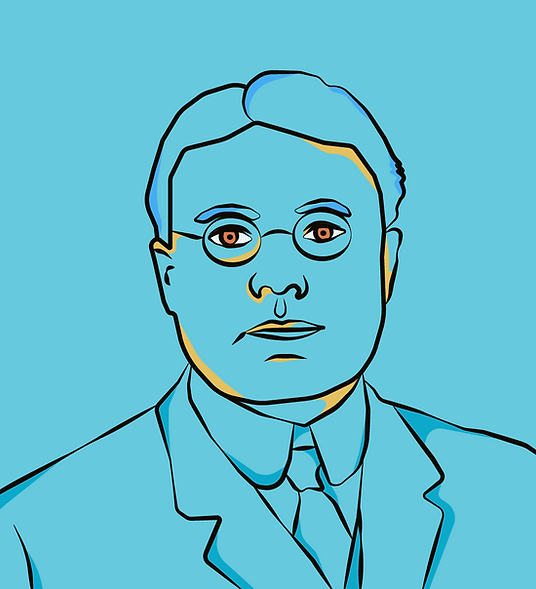
DR. WALTER CANNON
Fight or Flight
Episode 69
October 7, 2026
Boo! When you feel frightened, angry, or other strong emotions, your brain signals your body to prepare for drastic action. Aarati tells the story of the physiologist who coined the term "fight or flight" and defined "homeostasis".
Listen


Episode
Transcript
Aarati Asundi (00:12) Hi everyone, and welcome back to the Smart Tea Podcast where we talk about the lives of scientists and innovators who shape the world. I'm Aarati. Jyoti Asundi (00:20) I'm her mom, Jyoti. Aarati Asundi (00:22) So since it is October, spooky season... Jyoti Asundi (00:25) Yes! Aarati Asundi (00:25) I thought we would do a spooky kind of episode. Jyoti Asundi (00:29) I like that. Aarati Asundi (00:29) Because you know how much I love doing stuff that's on theme when I possibly can. Jyoti Asundi (00:34) Absolutely, you are so good with keeping track of what's going on in the world unlike me who lives in my own little well. I'm a frog happy in my well. Aarati Asundi (00:45) I try, you know, and we've done a couple of spooky ones in the past. We've done John B. Watson, who asked the question whether fear is a conditioned response. Like, do we learn how to be afraid of certain things, or is that innate in us? Jyoti Asundi (00:59) Yes. Aarati Asundi (01:00) We also did Donald Griffin, who was the bat scientist, echolocation. Jyoti Asundi (01:05) Batman. Yes. Aarati Asundi (01:07) Yeah. So we've done a couple of spooky Halloween-y themes, and so I'm going to continue this October with the story of Dr. Walter Cannon, who's the scientist who coined the term "fight or flight". Jyoti Asundi (01:22) Oh yes! Yes, I have heard of the fight or flight response. That's right. Actually, I've heard that there are four potential responses. I think flight or fight was the very original one. Then I think today they talk of fawn. You can fawn over your abuser in order to keep them happy and try to not be hurt by them because you're trying to be as loving as possible to them. Or the other one is you just freeze. You can't do anything. Yeah.Oh my goodness. This is going to be exciting to think about the psychology behind all these. Although I have to say that sounds like we are going to talk about a lot of abuse and toxic behavior. Aarati Asundi (02:04) No, no, not not abuse necessarily. Just more what happens when you get frightened or when you get angry, when you have extreme emotions, what is your response? And we're gonna be sticking to fight or flight. That's what Walter Cannon was known for. He did not go into freeze and fawn. I think that's a more recent thing. He was sticking to do you fight your way out of it or do you flee the scene and do you try to run away. Jyoti Asundi (02:30) Yes, I am definitely the runaway type because I know I want to try and be a warrior, but I always end up being a worrier and I know myself very well. I'm going to run away when there is problems, just make myself as small as I can, which comes naturally to me because God packaged me in a small package. Aarati Asundi (02:51) Well but actually the two are much closer tied than you might think. So we're gonna get into that today. Jyoti Asundi (02:58) Okay, so maybe there is hope for me to become a warrior after all. Aarati Asundi (03:02) Yeah, it's interesting. It's interesting to think about if you think your initial reaction is to run away, how hard actually is it to switch that and try to fight your way out of it? Like, how does your body make that decision? I don't know, but it's an interesting question to think about. Jyoti Asundi (03:20) Let us do that alright. Aarati Asundi (03:22) Yes. So Walter Cannon. Much of the information for this episode comes from his own autobiography called The Way of an Investigator, where he talks not only about his own life, but also the traits that a scientific investigator needs and the social freedoms and political support scientists need in order to make progress. Jyoti Asundi (03:44) That is a good one. Aarati Asundi (03:44) So it's a very interesting book if you have a chance to read it. Jyoti Asundi (03:48) Yeah so he's thinking more about the scientific process and what's required to foster a nurturing environment that will allow the scientific questioning to continue. Awesome. Aarati Asundi (03:57) Yes, both on a personal level, like what characteristics does the individual need, but also like, you know, how the government needs to help and how society needs to not, hinder scientific progress. So it's there's a lot of very relevant thoughts in that book today. Jyoti Asundi (04:12) I like that. okay, I'll try to get on it. Aarati Asundi (04:15) Yeah. So Walter Bradford Cannon was born on October 19, 1871, in Prairie du Chien in Wisconsin right along the Mississippi River. His father, Colbert, was a railroad superintendent, but he also dabbled extensively in farming and medicine. So two kind of very random things, but a man of wide interests. Jyoti Asundi (04:42) Yes. Aarati Asundi (04:42) Based on what I was reading and I could be totally wrong about this, he was a bit more of like an engineer slash tinkerer. So I think he was like more into making farming tools and like, you know, because he was an innovator in the railroad also, and he was like, making lot of Walter's toys Jyoti Asundi (05:01) Oh that's so cool. You know, reminds me of my childhood and my mom. She was very clever with her fingers, actually. Aarati Asundi (05:09) Oh yeah? Jyoti Asundi (05:10) And yeah, do you remember in any justice department, they show the justice as a lady who is blindfolded and holding scales. I'm not talking about the modern digital scales... Aarati Asundi (05:24) Yeah. Lady Justice, yeah. Lady Justice. Jyoti Asundi (05:25) Yeah, Lady Justice. So my mom fashioned one out for me when I was very young. She fashioned one with... Aarati Asundi (05:32) A pair of scales? Jyoti Asundi (05:34) A pair of little scales. She cut six strings of absolutely equal length and got a little twig. And then she took some milk caps and then poked little holes in them and tied up the strings to the three points on the little tin foil and then made a little scale for me. Aarati Asundi (05:55) Oh cute. Jyoti Asundi (05:55) And I went out happily. So it was a lot of fun. I had a lot, many hours of fun with that little pair of scales. Aarati Asundi (06:03) That's adorable. I love that. Yeah. So something similar here. And then Walter's father also taught him to make his own toys once he was old enough, like how to use the tools and stuff to make his own toys. And Walter said that that proved to be a very useful skill when he grew up and he was building his own experimental devices in the lab. He had that kind of confidence to work and tinker around with different- different things. Jyoti Asundi (06:24) Yes. Aarati Asundi (06:32) His mother, Sarah, was a high school teacher. Walter described her as being very clever and overly anxious about Walter and his three younger sisters. Jyoti Asundi (06:42) That rings a bell. That definitely... overly anxious about the kids. That's... me too. Aarati Asundi (06:48) Yes. I think that's a pretty good, indicator of any good mother though. Jyoti Asundi (06:54) I don't know man, I need to need to calm down as you and your brother often tell me. Aarati Asundi (07:01) Yes, we're okay. Sadly though, when Walter was just ten, his mother contracted pneumonia and passed away. Just before her death, she called Walter into her bedside and said, "Walter, be good to the world." A message that became in Walter's words a "sacred and haunting memory." Jyoti Asundi (07:22) Wow! Those are profound words to leave. You last madate for your child is, "Be good to the world". What a beautiful soul, what a beautiful lady, and what a wonderful way to set up your child to look at the world after that. Aarati Asundi (07:38) And he clearly took that very much to heart. He really lived by that. Walter went to public schools, but around the age of fourteen, his father for some reason became convinced that he wasn't paying enough attention at school. And so he pulled him out for two years to work at the railroad office. And the work was so time-consuming that Walter barely had any time for himself. Jyoti Asundi (08:03) Oh no. Aarati Asundi (08:03) So when he was finally allowed to go back to school, he really made sure to do well so that he didn't have to go back to the railroad office and he could keep his free time. Jyoti Asundi (08:12) Wow! That's harsh! Aarati Asundi (08:15) Yeah, I don't know what he was doing or why his father decided to do that to him, but... Jyoti Asundi (08:20) That's rough man. Aarati Asundi (08:22) Yeah. So needless to say, Walter's father took his education very, very seriously. He was also a very devout Christian, and he encouraged Walter to attend Sunday school and follow strict Christian teachings at home. Walter initially did take an interest in the church, but then he started reading works by Thomas Henry Huxley, who was a comparative biologist and was a very strong advocate of Charles Darwin's theory of evolution. Jyoti Asundi (08:51) Yes, creationism versus evolution raises its little head. Aarati Asundi (08:55) Mm-hmm. And so Walter started asking questions about science and trying to parse these two, disparate stories, like how... Jyoti Asundi (09:04) Yeah, basically trying to reconcile. He was trying to reconcile these two completely disparate stories. Aarati Asundi (09:09) Yes. And so he's asking questions of the clergymen at the church, and they basically shut him down and said, "What right do you have to question the church's doctrines?" Jyoti Asundi (09:21) Yes, that is usually the method. Yes, do as I say, don't question me. Yes. Aarati Asundi (09:27) Yeah. And so that did not sit well with Walter at all. Jyoti Asundi (09:30) Correct. Aarati Asundi (09:30) And so he started to withdraw from the church and spend more time reading works by Huxley and other scientists. And this is really what inspired him to pursue a college education. Jyoti Asundi (09:42) That's good. least it sounds like by this point though he was a little more independent and not under his father's thumb to the extent of, know, where his father could say, "You don't like my church. In that case, I'll craft yet another punishment for you." Aarati Asundi (09:57) Yeah, it did sound like it caused some friction between him and his father, but eventually his father did, you know, come around because his father also was like interested in medicine, like I said at the beginning. And so he was like, "Okay, well, I mean, I'm not thrilled about the fact that you are, you know, withdrawing from the church so much, but at least your interest lies in science and medicine, which I can still support." So I can still get behind that. Jyoti Asundi (10:27) In my own mind, I was drawing a caricature of the father and he's more gray rather than black and white to me now, with if he's having an open mind and willing to at least listen to other arguments about how life could have been created. He's a more nuanced character. Aarati Asundi (10:43) Yeah, yeah. So around this time, Walter met a Harvard graduate who urged him to apply to Harvard University. So with the help of his English teacher, he managed to get a small scholarship and his father, who hoped that Walter would become a doctor one day, agreed to pay the remaining tuition for his freshman year. And then throughout his undergraduate years, he continued to earn small scholarships and work side jobs to pay for his tuition. He also took an inordinate amount of classes compared to peers. But despite his hectic schedule, he found undergraduate life to be very exciting and full of intellectual discussion. Jyoti Asundi (11:22) Yes. Aarati Asundi (11:23) He started working as a student assistant in science classes and developed a particular interest in neurology and psychiatry. So then after graduating summa cum laud in eighteen ninety six, he went straight to Harvard Medical School to continue studying the nervous system and nervous disorders. However, in his first year of medical school, he took a research job under Dr. Henry Bowditch, who was a physiologist. And Dr. Bowditch put Walter to work using X-rays, which had just been discovered. Jyoti Asundi (11:53) We had actually done, you had done an episode on X-rays before Rontgen and all that. Aarati Asundi (11:59) Yes, we've done Rontgen before, yeah. Jyoti Asundi (12:01) Rontgen and then his wife with her finger and the ring on it and all that in an X-ray. I remember that. Aarati Asundi (12:04) Mm. Yeah. another good Halloween-y one if you're thinking about skeletons and X rays, yeah. Jyoti Asundi (12:10) Yeah, thinking about skeletons and the ring just comes through anyway. Aarati Asundi (12:16) Yes. Jyoti Asundi (12:16) yes. Aarati Asundi (12:17) So Walter starts using x-rays to study the mechanics of swallowing, and this led him to study the broader question of how all of our digestive organs work. And here he made one of his most important observations, although he didn't realize it at the time. He was x-raying the stomachs of animals as they were digesting food. And most of the time he saw very strong rolling waves in the stomach wall called peristaltic waves. And he deduced it that they were the muscles contracting and squeezing the food through the stomach, which is a key mechanism for digestion. Jyoti Asundi (12:57) Correct. Aarati Asundi (12:58) However, sometimes, almost it seemed at random in some animals, the waves were completely absent or they suddenly stopped. And it was very frustrating for his experiments because he couldn't figure out why what was happening. Jyoti Asundi (13:12) Yeah. Aarati Asundi (13:13) So we're gonna put a pin in that, we're gonna come back to it. Jyoti Asundi (13:17) Okay. Aarati Asundi (13:18) For the next fifteen years or so though, Walter was fully into understanding the physiology of digestion. He graduated from medical school in 1900 and immediately became an instructor of physiology at Harvard. Around this time, he also married his high school sweetheart, Cornelia James, who later became a best selling author and was a woman's rights activist. Jyoti Asundi (13:39) OH nice. Aarati Asundi (13:40) Yeah. He said, "When our wedding was announced in the Department of Physiology, one of the staff at the time quoted regretfully, 'A young man married is a young man marred.' This is a cynical dictum that I cannot confirm. Throughout our married life, my wife has been my best, most helpful, and most devoted counsellor and companion." Jyoti Asundi (14:02) Hmm, That is really beautiful. And this whole thing about 'A young man married is a young man marred.' This is such an old trope where the girl is congratulated on winning this guy. And, the guy is kind of given best wishes manage as well as you can for the noose that you have put around your neck kind of situation. It's so misogynistic, but... Aarati Asundi (14:27) And he recognized that. He like, No way, she's the best that I could ever hope for and she makes me better. And as if to prove this point, in his autobiography he told the story of their honeymoon, which was quite an adventure. So they got a birch bark canoe and they paddled it about 60 miles down the St. Croix River, camping all along the way. Then they boarded a train to Montana to a forest reserve, which today is Glacier National Park. There, a local guide took them to Goat Mountain, which he had said no one had ever climbed except for, of course, all the mountain goats. Jyoti Asundi (15:04) Yes! Aarati Asundi (15:05) So naturally, what do they decide to do? Jyoti Asundi (15:08) They are going to be the next level goats, okay. And they are going to be the greatest of all time with the goats and go for it. Okay, uh-huh, uh-huh. Aarati Asundi (15:15) Yeah, they're gonna climb it. So after a bit of a difficult climb because there's no trails, they reached essentially a vertical wall. And on the wall, they found a narrow path that the goats evidently used to climb. Jyoti Asundi (15:31) Yes! Aarati Asundi (15:31) And so they started climbing that narrow, narrow path on this vertical wall. Jyoti Asundi (15:35) No way! This is basically rock climbing now. Aarati Asundi (15:38) Basically, yeah. Jyoti Asundi (15:40) Wow. Aarati Asundi (15:41) Near the top, there was a crevice in the wall, which the group thought that if they could squeeze through that crevice, they could shortcut their way to the peak. Jyoti Asundi (15:50) Okay. Aarati Asundi (15:51) So the guide went first and he managed to get through. Jyoti Asundi (15:54) Yeah. Aarati Asundi (15:54) Then Cornelia went through, but when Walter's turn came, he got stuck. And so after a little bit of a struggle and a panic, he managed to wriggle free and go back to the path. And then the guide and his wife had to come back through the crevice to join him. But this really had a profound effect on him. He said, "I experienced an emotional reaction which appeared suddenly and mysteriously and deeply stirred my scientific curiosity. My body was shaking violently as in a chill." Jyoti Asundi (16:31) Yes, yes, because the body is recognizing your, you are testing the limits of survivability, you're testing the limits of your survival. Aarati Asundi (16:42) Yes. He's really like, "Whoa, this profound physiological reaction has occurred because of this. That's interesting." Jyoti Asundi (16:49) Yes. Aarati Asundi (16:50) And it piqued his scientific curiosity of all things. Yeah. Jyoti Asundi (16:53) It's interesting that he can think science when he's fighting life or death. He doesn't know if he's going to make it and he's thinking, what is this all about? Aarati Asundi (17:02) To be fair, maybe that came a little bit after. After he calmed down, but you know, still. Jyoti Asundi (17:04) True but still I would...I think I would develop mental blocks about it. It would seep into my nightmares but I would not want to personally go Aarati Asundi (17:13) Not think about it. Jyoti Asundi (17:14) and poke at that particular memory trying to figure something out. No I would be just like don't think about it. Aarati Asundi (17:21) Yes. But ultimately, they continued to follow the goats' trail that they had originally been on, and they did reach the peak of the mountain. And to them it was totally worth it. The view was absolutely gorgeous. And although Walter acknowledged that it wasn't like they had climbed, you know, Mount McKinley or the Matterhorn, they felt very accomplished and they felt proud of themselves. Jyoti Asundi (17:44) Absolutely. It's places where no man has gone before. Aarati Asundi (17:49) Yeah. And fun fact, that mountain today has now been renamed Mount Cannon in their honor. Jyoti Asundi (17:55) In their honor. Oh lovely. Yes. And also think about that. They are such a good pair that they both are interested in these kind of outdoor pursuits Aarati Asundi (18:05) Both very adventurous people. Yes. Jyoti Asundi (18:07) Excellent. Good pairing. Aarati Asundi (18:08) Good match. So back at Harvard, after two years of working as an instructor, he was promoted to assistant professor, and then in 1906 he took over Dr. Henry Bowditch's position as a Professor of Physiology and he stayed there for the rest of his career. So essentially he went to school at Harvard and he never left. Yeah. Jyoti Asundi (18:30) That's nice, a lifelong commitment to Harvard. That's beautiful, too. Aarati Asundi (18:34) He continued to work on the digestive system up until 1911, at which point he published a book called The Mechanical Factors of Digestion, which, as the name suggests, examines all the muscle contractions and the mechanical actions needed to digest food. Jyoti Asundi (18:52) Yes, that is as opposed to the enzymatic aspects of digestion because we all know that there are myriad enzymes that have to come into play for the digestive process to be able to work properly so that you break down the food into the appropriate nutrients that can then be absorbed. Aarati Asundi (19:10) Yeah. But the muscles in your jaw, the muscles in your throat to swallow... Jyoti Asundi (19:15) That's right. Aarati Asundi (19:15) the muscles in your stomach that, you know, churn the food and push it into the intestines, and then how your intestines squeeze it through.... Jyoti Asundi (19:20) And then the muscles in the intestine that push it along all the way. huh. Aarati Asundi (19:24) Yeah. So all of that is what he's looking at. Throughout his time studying all of this though, he's still running into that frustrating problem that sometimes the peristaltic waves in the stomach just seem to completely stop. However, over time he does begin to notice a pattern.... Jyoti Asundi (19:42) Okay. Aarati Asundi (19:42) ...that the waves are absent or seem to stop when the animal seems stressed out or frightened. And then when the animal calms down, the waves would start again. So this was very interesting to him, and he wondered whether there might be other physiological things that were connected to stress. So he started doing a series of experiments where he would provoke emotional stress in an animal, and then he would start to measure different physiological markers. Jyoti Asundi (20:10) Yeah. Aarati Asundi (20:10) And he found a number of things that seemed to change when the animal was frightened or angry. So, like we already said, gastrointestinal activity seemed to slow down or stop, but also respiration and heart rate increased, pupils dilated, blood clotting accelerated, blood sugar increased, and adrenal secretion increased. Yeah. Jyoti Asundi (20:36) Lot of responses there. Okay, mm-hmm. Aarati Asundi (20:39) So also around this time, a little bit earlier, like a few years earlier, but still around the same time period, another scientist named John Langley at Cambridge had introduced the term autonomic nervous system, which comprised of the nerves that control our involuntary actions. Jyoti Asundi (20:58) Ah yes, yes. Aarati Asundi (20:59) So these are actions like breathing, blinking, digestion, heart rate, pupil dilation. And Walter was like, that sounds very familiar. Yeah. Jyoti Asundi (21:09) That's right. Aarati Asundi (21:10) Langley had further split the autonomic nervous system into three systems, the sympathetic, the parasympathetic, and the enteric nervous system. Jyoti Asundi (21:19) Yes. Aarati Asundi (21:20) But for Langley, these three categories were more anatomical than anything. So he was saying the sympathetic nerves originated in the thoracolumbular region or your spinal column region. Jyoti Asundi (21:34) Okay? Aarati Asundi (21:35) And he noticed that adrenaline had similar effects on the body as stimulating these nerves. So he grouped that into one category. Jyoti Asundi (21:43) Got it. Aarati Asundi (21:44) Then the parasympathetic nerves came from the cranial and sacral regions, which is the head and the base of your spine. And these seem to work in the in almost opposition to the sympathetic nervous system. So he found that nicotine seemed to mimic the effects of stimulating these nerves. Yeah. Jyoti Asundi (22:04) Ah okay, got it. Aarati Asundi (22:06) And then the enteric nerves originated in the intestines. And so based on this, Walter Cannon realizes that when the animal is stressed out, the physiological changes that happen are very similar to what happens when you stimulate the sympathetic nerves. He sees that same adrenaline rush, the elevated heart rate and respiration, they're all getting triggered. Jyoti Asundi (22:28) Yes. Yes. Aarati Asundi (22:30) But now the question is why? Why would fear or rage trigger the sympathetic nervous system? And so now we come to an interesting point. So we've talked about this in a couple of previous episodes about Dmitry Mendeleev and his organization of the periodic table, and then with Carlos Finlay and his like understanding that a mosquito would be a vector for disease. We talked about how sometimes these ideas come together when you're falling asleep or drifting off or... Jyoti Asundi (23:01) That's right. When the brain is uncluttered anything else and you're kind of in a state of calm surrender, that's when it comes. Aarati Asundi (23:09) Yes, semi-consciousness, kind of like, you know. Jyoti Asundi (23:11) Yes, correct, correct. Aarati Asundi (23:13) So Walter Cannon talks about this exact thing quite extensively in his autobiography, saying hat he also found that his unconscious self helped him put together ideas. He said, "In typical cases, a hunch appears after long study and springs into consciousness at a time when the investigator is not working on his problem. It arises from a wide knowledge of facts, but it is essentially a leap of the imagination, for it reaches forth into the range of possibilities. It results from a spontaneous process of creative thought." Jyoti Asundi (23:52) Yes. That makes so much sense. The information is all there but if you're sitting there staring at it trying to beat it into submission it's going to elude you and then finally you let go and the pieces click into place. Aarati Asundi (24:06) Yes. So that term like "sleep on it", he really, you know, believed in that. Jyoti Asundi (24:09) Yes. These big terms come naturally man. There's a reason for them. There's a reason these are pieces of advice that grandmas used to give. Sleep on it and it'll all get better. Yes. Aarati Asundi (24:22) Yeah. So he had this kind of thing occur a few times throughout his career. For example, when he was preparing for a public talk and he was trying to come up with the best way to phrase things, or he was trying to figure out how to make a device that measured blood clotting. He had these kind of brain waves when he was, not thinking about it or when he was asleep. But now he was struggling to find a connection between all these physiological things that happened in the animal when they were stressed out. But then he said, "then one wakeful night after a considerableb collection of these changes had been disclosed, the idea flashed through my mind that they could be nicely integrated if conceived as bodily preparations for supreme effort in flight or in fighting." Jyoti Asundi (25:10) Ah yes! Your body is prepping to deal with the huge challenge. Aarati Asundi (25:15) Yes. Jyoti Asundi (25:15) And it's like, okay, all warriors out now, everything that can help you to survive. Here we are, because we as a system need to survive. Aarati Asundi (25:25) Exactly. Yeah. Jyoti Asundi (25:26) Wow. Aarati Asundi (25:28) In 1915, Walter published another book called Bodily Changes in Pain, Hunger, Fear, and Rage, where he lays out the argument that just like how pain can trigger the sympathetic nervous system, that emotions can do it as well. Emotions like fear and rage aren't just psychological, they physically trigger your nervous system to get ready to respond to the perceived danger. Jyoti Asundi (25:54) Okay. Aarati Asundi (25:54) And this is where he coins the term "fight or flight". Jyoti Asundi (25:58) Very cool. Aarati Asundi (26:00) And what he notes here is that your body is getting ready to take some extreme action. And in these cases, digestion isn't useful. Jyoti Asundi (26:10) That's right. Yeah, it's survival time. You can throw up the food for now and eat something else some other day. But if you can live through this crisis, yeah, yeah. Aarati Asundi (26:20) We don't need to be spending time or energy digesting food. Jyoti Asundi (26:22) Digesting. Yeah, we don't need to use that energy. Yes, correct. Correct. Aarati Asundi (26:25) Yeah, the food can sit there for a bit. It's fine. So your body diverts the energy that it would be using to digest food, it diverts that into things that would actually be useful, like getting oxygen to your muscles by increasing respiration and releasing stored energy in the form of blood sugar and pumping up the adrenaline so that you are ready to either fight your way out of the situation or run away as fast as you can. Jyoti Asundi (26:49) Run away. Oh my goodness! So yeah that's how they are so closely intertwined. If you feel you're strong enough to fight through, you will. But if the problem looks a lot bigger than you can handle, then you run away from it. Aarati Asundi (27:03) Mm-hmm. Or just depending on the situation, if you think you can fight your way out, you will. If you think you can run away, you will. Jyoti Asundi (27:11) That's right. And also there's a bit of personal perception in there as well. If you think of yourself as a small person, it's like this problem is very big. There is no way I can tackle it. Let somebody else deal with it. I'm out of here. Find me my skates. And you get out of there. But then you think of yourself as "I'm highly capable, I can tackle anything that is thrown my way." And you're like, yeah, yeah, bring it on. Aarati Asundi (27:37) I think there's a fine line there, you know, like if... because I can imagine situations where it'd be like, you know, there's some animal attacking me. I don't think I am fast enough to run away though, so I would love to run away, but I think it's gonna catch me. So I think I have to try and fight, you know? And so like how how your brain makes that decision is an interesting, you know, question. But Jyoti Asundi (28:00) Yes, yes, that's right, that's right or even if you have the choice actually that is another thing that we haven't mentioned like if you are unable to run away and you are forced to fight through Aarati Asundi (28:07) Yes, exactly. Jyoti Asundi (28:13) You're you're saying I'm going to die anyway I might as well die fighting instead of just laying down and letting this get me. Give it, give it a shot man. yeah Aarati Asundi (28:20) Yeah. So yeah, it's an interesting question. I don't know. But either way, Walter is saying your body is getting ready to do something really extreme. He also argued that when a triggering event happens, both your emotional response and your physiological response happen simultaneously. And this was a direct contradiction to what some other scientists, William James and Carl Lange, had proposed. So they had said, for example, if you see a bear, your body responds immediately. Your heart starts pounding in your chest, and then your brain processes that you must be feeling afraid. So, in their, hypothesis, the emotion kicks in after the physiological response. Jyoti Asundi (29:08) Yes. Aarati Asundi (29:09) But Walter Cannon and later his student Philip Bard argued that if you see a bear, your brain processes the threat first, and then both your emotional and physiological responses kick in at the same time. Jyoti Asundi (29:23) Got it. It's like the brain is sending signals everywhere at the same time. It first computes what's happening and then it's like everybody fire up right away. Yeah. Mm hmm. Aarati Asundi (29:33) Exactly. But then, as is the case with most of our stories, World War I comes in and interrupts his work. But I'm going to call it more of a side quest because he did continue scientific research throughout World War I, just in a slightly different direction, and it did end up informing his later research. Jyoti Asundi (29:52) Okay! _______________________________________________________________________________________ Aarati Asundi (29:59) Hi everyone, Aarati here. I hope you're enjoying the podcast. If so, and you wish someone would tell your science story, I founded a science communications company called Sykom, that's S-Y-K-O-M, that can help. Sykom blends creativity with scientific accuracy to create all types of science, communications, content, including explainer videos, slide presentations, science, writing, and more. We work with academic researchers, tech companies, nonprofits, or really any scientists. To help simplify your science, check us out at sykommer.com. That's S-Y-K-O-M-M-E-R.com. Back to the story. _______________________________________________________________________________________ Aarati Asundi (30:46) So during World War I, soldiers who were very badly wounded would go into shock and often die, and people didn't really understand what was happening at a biological level, at a you know, physiological level. And so Walter Cannon volunteered for the US Army Medical Corps to be a field researcher in England and study shock. The prevailing theory at the time was that the blood was pooling somewhere in the abdomen and it wasn't getting pumped back to the heart. Jyoti Asundi (31:16) Yeah. Aarati Asundi (31:16) And that's what was causing the soldier to die. But Walter and his colleagues soon ruled that out. They couldn't find any blood pooling anywhere. Jyoti Asundi (31:24) Okay. Aarati Asundi (31:25) Instead, they noticed that the blood was becoming acidic, so they were like, maybe if we neutralize it, it will bring the soldiers out of shock. Jyoti Asundi (31:33) Okay. Aarati Asundi (31:34) But that didn't really work either. And what's more, they couldn't induce shock in animals just by making the blood more acidic. Jyoti Asundi (31:41) Okay. Aarati Asundi (31:42) They then realized that the blood acidosis was actually due to a buildup of lactic acid because of inadequate blood flow to the tissues, which all stemmed from severe blood loss, and so this paved the way for treating these soldiers with blood transfusions. But then Walter also noticed that there were cases where the soldiers went into shock after experiencing severe tissue damage as well. Jyoti Asundi (32:09) yes. Aarati Asundi (32:10) So even though they hadn't actually lost that much blood, the severe tissue damage also caused them to go into shock. And this got him thinking that maybe in addition to blood loss, shock could also be caused by the damaged tissues releasing some chemical into the blood. Jyoti Asundi (32:29) Okay. Aarati Asundi (32:30) So after the war, he goes back to his lab at Harvard and he's back to thinking about stress and the physiological response it has. And he starts wondering if it was really the sympathetic nerves that were causing this effect throughout the body, or whether it was a chemical stress factor being released in the blood. Jyoti Asundi (32:50) Okay. Aarati Asundi (32:51) So to get at this question, he starts doing experiments where he denervated the heart of an animal, meaning he very carefully, surgically removed all of the sympathetic nerves that were connected to the heart. Jyoti Asundi (33:07) Oh wow! Oh my goodness! Okay. Aarati Asundi (33:09) Yes. I don't even know how you begin to do something like that. Jyoti Asundi (33:12) How you begin to do this? Yeah, this is incredible to me. Aarati Asundi (33:16) So the animal's still alive, the heart is still beating. Just the sympathetic nerves have been severed. So now if he applied some stressor to the animal, if the heart rate sped up even without the sympathetic nerves attached to the heart... Jyoti Asundi (33:31) Then it's a chemical is going through the blood. Aarati Asundi (33:34) Yes. And that's exactly what he saw. He then took it one step further and saw that if he caused an injury to the hind leg of the animal, but prevented blood flow from the leg to the heart, then the heart did not speed up. But when he restored the blood circulation, the heart did speed up. Jyoti Asundi (33:54) Wow! These are detailed thought experiments. Okay, got it, got it. Mm-hmm. Well thought out. Aarati Asundi (33:58) Yeah, very finicky and I don't even know. Jyoti Asundi (34:01) Yes, I can't even imagine doing these kind of things. Aarati Asundi (34:04) Yeah it really did seem to prove that there's a chemical in the blood that's carrying the signal to the heart and not just nerve stimulation. He also found that if he removed the adrenal glands and then caused stress to the animal, the heart rate did not speed up. So whatever the substance was, it was probably coming from those glands. Jyoti Asundi (34:25) Got it. Aarati Asundi (34:25) He figured that it was most likely epinephrine, also known as adrenaline, but he wasn't one hundred percent positive, and so he called the substance sympathin. Jyoti Asundi (34:35) After the sympathetic nervous system. Yeah, got it. Aarati Asundi (34:39) So he never actually proved that sympathin and adrenaline were the same substance. Today we actually know that both are true. So there is a chemical in the blood, which is indeed adrenaline or epinephrine, which is released from the adrenal glands, but there's also a signal from the nerves. And that comes in the form of a neurotransmitter called norepinephrine, which has the same effect. Jyoti Asundi (35:07) Yes. Aarati Asundi (35:07) So epinephrine and norepinephrine are two signals that kind of have the same effect of speeding up your heart rate, dilating your pupils, increasing respiration, all these things. They work together to do the same thing. So he never quite got around to being able to make that distinction. Jyoti Asundi (35:26) Got it. But those are really detailed experiments. And I think foundational and used in multiple places. For example, I had a torn rotator cuff and I had to go through surgery. They were going to open me up and sew it back on. And before I was even put under the knife, they checked that I had physical therapy appointments lined up. And the reason for that, the doctor said to me, she just said that when I go into your body and open it up, the tissues contract due to the shock of the surgery. The surgery itself is like a damage, a shock and they contract and they're like, something very weird is happening and I'm going to contract and survive. And so in order to release it and bring it back into its open form, because the muscles have to contract and relax, right? In order to actually work. So all the muscles go into its most contracted form and there is no way to release it. You have to go through the correct physical therapy sequence in order to release that muscle and teach it like "I's okay darling! Everything is okay now. Aarati Asundi (36:35) We survived, we're fine. Jyoti Asundi (36:36) We survived, we are alive again. Come on now start working. So you have to gently bring it back in. So the foundational work that Cannon has put in is actually informing surgeries and the post surgical therapeutic structure as well Aarati Asundi (36:53) Interesting. Well that's actually a really good segue for what comes next for a very interesting way that Walter interpreted his work. So up till now, everything that I've learned about Walter's work and fight or flight. My immediate instinct is to say, okay, so like when I or any other animal is under threat or gets very angry or like you're saying, you know, some injury or surgery or something, your body goes into this absolutely insane state. Like it contracts really violently, or, you know, it dumps all this sugar into your blood, you know, like gets your heart rate beating super fast. Like... Jyoti Asundi (37:35) Staying alive, staying alive. Aarati Asundi (37:37) Yeah. Yeah. Yeah. Exactly. So your body is just in this absolutely like insane state is what I would say, right? But Jyoti Asundi (37:45) Yes. Yes. Aarati Asundi (37:50) Walter had almost the opposite interpretation, actually. He said, Look, these physiological things that are happening, like heart rate and blood glucose level and respiration; they all have actually a very narrow range that they can exist in for you to still be alive and survive. Jyoti Asundi (38:10) Yes, yes. Aarati Asundi (38:11) If your heart rate goes too high or too low, you're dead. Jyoti Asundi (38:14) Yes, correct. Aarati Asundi (38:15) If your blood sugar goes too high or low, you're dead. Jyoti Asundi (38:17) That's right, it's supposed to be a short burst. Aarati Asundi (38:20) Yeah. And so when your body is stressed out, multiple systems have to work together to keep your body functioning and surviving and keep these parameters within a somewhat stable range. Jyoti Asundi (38:33) Yes. Aarati Asundi (38:34) And so that's why your body dramatically suppresses digestion, which isn't an immediately essential function, and redirects that energy towards the things that are essential for survival, like blood circulation and muscle function. Because if it was trying to do both, you would probably die. You wouldn't have enough energy. Jyoti Asundi (38:51) Yes. Aarati Asundi (38:53) So in 1932 he published a book called The Wisdom of the Body, where he popularized the term homeostasis. Jyoti Asundi (39:03) Yeah, homeostasis, the key thing that we all try to come back to with every... Aarati Asundi (39:08) Yeah, come back to normal. Jyoti Asundi (39:09) Come back to normal, come back to normal. Yes, yes, yes. Aarati Asundi (39:13) So in this book, he lays out the four big principles of homeostasis. First is that the body is an open system that is influenced by external factors, and so something must be maintaining the body's internal conditions despitethese external disturbances. Jyoti Asundi (39:32) Okay. Aarati Asundi (39:32) Second was that if an external factor is pushing something one way, your body has mechanisms to counteract that. So easy way to think of this is if your environment is cold, your body finds ways to heat up, like you start shivering, and if you're in a hot environment, then you start sweating, your body finds ways to cool down. Jyoti Asundi (39:52) Yes. Aarati Asundi (39:53) Third is that homeostasis is not controlled by just one organ or one system. There are multiple systems in your body that work together to maintain homeostasis. And fourth is that these efforts are not random, they are coordinated. The body does this on purpose. It is self-regulating. Jyoti Asundi (40:13) How complex of it. We don't appreciate it enough. We don't appreciate mother nature's checks and balances like if this fails then we'll go here. Very nice. Aarati Asundi (40:24) Yeah. But I thought that was just such an interesting leap of logic. Or like just such an interesting direction that he took it in because when you're in fight or flight and you're thinking about, you know, this keyed up response of your body, the last thing I'm thinking about is homeostasis... Jyoti Asundi (40:39) That's right. Yeah, yeah. Aarati Asundi (40:40) ...and like being normal, you know? So for him to be able to take it to that level and be like, you know, no, this is actually also something coordinated. Your body is coordinating this severe stress response... Jyoti Asundi (40:55) That's right. Aarati Asundi (40:56) but in order to do that, it's suppressing other things so that you can survive. Jyoti Asundi (40:59) Yes, that's right. Aarati Asundi (41:01) So it's driving- your body's driving these certain responses or certain physiological responses in order to, deal with the threat, but because it's, you know, pumping some of these things up, it has to suppress other bodily functions. Jyoti Asundi (41:16) Other things. It comes at cost. This kind of a big survival response has a cost associated with it. You're stepping away from homeostasis. Your real goal is to go back to homeostasis as soon as you can. Aarati Asundi (41:32) And so that's why when you calm down finally, then your body's like, Okay, Jyoti Asundi (41:36) Okay, we are okay now. Aarati Asundi (41:37) We're okay, we can restart digestion and so, you know, restart those peristaltic waves. Jyoti Asundi (41:43) That's right. That's right. Aarati Asundi (41:45) You know, once the animal has calmed down, he would see those waves come back. Jyoti Asundi (41:48) I have studied stress responses. Mine has gone into chronic stress response and it leads to various things. Here, we are focusing on a very immediate stress response where it's like danger right away. There's a tiger in front of you deal with it, that kind of thing. But then if there is a chronic elevation of stress, I'm talking about just like daily somebody in your life is creating chaos for you or a situation... Aarati Asundi (42:19) Mm-hmm. Your job or something, like yeah. Whatever it is. Jyoti Asundi (42:21) A job or whatever, commute or whatever it is and you have this low level of chronic stress continuously. That also takes you away from homeostasis and it takes you away from homeostasis in things that are not so obvious where you are, you know, able to really catch it and say that's it, that's the parasympathetic response, that's the sympathetic response. You can't say that, but happens is your normal protein synthesis is shut down. The body again, pivots into abnormal protein synthesis. And the stress proteins that are made, they are not made in a very good way because the body is basically trying to divert energy from its normal conditions to deal with the stress that it is dealing with. And so the proteins that are made are off. They can be misfolded, things like that. And those could be the underlying seed for cognitive diseases like Alzheimer's or something. Aarati Asundi (43:26) Hmm, yeah. Jyoti Asundi (43:28) Where you have those plaque formation in the brain. And that's happening due to misfolded proteins. Aarati Asundi (43:34) Yes. Jyoti Asundi (43:34) So a low level of chronic stress also leads you away from homeostasis and five years, 10 years down the road, you're more prone to cognitive decline, to other stressful diseases like cancer, diseases that can be driven. Aarati Asundi (43:51) That makes a lot of sense. Like a longterm chronic stress response would lead to a long term kind of chronic disease that yeah. Jyoti Asundi (43:58) Moving away from your homeostasis state. So that's why we need to find our mental fortitude to say this stress is not going to eat me up. You know, yes, I have to deal with it, but I don't want to destroy my body in dealing with this. Aarati Asundi (44:12) Yes, find ways to relax. Jyoti Asundi (44:14) Find ways to relax or even just say, I'm not giving you more than what you're already taking from me. Like if it's a bad job or something, you kind of say to yourself, Okay, yeah, you got me for eight hours and I need that paycheck, but then once I leave the job, I'm going to find a way to de-stress. I'm going to go walk in that park. I'm going to sit and meditate. I'm going to breathe deeply, whatever it is, that helps you remove that stress. Aarati Asundi (44:40) This was the whole workers' rights thing, right? I remember vaguely. Really vaguely from high school that there was some like, you know, picketing line or something that they used that said, eight hours to work, eight hours to sleep, and eight hours to do what we want, And that's how the day should be broken up. Jyoti Asundi (44:57) Yes, yes. Aarati Asundi (44:58) And they need to put a cap on how many hours a day you can ask your workers to work. Jyoti Asundi (45:02) Correct. Aarati Asundi (45:03) Even then, they were recognizing like you cannot ask people to work 12, 13, 14-hour shifts... Jyoti Asundi (45:09) Correct. Aarati Asundi (45:10) ...and not give them any time to unwind and de-stress because it causes problems. It really does. Jyoti Asundi (45:15) It causes long-term problems. Yeah. Aarati Asundi (45:17) Interesting. okay, so back to Walter. So by this time in his life. Walter had become a major figure in psychosomatic medicine, which is how your emotional state influences your body's physical health. He was also becoming more active politically and socially. He had always been a very staunch supporter of animal experimentation in the sense that he was very frustrated when, you know, people would come and say, "You're torturing these animals and scientists are inhumane," and stuff. He would argue that scientists took every possible measure to make sure that the animals they used were as comfortable as possible. And there was a lot of justification that went into whether or not you needed to actually use an animal for your experiments. And these people that are saying, like, you horrible animal torturers, they're really only succeeding in repressing scientific progress. Jyoti Asundi (46:16) Correct, absolutely. That's one of my favorite soap boxes as well. I don't want to get into that. This episode will never end if I start that one. Aarati Asundi (46:24) But he strongly agreed with you on that. Like it's necessary, you know. Jyoti Asundi (46:30) It is necessary. Yeah all those people who claim to be animal lovers that animal research should not be made, well, will you volunteer instead of that animal the person who takes the drug for the first time before you give it to your child? Aarati Asundi (46:44) And there's so many protocols in place, you know, like you have to go through so many steps. Jyoti Asundi (46:49) Absolutely. Aarati Asundi (46:50) If you say we want to use ten animals for this experiment, it's like, well, could you get away with eight? Could you get away with five? Jyoti Asundi (46:56) That's right. Aarati Asundi (46:57) Like, why do you need ten? Justify it. Jyoti Asundi (46:59) Correct. Aarati Asundi (46:59) How long are you running this experiment? You're doing it for a month? Well, can you do it in two weeks instead? Like there's so many ways that people try to... Jyoti Asundi (47:06) And even at the end, when the animals have to be finally taken down at the end of the experiment, they have to find the most humane way of ending their life. You cannot just be like, I'm going to maniacally giggle while I kill this animal because I'm done with the experiment. No, we don't do stuff like that. It's very, very compassionate, well thought out, minimum hurt to life. Aarati Asundi (47:30) Yes. Jyoti Asundi (47:31) But we start the animal experiment only when we cannot take that study further with just ex vivo work basically. Aarati Asundi (47:39) Yeah. In cells or in tissues or like in a petri dish. Yeah. Like yeah. Jyoti Asundi (47:41) Tissues or a test tube or in silico. Now it is like ask AI to figure it out. Okay, that's wonderful. Yeah, yes. Aarati Asundi (47:47) Okay. Yes, yeah. So he was very outspoken about that. He was very outspoken against fascist governments also, and in the late 1930s, during the Spanish Civil War, he became the leader of the Medical Bureau to aid Spanish democracy, and a few years later became the lead of the American Soviet Medical Society. Jyoti Asundi (48:10) Okay. Aarati Asundi (48:11) He was also nominated for the Nobel Prize in Physiology or Medicine at least twenty-seven times between 1921 and his death in 1945 for everything from his work from on the digestive system to proposing this relationship between adrenaline and the sympathetic nervous system. However he never actually won. Jyoti Asundi (48:35) 27 times and he did not win? Aarati Asundi (48:35) Yes. Jyoti Asundi (48:36) Is there some back story to that with a personal grudge of some sort? Aarati Asundi (48:40) No, I think one of the main reasons he didn't win was because he never parsed out that sympathin was actually both adrenaline and norepinephrine. It was both epinephrine and norepinephrine. So he kind of got his interpretation of sympathin wrong. But yeah, other than that, it's like, man, he did so much. He did so much work on figuring out the digestive system and the sympathetic nervous system and, homeostasis. Like I didn't know he coined the term homeo- or popularized, I should say, the term homeostasis. Like he did a lot. Jyoti Asundi (49:17) Yeah, he did, he did. Aarati Asundi (49:18) And throughout his life he was also a fantastic mentor to new students and very much regarded as a public role model. Jyoti Asundi (49:25) Yes, he does seem to be an absolute role model of a scientist. In every way. He has the political inclinations that align well with good scientific reasoning. He has good mentorship ideas. Aarati Asundi (49:40) And then in his book he was also talking about like all the characteristics he thinks a good scientist or investigator needs, like patience and integrity and curiosity, like all of these he's, got chapters where he just lists out like you need all of these really great qualities to be truly good at being an investigator, being a researcher. Jyoti Asundi (50:02) That's beautiful. Aarati Asundi (50:04) And in addition to all that, he's very much a family man. He and Cornelia had five children together, and they had a very active family life. They would travel around the world, and his children actually ended up becoming very successful in their own right. His oldest son, Bradford Cannon, became a prominent plastic surgeon. His oldest daughter, Wilma, became an artist and scholar of Chinese art and architecture. And his third daughter, Marian, became a painter and an author. I couldn't find out much information about his other two children, but at least based on those three, highly successful kids. Jyoti Asundi (50:40) Beautiful Aarati Asundi (50:42) Walter retired from Harvard in 1942 and he passed away on October 1, 1945, at the age of 73. Sadly, he passed away from a rare type of blood cancer called mycosis fungoids, in which abnormal white blood cells or T cells migrate to the skin and multiply causing what looks like a skin rash. Unfortunately, we now understand that this blood cancer was likely due to the constant exposure to X-rays early on in his career. Jyoti Asundi (51:16) Yes, that's right. Yeah, it was only after Alice Stewart brought to light the damages caused by radioactivity that limits were put on how much X-ray could be used. What are the exposure limitations, etc.? Aarati Asundi (51:31) Yeah, and she had a long, hard fight, so... Jyoti Asundi (51:33) She had to fight really hard because it's so convenient. That's right. Aarati Asundi (51:38) Walter had actually been diagnosed with this blood cancer in 1931 or 32, but he continued to work for another decade before he retired. Jyoti Asundi (51:47) My goodness, indomitable, an indomitable soldier. Aarati Asundi (51:53) yeah, so that's his story. he had a bit of an untimely death, I think, but you know, he accomplished so much during his time. Jyoti Asundi (52:00) Yes, yes, this is brilliant, absolutely brilliant. These are the people who lay the foundations for our thinking process today, actually. Aarati Asundi (52:11) Mm-hmm. Yeah, "fight or flight" is still very well known term and Yeah. Jyoti Asundi (52:15) And homeostasis, come on. Aarati Asundi (52:17) And I feel like I remember in like my first high school biology class learning exactly those four points that he laid out. Like these this is what homeostasis means. One, two, three, four, and exactly what he had laid out. And I'm like, I didn't know it came from him. Jyoti Asundi (52:31) Yeah, our body is an extremely complex system. It has got multiple fail-safe mechanisms in place. So if one path fails, the other one is ready. Wonderful. Aarati Asundi (52:42) Yeah, and we got that even with this story, right? With- we have epinephrine and norepinephrine. Jyoti Asundi (52:48) Correct. Aarati Asundi (52:48) So, you know, if one thing is failing, you get the other thing. Jyoti Asundi (52:51) You get the other one. Aarati Asundi (52:53) Yeah, so I thought this was a good one for Halloween with everybody getting scared. Jyoti Asundi (52:58) Yeah, I I'm thinking about all those people in Halloween also and maybe even in theme parks looking for that adrenaline rush. Aarati Asundi (53:07) Yes. Jyoti Asundi (53:08) They put their bodies into danger and the body responds automatically with all these things that Dr. Cannon came up with. Aarati Asundi (53:15) Yeah. Jyoti Asundi (53:15) And I'm thinking, I don't know if this is a very good idea for long term health. Aarati Asundi (53:23) Maybe in small doses it's okay. Like I can get behind a good haunted house for one night kind of thing, but Jyoti Asundi (53:29) Yeah, maybe it's it's in a way a little bit of a prep for your body when it really happens, like a little fire drill kind of thing. But I don't know about long term. Aarati Asundi (53:39) No, like I was telling you that one time we I went with my friend Maria, who has told a story on the podcast before. I went with her to a theme park and we went on these roller coasters pretty much all day, starting from the morning and by like two or three o'clock in the afternoon, she was still ready to go. But I was like, my body is done. My body cannot handle this constant adrenaline spike. And then drop again... Jyoti Asundi (54:03) That's right. Aarati Asundi (54:04) ...and then spike again and then drop again. So I was like, you know, physiologically I was like, I'm done. I'm just gonna you go enjoy the remaining roller coasters. I'm gonna stay on the ground. I can't my body can't handle this anymore. So yeah. Jyoti Asundi (54:19) And when your body talks like that you should learn to listen. It's important. Aarati Asundi (54:22) Yes. And I did. And I was like, Yeah. And she also is very like, Okay, that's fine, you know, so very good. Yeah. Jyoti Asundi (54:28) Yes, yes. Aarati Asundi (54:30) But yeah, this Halloween when you're getting scared by, haunted houses or witches cackling or jumping out from bushes or something, you can remember Walter Cannon and his fight or flight response. Jyoti Asundi (54:43) That's fantastic. What a fantastic story. And everybody please try your best to go towards homeostasis and calm down, meditate, exercise, converse with nature, Aarati Asundi (54:56) Yes. The day after Halloween. Bring it down. Jyoti Asundi (55:00) That's right, bring it down, bring it down, enjoy, relax. It'll help you in your long term goals. Aarati Asundi (55:06) Thanks for listening. If you have a suggestion for a story we should cover or thoughts you want to share about an episode, reach out to us at smartteapodcast.com. You can follow us on Instagram, TikTok, and BlueSky @smartteapodcast, and listen to us on Spotify, Apple Podcasts, YouTube, or wherever you get your podcasts. And leave us a rating or comment. It helps us grow. New episodes are released every other Wednesday. See you next time!

Sources for this Episode
1. Cannon, Walter B. The Way of an Investigator: A Scientist’s Experiences in Medical Research. W. W. Norton & Company, 1945.
2. Brown, Theodore M., and Elizabeth Fee. “Walter Bradford Cannon: Pioneer Physiologist of Human Emotions.” American Journal of Public Health, vol. 92, no. 10, 2002, pp. 1594–1595. PubMed Central, https://pmc.ncbi.nlm.nih.gov/articles/PMC1447286/.
3. “Walter Bradford Cannon.” Wikipedia, Wikimedia Foundation, https://en.wikipedia.org/wiki/Walter_Bradford_Cannon. Accessed 15 Sept. 2026.
