Support the show with a monthly or one-time donation!

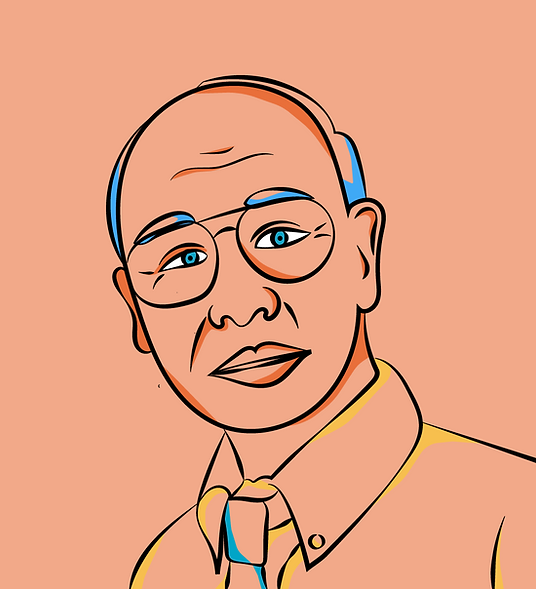
DR. TETSUYA "TED" FUJITA
Mr. Tornado
Episode 56
April 8, 2026
On June 24, 1975, Eastern Airlines 66 mysteriously crashed when attempting to land at JFK airport. Authorities called in Mr. Tornado to investigate. Aarati tells the story of Dr. Ted Fujita, who analyzed the destruction from severe storms and gave us a scale to quantify tornados.
Listen


Episode
Transcript
Aarati Asundi (00:12) Hi everyone, and welcome back to the Smart Tea Podcast where we talk about the lives of scientists and innovators who shape the world. I'm Aarati Jyoti Asundi (00:21) I am her mom, Jyoti. Aarati Asundi (00:22) And today, mom, I have a real twister of a story for you. And you won't get that reference, but our audience will, because they will already know the title. So they'll get my little joke. Jyoti Asundi (00:37) That's not fair. You know I don't like flying into things blind and everybody else knows the secret that I don't. Aarati Asundi (00:46) OK, we'll put you out of your misery. So today we are going to be talking about Dr. Tetsuya Theodore Fujita, who is also known as Mr. Tornado. Jyoti Asundi (00:57) Oh! Was he... Did he chase tornadoes? Aarati Asundi (01:01) I wouldn't say he chased them. He kind of came in after the fact. But yeah. Jyoti Asundi (01:08) All right. This sounds exciting already. Let me, buckle up for the tornado guy. Aarati Asundi (01:13) So quick fun fact before we get started. Did you know that the US gets over 1200 tornadoes a year on average? And that is about 75 % of all global tornadoes. Jyoti Asundi (01:28) Oh I did not know this. Aarati Asundi (01:30) Yeah. Jyoti Asundi (01:30) What? Wow, we in United States get 75% of all the global tornadoes? Aarati Asundi (01:38) Mm-hmm Jyoti Asundi (01:39) Why? Aarati Asundi (01:40) Great question. I looked it up. Because we literally have the perfect terrain for it. The middle of America is this huge flat area, like a lot of wide open grassland. And that, especially in the summer, can heat up very quickly. Jyoti Asundi (02:01) Yes. Aarati Asundi (02:01) And there's also access to moisture from the Gulf of Mexico. And so this warm, humid air rises over these flat terrains, and that creates the perfect conditions for thunderstorms and tornadoes to form. Jyoti Asundi (02:21) Oh wow, so this perfect trifecta of three different coming together to create a tornado friendly situation. Aarati Asundi (02:30) Yes. Yeah. Jyoti Asundi (02:32) I did not know this. I am excited for this story already. Aarati Asundi (02:36) Let's get into his story. So as part of my research, I was listening to an interview that Tetsuya Fujita recorded in 1988, and it was carried out by the American Meteorological Society's Oral History Project. The interviewer Richard Rotunno asked Tetsuya to introduce and I thought it was perfect introduction. He said, "I was born in Japan, of course, way back in October 23, 1920. I am 67.4 years old." Jyoti Asundi (03:10) Oh very precise. Aarati Asundi (03:12) Yes. So you can already tell he's a scientist and a meticulous one at that. Jyoti Asundi (03:18) Yes. Very clearly marking his time. Very nice. Aarati Asundi (03:21) Yeah. He was born in the Fukuoka Prefecture, which is on Japan's southernmost island Kyushu. Jyoti Asundi (03:28) Hmm, these words are very strange in my ears. Okay. Aarati Asundi (03:32) But I took Japanese for seven years. Jyoti Asundi (03:36) Yeah, that's true. That's true. Yes. Aarati Asundi (03:39) So yeah, so it's a little easier for me. I hope I do it justice. This was a long time ago that I took Japanese, but I do remember some of the things. Jyoti Asundi (03:51) Yes. Yes. Aarati Asundi (03:52) So Tetsuya was the oldest son and he had a younger brother and sister. His father Tomojiro was a grammar school teacher and his mother Yoshie was a housewife. His father hoped that Tetsuya would follow in his footsteps and become a school teacher also. And in fact, his younger brother became a teacher and his sister-in-law was also a teacher. Jyoti Asundi (04:18) Okay. Aarati Asundi (04:18) And so he's coming from this family of teachers and initially Tetsuya also thought that this would be his career as well. But from a young age, he was also fascinated by the natural world around him, particularly, "the angry face of our living planet". Jyoti Asundi (04:38) Hmmm all the things that are destructive to us. Like you said, the tornadoes, the cyclones, earthquakes. Aarati Asundi (04:45) Yeah, so there really tornadoes in Japan, but he did enjoy hiking to nearby volcanoes. Jyoti Asundi (04:53) Oh! Aarati Asundi (04:54) When he was in middle school, he accurately computed the time it took for the sun to do a full rotation by making a pinhole camera and observing the sunspots as they moved around the sun. Jyoti Asundi (05:06) Oh wow. Aarati Asundi (05:08) Another time he heard that a typhoon was coming And so he went up to the roof of his house to try and measure the wind speeds of the typhoon. But then his father freaked out and dragged him back down, yelling, that's the most dangerous place. Jyoti Asundi (05:23) Absolutely. He would have been blown away. Absolutely. Oh my goodness. Aarati Asundi (05:29) Just some insight into the way he's thinking, like, there's a typhoon coming. I should go to the roof. Jyoti Asundi (05:31) He's thinking, yes, yes. He's so immersed in excitement and curiosity that personal safety is not even on his radar at this point. Aarati Asundi (05:44) And then one more story that he told in his interview, which I think is helpful to understand his character, is that one year, their school teacher took them on a trip to visit a historic site called Ao no Domon. And it's located near this dangerous cliff that people would have to climb over in order to reach a shrine. And people would slip and fall on their way to worship and they would die. And so legend has it that there was this Buddhist monk who decided to dig a safe tunnel through the cliffs for people to use instead. And so this is that historic site. You can go and see this tunnel that has been dug. Jyoti Asundi (06:24) Okay, got it. Aarati Asundi (06:26) And it said that it took him 30 years. Most sources say 30 years, but when Tetsuya tells the story, he says 20 years. So anyway, took a long time to carve a 185 meter tunnel with just a small hammer and a chisel. Jyoti Asundi (06:42) I admire the Buddhist monk who had the patience to do this. But.... Aarati Asundi (06:45) Yes. That's the right answer. Yeah, so that's the right answer. So Tetsuya's teacher asked the class to write what lesson they learned from this story. And I'm sure patience or endurance or something is the correct answer. But Tetsuya wrote that the monk had been very wrong. Jyoti Asundi (07:05) Oh! Aarati Asundi (07:06) He said, "If I assume that it would take 20 years to dig the tunnel, The first 10 years, I would invent a tool. Then I would accelerate the job, and in the second 10 years, I would complete it. After my death, people would see both the tunnel and the tool. However, this monk worked very hard, but what he left behind was just the tunnel." Jyoti Asundi (07:29) Oh wow. So basically he's... in his words, you're supposed to work smart, not hard... or work smart and hard. And the monk had only done hard work and not smart work. That's what he's saying. Aarati Asundi (07:42) And also leave something so that other people can now carry forward the same work that you did. Who else has 30 years to dig a tunnel? Now, you know, give people the tool to do it faster. You, you know, benefited humanity even more. Jyoti Asundi (07:56) But the thing monk has already done a lot to benefit humanity. It's like, it's not enough. No, you didn't meet my standard. You need to do more. He has a high bar. ⁓ Okay. Aarati Asundi (08:08) He does. Unfortunately, on this occasion, he did not meet his teacher's high bar. He got a D on that paper. So, yeah. Jyoti Asundi (08:15) Make sense, make sense, because this is this is almost like entitlement, I want to say, but not quite. It's a little too much hubris. You met little kids who do that. They are bombastic sometimes kids and they say things like, you know what? he got scared of the tiger. Oh, if I had been there. I would have fought with the tiger I had been there, I would have done this. Aarati Asundi (08:43) It's like you don't know If you are actually in the situation, you don't know. Jyoti Asundi (08:46) And of course, those are the ones who run away first. But I'm just saying, I think my first idea would be to admire the monk. And hey, the monk was maybe not an engineer. He was not an inventor. Aarati Asundi (09:00) Yeah but this gives you little bit of insight into his thinking even at young age that this is what he was thinking. So I thought it was an important story. ⁓ Jyoti Asundi (09:10) Yes. Aarati Asundi (09:11) Unfortunately, both of Tetsuya's parents died when he was still fairly young. His father died in 1939, just before Tetsuya was getting ready to go to college. Jyoti Asundi (09:23) Yes. Aarati Asundi (09:24) Tetsuya had been accepted to both Hiroshima College for teachers and the Meiji College of Technology. But on his deathbed, Tetsuya's father told him to go to Meiji College, hoping that he would get some sort of higher learning there and become a high school teacher or some higher level of teacher than a grammar school teacher. Jyoti Asundi (09:46) Got it. Okay. Aarati Asundi (09:48) So with his father's blessing, Tatsuya enrolled in Meiji College. And this decision actually probably saved his life because if he had gone to Hiroshima... Jyoti Asundi (10:00) That's right. He would have been right there at the time of the atomic bomb. Aarati Asundi (10:04) Yes. Jyoti Asundi (10:05) That is unbelievable serendipity for him. Aarati Asundi (10:10) Yes, somehow his father's dying wish saved him. And then Tetsuya's mother passed away just two years later in 1941, leaving both Tetsuya and his siblings effectively orphans, although Tetsuya is technically 20 or 21 at this time. Jyoti Asundi (10:28) But you're still a young child at that time. Aarati Asundi (10:29) So young. Jyoti Asundi (10:30) 20-21 is just barely passing for adult at that point. Aarati Asundi (10:34) And now you have two young ones who are kind of dependent on you now. Jyoti Asundi (10:38) That's right. Reminds me of my own dad who had faced the exact same situation. He was, I think, barely 24 when his dad died and all his younger siblings were dependent on him. And the youngest one was five years old. And my dad basically raised him as if he were his own son. Very hard. Aarati Asundi (10:59) I can't imagine. But when I was reading about Tetsuya, I was also thinking about my grandfather, especially when he said he's 67.4. I was like, that's something grandfather would say. Jyoti Asundi (11:11) Yes, I had the same thought, but I didn't want to digress, but this is just too coincidental. It's too many things are happening, which are very... and they belong to the same generation also, very similar generations. So yeah, very reminiscent my dad, yes. Aarati Asundi (11:27) Yeah, so Tetsuya also had to work very hard supporting both himself and his younger brother through college. His fees were partially covered by a scholarship, but he still had to get a tutoring job at night to make ends meet. However, he managed to continue his education. He majored in mechanical engineering, which he attributes to that monk story because he's like, hey, I better figure out how to build those tools if I'm going to be so flippantly saying... Jyoti Asundi (11:54) But that's good. I mean, that's a very positive point because he's putting his work where his mouth is. He's not just finding criticism about other people. He's actually doing something about it. That's good. That's good. Aarati Asundi (12:08) But he also started assisting a geology professor by drawing topological maps of volcanoes in the area so that you could see what the land would look like if you had a bird's eye view. So this was another big part of his education that will come in handy as we go forward. Jyoti Asundi (12:27) Yes. Aarati Asundi (12:28) He finished his BS in 1943 and after graduating, he stayed at the college for a few years an assistant professor in physics, teaching students and instructing them in the lab. Jyoti Asundi (12:40) Which is actually, I mean, I don't want to keep changing the topic, but that's exactly what your grandpa did as well. Aarati Asundi (12:46) Oh really? Jyoti Asundi (12:47) Completed college and became a assistant professor, teaching professor, teaching assistant, yeah. Aarati Asundi (12:52) Nice, there you go. Jyoti Asundi (12:53) And in physics, yeah, he did the same thing. Aarati Asundi (12:56) Amazing. Jyoti Asundi (12:56) Yeah, yeah, it's almost like twin souls there. Aarati Asundi (12:59) That's so cool. But then there was a major life-changing event on August 6th, 1945. The US dropped an atomic bomb on Hiroshima. And then three days later, on August 9th, the US came in with a second bomb. Jyoti Asundi (13:16) Yes, Nagasaki. Aarati Asundi (13:17) Yes, but this bomb was actually initially intended for the city of Kokura, which was a major hub of transportation and munitions manufacturing. Jyoti Asundi (13:27) I see. Aarati Asundi (13:27) And Kokura City was just three miles away from Meiji where Tetsuya is. Jyoti Asundi (13:33) Oh he is escaping death by a cat's whisker, Aarati Asundi (13:37) Yeah, narrowly. Jyoti Asundi (13:37) Just by hairline, changes of plan and he's kind of... Aarati Asundi (13:43) Yeah, So what saved his life actually is that morning over Kokura, there was a thick layer of fog that was covering it, obscuring the bomber's view. Jyoti Asundi (13:54) I did hear that. I did hear that. Yes. Aarati Asundi (13:56) Yes. So they diverted to Nagasaki instead. Jyoti Asundi (13:59) Yes. Wow. How life changes in unexpected ways. Aarati Asundi (14:08) So after the bomb blasts, Tetsuya and his students volunteered to help study the aftermath of the blast in either place. Nagasaki and Hiroshima were both equidistant from Meiji. And so they were sent to Nagasaki to kind of help understand what they could about these unprecedented weapons and their effects. So based on the damage that he saw, Tetsuya was able to triangulate exactly where the bomb had dropped and calculate that it had exploded 520 meters above the ground. He also created maps of the damage and studied how the wind affected the fallout patterns. And he noticed an interesting pattern: that all the trees and the structures that were just below, like exactly below where the bomb had dropped, those structures were still standing. But starting 300 to 600 kilometers away or 180 to 370 miles away, the trees and the buildings had been kind of blasted outwards with the debris falling away from the bomb's epicenter. Jyoti Asundi (15:17) Okay so the epicenter is okay, but the it's an outward explosion. Aarati Asundi (15:22) Yeah, there was like charring you know, fire just below, the actual like almost like a shockwave. He realized that if you looked at the damage from above, you would see that all of it seemed to radiate outwards from a central point like a giant starburst. Jyoti Asundi (15:38) Yes. Okay. Aarati Asundi (15:40) And what was most interesting to him was that some of this damage was reminiscent to damage that he had seen after big storms and typhoons. And so this raised his curiosity again about severe storms. And in 1946, he got a government educational grant to study weather science. Jyoti Asundi (16:01) Ah! I see, I see. So he's looking at the bomb and he's like, what happened here is very similar to what is happening with tornadoes and things like that. And so I'll go study those and get a sense of what's happening in this big... Aarati Asundi (16:17) Yeah, it roused his curiosity again, that childhood curiosity that he had about standing on the roof in the middle of a typhoon and... Jyoti Asundi (16:24) Absolutely. Yes. Aarati Asundi (16:24) ...the destructive forces of nature. It kind rose his interest in that again. Jyoti Asundi (16:30) Yes, yes, I mean, I go on YouTube a lot and I see storm chasers who just hop into their vehicle and start chasing tornadoes and he sounds like one of those and it's very reminiscent to me of your story that you told of Pliny the Elder. Aarati Asundi (16:49) Oh, yeah. Like go towards the volcano that's Jyoti Asundi (16:50) Everybody else... Yeah, mean, everybody else is running away Mount Vesuvius and its impacted areas. Whereas Pliny takes a boat to go towards it. And it just reminds me of that as well, where here it is, this big atomic bomb has fallen on Nagasaki and he volunteers himself to go there. And the more I think about it, the more I feel, wait a second, there was radiation still lingering around. Aarati Asundi (17:21) Mm-hmm. And they did say that some of his students did feel nauseous and sick due to the radiation. He himself was okay, but yes, a lot of his students did feel the effects of the radiation. Jyoti Asundi (17:34) Yes. In today's world that was a lawsuit waiting to happen. Aarati Asundi (17:38) But they didn't know. Yeah, they didn't know, so. Jyoti Asundi (17:41) Correct. Correct. Aarati Asundi (17:42) Yeah, so he gets this government educational grant to study weather science and he starts studying thunderstorms in his area, measuring the frequency of the lightning bursts, wind speeds, barometric pressure changes and cloud formation. In 1947, Tetsuya decided to pursue a PhD. He contacted a professor at Tokyo University, Dr. Shiono, who agreed to be his thesis advisor. And he decided to pursue meteorology so that he could keep studying storms, but also because apparently it was cheaper than studying physics. And I guess that's because like physics, he would need a lot of expensive equipment. But for meteorological studies, all he really needed was a pen and paper. Jyoti Asundi (18:28) Interesting. A physics laboratory would need more equipment, I guess. Because initially my thought was that physics was a more in demand field and... Aarati Asundi (18:38) That might be true too. Yep. Jyoti Asundi (18:39) Yeah, and meteorology, there was nobody joining and therefore things were better but you're right it's equipment related probably. Aarati Asundi (18:46) And that's also what he said. He said that all he needed was a pen and paper to study meteorological science and so he was like, okay, that works for me. And he's on a tight budget. He's trying to put his younger sibling through college too. Jyoti Asundi (18:59) Younger siblings, yes, younger siblings through college. Yeah, yeah money matters. Aarati Asundi (19:05) Yeah. He started taking classes at the local weather service, and through them, he got access to a weather station on Saburi Yama's mountaintop. And that weather station actually really was just a small wooden cottage with instruments that studied wind speeds and changes in atmospheric pressure during thunderstorms. Jyoti Asundi (19:27) Okay. Aarati Asundi (19:28) So nothing fancy. I was really envisioning this big, like, ooh. with computers and all this stuff. But he's just like, no, was just a wooden shack on top of mountain. Jyoti Asundi (19:35) Yes, this is just yeah Aarati Asundi (19:39) He also studied typhoons, which are more common in Japan. And he's watching these storms and he's collecting this data. And he's meticulously drawing out what's happening on these topological maps. So if you were to look at the storm from above, the high pressure points would be over here. The heaviest rainfall would be over there. And then he's like mapping the storm over time. So as it's moving in the direction of the wind. He's creating these like, you know, time stamped maps that are very detailed, very information dense maps. ⁓ Jyoti Asundi (20:16) Incredible that he was able... nowadays the computers just generate these maps and you see the storm floating above or even the know ⁓ the cold wave is coming in or something like that and they show the heat wave coming in or whatever and he's doing all this by hand making the calculations happen and then figuring out timing it out that's a lot of work okay. Aarati Asundi (20:42) Yeah, and they were more detailed than anybody had ever created before. But honestly, no one really cared that much about his work. It wasn't like, groundbreaking or anything, according to a lot of people. They were like, whatever. But one day, he was presenting his work at a conference. And after his talk, another attendee came up to him. So listen to how many things have to connect here. So this other attendee is at the same conference as him, heard his talk, came up to him, and this other attendee said that he had been at a nearby US Air Force radar base, and he found an article in the trash can, and Tetsuya's talk apparently reminded him of what he had read in that article that he had pulled out of the trash and told Tetsuya, go check that out. Jyoti Asundi (21:33) Oh interesting. OK. Aarati Asundi (21:35) Yeah. So the article that had been in the trash can was called Non-Frontal Thunderstorms. And it was written by an American professor, Dr. Horace Byers from the University of Chicago. Dr. Byers was in charge of the Thunderstorm Project, which had been set up by the US in 1945, because thunderstorms were a huge hazard for pilots, which became abundantly clear during World War II. And so the project was set up to help predict how thunderstorms are forming and their wind patterns so that we could keep our pilots safe. And it was using the latest advances in satellite imagery to do this. So Tetsuya gets a hold of this paper by Dr. Byers. And he realized that a lot of the work that Dr. Byers was doing was very similar to his own work. And so he started slowly, painstakingly translating his own work into English so that he could send it to Dr. Byers and set up a correspondence. Jyoti Asundi (22:36) Oh goodness, he is a really hard worker and for so many little pieces to come together for something to be in the trash can for somebody who understands this to actually read it and then be in the same conference where Tetsuya was talking about and connect the two and say here you guys need to talk to each other. Beautiful. Aarati Asundi (23:00) It's just remarkable. So Tetsuya sent Dr. Byers a paper that he wrote in 1950, where he predicted that thunderstorms, which, as we mentioned in the very beginning of this, are formed by powerful drafts of warm air rising. So Tetsuya predicted that these thunderstorms would also have equally powerful downdrafts of cool air right in the middle of the storm. Jyoti Asundi (23:28) Ah! Aarati Asundi (23:30) And so he sent this prediction to Dr. Byers that this is what I'm observing and this is what I'm thinking. And Dr. Byers read this and was just amazed at this insight that's coming from just one PhD student. He said, "We spent millions of dollars to much money have you spent to end up with this kind of downdraft? I said, I made a micro analysis and maybe spent $100 at most. He said, come over right away." Jyoti Asundi (24:04) These intuitive leaps of faith that these scientists are able to make, and then it just becomes transformative for the field that they are studying. And that's where the groundbreaking work comes from. It's not throwing money at it. It's actually just that being able to see the big picture and say, here, I think this is what must be happening. Aarati Asundi (24:25) And just observing all these meticulous maps that he's drawing, he's noticing that, hey, it looks like something's happening there in the middle of the storm. It looks like the wind is moving kind of downwards. It looks like the rainfall is heavier there. That would make sense, actually, that there's a downdraft happening there. And these Americans are spending millions of dollars to discover the same thing that he's discovering by observation, basically. Jyoti Asundi (24:52) That's right. That's right. And again, it's bringing back to my mind bomb at Nagasaki and how he observed that the center was safe. So there must have been a similar pattern going on there. Aarati Asundi (25:08) Yeah, so we're going to come back to that idea. It's all going to come together beautifully. You'll see it all. Jyoti Asundi (25:11) Oh goodness. Okay, okay, okay. This is so exciting. Aarati Asundi (25:16) Yes. SO Dr. Byers said come over right away, but Tetsuya said he needed to finish his PhD first. So hang on. So Dr. Byers waited patiently until Tetsuya finished his degree. And then in 1953, he invited him to spend one year at the University of Chicago with his team. So Tetsuya got on board a flight to America with $22 in his pocket, which was the maximum he was allowed to travel with due to strict controls on Japanese currency after the war. Jyoti Asundi (25:45) Yeah. Those... there were a lot of rules like that. I also remember something like this. I don't remember the number, when I came to America, I couldn't bring a lot of money. I didn't have a lot of money so there was not... Aarati Asundi (25:58) India and the US weren't even at war or anything. Yeah, there was nothing. Yeah. Jyoti Asundi (26:01) Yeah, exactly. We weren't even fighting. We had been friends, but that was not it. No, there were a lot of, no, there were restrictions from the Indian side as well that because they didn't want... Aarati Asundi (26:11) Yeah. And I think this was also from the Japanese side. Yeah. Jyoti Asundi (26:15) Yeah, because these are countries that have been affected so badly right by the war so now they want... it's basically that Protection. Don't take our money and run away with it because what's the money? Even when Tetsuya is going to go to America. What money is he going to take with him? He's going to take Japanese money converted into dollars. That means Japanese money is leaving and going away and they don't want to see that so yeah there's lot of restrictions like that. 22 dollars in 1953 you said... Aarati Asundi (26:47) It's equivalent to about $268 today. Jyoti Asundi (26:51) Okay, Brave man. Yes, okay. Aarati Asundi (26:52) Yeah. What are you going to with that? Jyoti Asundi (26:55) Yeah, maybe, get a couple of meals the way inflation is rising right now. Aarati Asundi (26:58) At the most. So he starts working with Dr. Byers' team in Chicago. And after that year was up, Dr. Byers was like, why don't you stay maybe just one more year? And he ended up staying for two and a half years before he went back to Japan. But he only stayed in Japan for nine months because Byers called him back again in 1957. Jyoti Asundi (27:22) Obviously his brilliance was just amazing. So Dr. Byers is like, you are my guy. Come back and work with me. Aarati Asundi (27:26) Yes, come back. ⁓ How do we make this permanent? How do we make this happen? And so in 1957, Dr. Byers positioned him as a research professor, which was not a faculty position, but still it took Tetsuya just three years to reach the rank of full professor. Jyoti Asundi (27:47) Wow. But I have to say, I'm impressed because I think they are just coming out of World War II. They were not too friendly with the Japanese. So I can see that there would be discrimination in some places. And yet his brilliance is recognized. So I commend that. I am respectful of that kind of non-discriminative thought process. Aarati Asundi (28:11) Yeah, and I think great scientists are like that. They understand that great science can come from anywhere. And it... politics and science are two different things in most cases, you know, Jyoti Asundi (28:23) No, I'm thinking of the other stories that you said of Vivien Thomas and things like that. And just because of color or race, they kind of are discriminated against. And that is not happening to this that's a bit heartening, actually. So a positive good feeling. Aarati Asundi (28:39) Yes, it's a very positive story. Jyoti Asundi (28:41) Yes. Aarati Asundi (28:42) In the US, Tetsuya adopted the middle name started going by Ted Fujita, which was easier for Americans to pronounce. Jyoti Asundi (28:50) Yes, I've seen that being done. A lot of Asians do that. Just get a simpler name that sit better on Western tongue. Aarati Asundi (29:00) Yeah. And so I think from now on, I'm just going to call him Ted because he was called Ted for his professional life. Jyoti Asundi (29:09) Okay. _______________________________________________________________________________________ Aarati Asundi (29:17) Hi everyone, Aarati here. I hope you're enjoying the podcast. If so, and you wish someone would tell your science story, I founded a science communications company called Sykom, that's S-Y-K-O-M, that can help. Sykom blends creativity with scientific accuracy to create all types of science, communications, content, including explainer videos, slide presentations, science, writing, and more. We work with academic researchers, tech companies, nonprofits, or really any scientists. To help simplify your science, check us out at sykommer.com. That's S-Y-K-O-M-M-E-R.com. Back to the story. _______________________________________________________________________________________ Aarati Asundi (30:03) He came back to the US on June 20, 1957. And it was just in time for a devastating tornado which hit the town of Fargo, North Dakota. The thing was no one could really quantify how bad the tornado had been. People didn't know how big it was compared to other tornadoes. They knew it was devastating, but they didn't know what the wind speeds were. They didn't know how destructive it was compared to other tornadoes. And so after the fact, after the tornado, Ted goes to North Dakota and he starts piecing together clues from the destruction like a detective at a crime scene. And so then you just imagine this Japanese man who's walking around your town all of a sudden in Fargo, North Dakota. So all the residents are curious. They're like, who the heck are you? And as soon as they heard that he studied tornadoes, they started giving him photographs that they had taken of the storm as it was approaching. And then local TV stations sent him footage that they had captured of the storm. Jyoti Asundi (31:11) Yes. Aarati Asundi (31:12) And so he's able to use all of this, you know, the damage that he's assessing and the photographs and the TV footage. He's able to put together this of simulation of exactly how the tornado formed and its path through Fargo and the intensity and wind speeds of the tornado at different points. So he's able to just reconstruct the storm's entire life cycle. Jyoti Asundi (31:39) The entire, yeah. It's practically like, you know, detectives walking around a crime scene and everybody comes out and says, I know a piece of information. Here you go. then the detective is able piece, scene together. Aarati Asundi (31:53) Yeah, and he was even able to make a motion picture using all the photographs that he had collected showing the storm's movement. And it's like the first motion picture of a tornado, basically. Jyoti Asundi (32:05) Of a tornado. That is- that is really something. He collected a lot of information. Aarati Asundi (32:11) And there's so much math that was involved, I'm sure also, because, you know, people are living and getting these pictures from different points around the city. So he has to figure out like, okay, you took this picture from this side of the tornado. You took that picture from that side of the tornado, but five miles further than this guy. So it's just like, oh my gosh, so much, so much math, so much, you know, calculations you have to do. Jyoti Asundi (32:31) Yes. So much is going on, that's right. Aarati Asundi (32:36) So he puts all of this together and he published his findings in a landmark paper in 1960 called A Detailed Analysis of the Fargo Tornadoes of June 20th, 1957. In this paper, he introduced several terms that scientists still use today, like wall cloud, which is the large cloud where the funnel of the tornado forms. Tail clouds, which kind of look like tornado funnels, but are more like horizontal and move into the storm. And they can be used as an indicator for potential severe storms. And then also collar cloud, which is kind of like a ring of clouds that appears around the tornadoes wall cloud. Jyoti Asundi (33:17) This is almost like, you know, establishing the Richter scale for measuring earthquakes. That's the level of complexity and detailed analysis that he has created. It's like somebody or even, know, Celsius figuring it out. This is how you measure temperature. Aarati Asundi (33:35) You're getting a little ahead, but yes, exactly. Jyoti Asundi (33:39) Yes, but the points are zinging in my brain. I'm making those connections. He's at that level practically. He's establishing the field basically. Aarati Asundi (33:48) He is. But the other thing that he notices, he notices something strange, that many times he would see that one house had been completely swept away down to its foundations, but the house next door looked completely untouched. Jyoti Asundi (34:03) I've heard of this also. Aarati Asundi (34:05) Yeah. So he was like, how is it possible that this, you know, huge massive tornado comes by, but only does very selective damage? And he begins to theorize that maybe in Fargo, instead of a single large funnel, the damage that he was seeing was actually more consistent with several smaller funnels that kind of traveled together in a group around a central core vortex. Jyoti Asundi (34:35) And the unity of the multiple funnels creates the illusion of a big tornado, but it's actually multiple miniature tornadoes all traveling together Aarati Asundi (34:46) So he got a lot of pushback for this idea. He said, "People take lots of pictures of a nice tornado, which is one funnel. How can I say that there is a small vortex running around, dancing around? That's what my aerial photos and survey indicated. I never saw the vortex, but not to have seen something does not mean that such a thing does not exist. I don't want to identify who argued about it, but the argument came from all directions to Chicago. They said, you're dead wrong, but I still pursued my concept. And whenever I went out, I tried to look for or take pictures of tornadoes, but unfortunately I hadn't seen any tornadoes at the time. My idea was actually recognized by a TV station. Lots of TV stations told me that they saw some several fingers hanging down, but they couldn't tell if the cloud was rotating or not. It may not have been rotating. All of a sudden, when we had a super outbreak of tornadoes, April 3rd to 4th, 1974, Indianapolis TV stations sent me a beautiful 16 millimeter picture, a movie that showed my suction vortices dancing around and I went to the spot to find exactly what I expected. One house was damaged. The one right next to it was standing, untouched. Houses located in between the path of the suction vortices left standing confirmed everything." Jyoti Asundi (36:16) Wow, wow, everything coming remarkably beautifully together. These TV stations have the equipment in place already to capture the exact images that prove what he's talking about. And his idea of saying, just because you didn't see it doesn't mean it doesn't exist and that's such profound concept in so many different walks of life, actually. And you miss a lot in life if you don't make those more intuitive leaps. Aarati Asundi (36:49) Yeah, and so basically, you know, he had proposed this idea in 1960 in his paper, and then he had to wait until 1974 for footage that proved him correct. So for 14 years... Jyoti Asundi (37:03) He has to fight the naysayers. Aarati Asundi (37:05) Yeah. But still, during that time, he had been highly successful in his other work, and he really became known as the forefront storm damage detective. As the long quote that I just said, alluded to, he had progressed to flying around areas that had been hit by tornadoes and surveying the damage aerially. In 1964, he became director of the Satellite and Mesometeorology Research Project at the University of Chicago. He also, on a personal level, got U.S. citizenship in 1968. Jyoti Asundi (37:43) Okay. Aarati Asundi (37:44) He also got married to a woman named Sumiko Yamamoto, went by Suzie for the Americans. Not a lot is known about her or their relationship. They were super private about their personal life. In that interview for the American Meteorological Society, Ted says he met her through a teacher's meeting because Sumiko had also come from a family of teachers. Jyoti Asundi (38:07) Nice. Aarati Asundi (38:08) But I had a hard time pinning down exactly when they were married. Some places said 1945, other places said 1969. Jyoti Asundi (38:17) Hmmm. That's a wide range. Aarati Asundi (38:17) Some sources said that he had been married before, but got a divorce in 1968 and then married Sumiko in 1969. So there's like, you know, but there's no indication of who his first wife was, if that's even true that he was married for like, so I don't know. It was all kind of very confusing. Jyoti Asundi (38:37) Especially with him having migrated into this country and things could, who knows what the records were like that he left back home and ⁓ yeah, this is, this is hard to chase and figure it out. Aarati Asundi (38:48) Yeah, and I don't think he talked about it that much. But one thing at least that everyone agreed on was that Sumiko was an amazing partner for him. In the interview, Ted said, "We had a little problem because when we got married, she thought she married a teacher. I told her she had married a teacher, but she found out that I was flying around on all these especially dangerous flights. I tried to hide it, but she found out through somewhere and she said, you are living dangerously." Jyoti Asundi (39:17) Yes. Aarati Asundi (39:19) But it seems that after she found out, she would regularly go with him to storm damage sites and they would both fly around together in these small Cessna airplanes and examine the damage from above. She took photos of the damage and became his partner in the field basically, helping him document everything. Jyoti Asundi (39:40) Wow, true soul mate. This is so funny because she's like, I thought I was marrying a teacher and you turned out to be this danger chaser. Okay, I'm gonna come join you. That sounds good. I get it. Aarati Asundi (39:48) Okay, yeah, pivot. I get it. Yeah, alright. Jyoti Asundi (39:52) Yeah, let's do it together. That's our together time. That's the hobby we'll do together. Aarati Asundi (39:55) Yeah, if you're going to live dangerously, then I guess so am I. Here we go. Jyoti Asundi (39:58) Yes, yes, that is so cute. Aarati Asundi (40:01) Yeah. After years of collecting data and analyzing damage from countless storms, Ted, with a lot of help from Sumiko, developed a scale for rating the intensity of a tornado. Jyoti Asundi (40:14) Ah! That's why you were saying to hold on because yeah, he did develop a scale. Aarati Asundi (40:19) Yes. In 1971, he presented the Fujita Tornado Scale or F scale, which categorized storms from F0, which were mild storms with winds of 40 to 72 miles an hour... Jyoti Asundi (40:34) Wait! 40 to 72 miles an hour is a mild storm? OK. Aarati Asundi (40:39) Mm-hmm. Yes, just a little bit of destruction, not much. Yeah. Jyoti Asundi (40:43) Just a bit of destruction. OK. All right. That's a mild one. OK. Aarati Asundi (40:47) And the scale went up to F5, which were highly destructive storms that wind speeds of 261 to 318 miles per hour, which is strong enough to lift trucks and cars and throw them around, strong enough to tear down houses. Jyoti Asundi (41:05) Absolutely. Absolutely. Yes. Yes. Aarati Asundi (41:09) So before if someone had said, wow, that was really strong storm, didn't really mean anything because what does that mean? But now if someone said that was an F4 storm, people knew exactly what that meant, how strong it was and how much damage could be expected. Jyoti Asundi (41:24) But hang on. When you say they are able to rate the storm and call it F0 to F5, do you have a scale to measure it on or some instrument to measure it on? Or are you just... Aarati Asundi (41:37) Not...I don't think not during the storm but after the storm... Jyoti Asundi (41:40) But you are deriving what the storm intensity was based on the damage it has left behind. Aarati Asundi (41:46) Correct, yeah, correct. Jyoti Asundi (41:47) OK. All right. Aarati Asundi (41:50) And this scale became invaluable in not only understanding which tornadoes would be most dangerous, but also in helping develop ways to forecast them so that people could be warned and get to safety when a big one was coming. Jyoti Asundi (42:03) Yes. Aarati Asundi (42:03) So although the scale itself did not anything, it was instrumental in helping people after the fact assess the damage and then look back at what had happened. Jyoti Asundi (42:16) Correct. Aarati Asundi (42:16) And figure out like, okay, what happened before that F4 storm so that next time when we see that again, we know what's coming. Jyoti Asundi (42:24) Especially because you're able to predict the expected wind speed, for example. I don't know what else they could predict beforehand, but the amount of rain associated with it, the amount of wind associated with it, and based on prior experience and on that now that new F scale that he has created, they can tell them, OK, this is going to be really bad. Step away, guys. Aarati Asundi (42:47) Yes. Over the years, Ted kept refining the scale as he learned new information. And on February 1st, 2007, the National Weather Service upgraded the scale to the Enhanced Fujita Scale or EF scale to, quote, reflect better examinations of tornado damage surveys so as to align wind speeds more closely with associated storm damage." And I looked into that, I was like, what the heck does that even mean? And basically, it sounds like construction quality improved over time. Jyoti Asundi (43:20) That's a good point. Aarati Asundi (43:20) And so buildings could actually withstand heavier winds than before. So the scale was no longer accurate. Jyoti Asundi (43:26) Yes, so you have to tweak the scale to understand what exactly is going on. Aarati Asundi (43:33) Yeah. So by now Ted has really earned the nickname Mr. Tornado. Whenever there was a severe storm, he was called on to assess the damage and lend his scientific expertise. He was also very charming and so news reporters loved interviewing him. He built a tornado simulator at the University of Chicago that he invited guests to come and see while he talked to them about tornadoes, you know. Jyoti Asundi (44:00) Yes. Aarati Asundi (44:02) What else? Jyoti Asundi (44:03) Show and tell. Aarati Asundi (44:05) Then in 1975, something really weird happened. A passenger flight, Eastern Airlines Flight 66, which was flying from New Orleans to New York City, suddenly crashed as it approached JFK Airport. It killed 113 of the 124 people that were on board. Jyoti Asundi (44:29) Oh. Aarati Asundi (44:30) The crash happened at the same time that there was a severe thunderstorm approaching JFK. And although the aircraft had been warned of severe wind shifts, it was cleared to land because no one had realized that there was any extreme danger. Dozens of planes had landed safely just before. And actually, even after this plane crashed, other planes that were coming in continued to land safely. So what happened to this one plane? Why did it crash? Jyoti Asundi (44:58) Yes. Aarati Asundi (44:59) So the airline calls in Mr. Tornado... Jyoti Asundi (45:01) Of course, yes, yeah, Aarati Asundi (45:01) ...to assess the damage and see if he can figure out what went on. Jyoti Asundi (45:06) He will piece the information together to figure out what happened. Aarati Asundi (45:09) Mm-hmm. So Ted comes to look at the plane wreckage and he realizes that he's seen this type of damage before. He's seen it when he's been examining the damage after other storms, but more importantly, he's seen it when he was studying the damage in Nagasaki after the atomic bomb. Jyoti Asundi (45:28) Oh he's connecting those big pieces. Okay. Aarati Asundi (45:32) Mm-hmm. It's that same starburst pattern where there's a central area with very little damage and then further out the damage seems to radiate outwards. Jyoti Asundi (45:43) Ah! Aarati Asundi (45:44) And he had also seen this starburst pattern in other storm damage areas. He had seen like little mini starbursts, like mini atomic bombs had gone off after big storms. And so he had been noticing this starburst pattern has been appearing randomly in different places. And he had been forming this hypothesis in the back of his head. But now at this plane crash, he feels confident enough to put forth this hypothesis that... so remember way back he had figured out that thunderstorms had downdrafts? Jyoti Asundi (46:21) Correct. Yes. Aarati Asundi (46:22) Yeah. So he thought that if you had a very strong downdraft, so a big gust of wind that blows directly downwards, the wind would hit the ground and then radiate outwards almost like a bomb falling. Jyoti Asundi (46:36) I see. Yes. Aarati Asundi (46:38) And he theorized that it was just this very small localized which he termed a downburst or a microburst. And he theorized that that is what had hit the plane, sending it crashing to the ground. Jyoti Asundi (46:53) Aha. Aarati Asundi (46:54) Unlike a down draft, which as the word draft implies is slower and can kind of dissipate as it's moving downwards, a down burst is fast and explosive and it hits the ground and it can blast apart buildings, it can make airplanes crash and actually can even sink ships potentially. There was a yacht called the Bayesian that was owned by a British entrepreneur, Mike Lynch in August, 2024 that sank partly due to a downburst, we think. Jyoti Asundi (47:27) Oh wow. Aarati Asundi (47:29) And I feel like I remember hearing this story, too, that some millionaire's yacht sank super suddenly, but all the other yachts in the marina were untouched. And so people were just like, what the heck? It must have been sabotage or.. Jyoti Asundi (47:43) That's right. Aarati Asundi (47:43) ...something happened to that one yacht. Jyoti Asundi (47:45) Yeah, to parse out that kind of, yeah, it's hard to figure out why one out of so many. Yeah, but this reminiscent of the tornadoes as well, where you have one standing, but the next house is not. Aarati Asundi (48:01) Yes. Exactly that, the microburst could just damage a very small area and leave other nearby areas untouched. Jyoti Asundi (48:10) Very localized. Aarati Asundi (48:11) Yes. Again, Ted faced a lot of pushback from scientists saying that they had never seen a microburst, so that can't be real. But this time, he was backed up the pilots who said that they had experienced pretty much exactly what Ted had said a microburst would feel like. But either luckily in those cases, the pilot had been at a high enough altitude to recover from the downburst or they had just heard reports from survivors of other crashes. Yeah. Jyoti Asundi (48:40) Yes, So it's not like if you have never seen it, it didn't happen kind of thing. No, we are seeing it. This is right. Aarati Asundi (48:46) Yeah, we felt it. Yeah. Jyoti Asundi (48:47) Yeah, we felt this. Yeah. Aarati Asundi (48:49) And thanks to his work, airlines made changes to their operations, including mandatory pre-flight checks for wind shear during storms that, you know, has probably saved so many lives. I can't even count how many. Jyoti Asundi (49:02) Absolutely. Yes. Big monumental changes to the procedures and flight patterns and things like that. That's huge contribution to humanity. Aarati Asundi (49:13) Very, very big. He also in order to prove to his naysayers that he was right, he tried very hard to capture a microburst on camera, but it took him almost seven years. Jyoti Asundi (49:28) Oh the first one took 14 years. Now this one is taking seven years. Okay. Aarati Asundi (49:32) But that day that he managed to capture it was June 12th, 1982. And it was actually the day that Ted witnessed for the first time a tornado while it was happening. So he was 61 at this point. And up until now, he had always just been studying the aftermath of these storms. Jyoti Asundi (49:57) Yes. That's interesting. The tornado guy is seeing his first tornado ever at the age of 61. That's almost ironic. Aarati Asundi (50:06) Yes. Yeah so he was near Bennett, Colorado, and he noticed a tornado was coming down. It turned into an F3 storm, and he was able to witness and capture evidence of three microbursts. He was absolutely thrilled, and he described it as, "one of the best tornado data sets ever collected." Jyoti Asundi (50:32) Each one has something that thrills them in life. For him, it's a tornado. Okay. A good F3 tornado. Very thrilling. Aarati Asundi (50:43) Yes, very thrilling. I got some good data from that. That was excellent. Jyoti Asundi (50:47) Fun guy. Aarati Asundi (50:49) Ted continued studying tornadoes for pretty much the rest of his life. In the 1988 interview when he was 67.4 years old, remember.... Jyoti Asundi (50:59) Yes. Aarati Asundi (51:00) He was asked whether he was considering retiring and going back to Japan. But he said, although he liked to joke about retirement, "the true story is that I'm a US citizen. I'm very proud of it. I have lots of professional friends, young and old. All of the conflicts and all kinds of different ideas I went through, but all of them are good friends. I will spend the rest of my life here and that's my life." Jyoti Asundi (51:26) That's beautiful. This is such recurring theme among immigrants because I feel like that too. And we have... it's like you have a birth mother and an adopted mother, that kind of thing. So America becomes the adopted mother and you're very grateful to the love of the birth mother and the love of the adopted mother. Very fortunate to have that kind of love from multiple places and to feel comfortable all different environments. It's very enriching, actually. Aarati Asundi (51:57) And I think he kind of knew that if he went back to Japan, he wouldn't have the same kind of professional life as he did in America. Jyoti Asundi (52:07) Yeah, each mother gives a gift to the child. So Japan gave him birth and gave him those beginning roots. But then here in America, he got all the tools that he wanted to... and he was able to develop professionally. Absolutely. Why do you have to choose? Can't you, like I said I consider myself a global Desi. That's what they call people who are from India who have gone and settled abroad. Desi means somebody from India. But I'm a global Desi. Indian at heart, I belong to the entire world. You're limitless, basically. There are no limitations. There are no boundaries. You belong to the world. And the work that he did, enriched the entire world. It wasn't like he only benefited Japan or only benefited America. He was looking at humanity. Aarati Asundi (52:57) And that actually segues really nicely into what he said next. He was asked if there was anything else he wanted to study. And Ted said he wanted to continue studying severe storms, but take his research global and try to figure out why other areas of the world like China, which also seemed to be good breeding ground for tornadoes on paper, actually had much weaker storms than the US for some reason. Jyoti Asundi (53:23) Hmm. Aarati Asundi (53:24) So he wanted to continue looking into this. Jyoti Asundi (53:27) Yes. His thought process seems to resonate with me quite a lot. It's like scientific curiosity, it doesn't matter who doesn't... you don't have to it down with a name and a place and a nation and things like that. It's like this is happening here and this is happening here. I want to study it all and figure out why nature is so fantastic. Aarati Asundi (53:48) Mm-hmm. Jyoti Asundi (53:49) Beautiful. Aarati Asundi (53:50) He continued to teach lectures on climatology and headed the Wind Research Laboratory at the University of Chicago from 1988 until his death on November 19, 1998, at the age of 78. After his death, StormTrack Magazine and Weatherwise both published tribute articles telling his story. And in 2020, PBS aired a series called American Experience and Ted Fujita was the subject of one of the documentary films in the series called Mr. Tornado. Jyoti Asundi (54:26) Lovely. That's such a wonderfully positive story. Aarati Asundi (54:30) Yeah, it was a good one. Jyoti Asundi (54:31) All contributions were acknowledged. Right away, his genius was recognized by Dr. Byers in Chicago. Aarati Asundi (54:40) Well first he dodged death like twice from the atomic bombs. Yeah. Jyoti Asundi (54:43) Amazingly, this is like the cat with nine lives kind of thing. He's just missing that by hair, literally. Aarati Asundi (54:51) Yeah. And then after that, some guy picked an article out of a trash can and told him about it. Jyoti Asundi (54:56) Seriously. And so when he makes a connection, the other guy is thrilled. He's like, let's be together. We'll build synergy. Come along, come along. And he does and then whatever he does, the entire field is recognizing him and his genius. And that is very positive. Because we do go into dark stories. We just came off of a dark story of Alice Stewart and everything. So I'm just like happy that this is a very strongly positive one. Aarati Asundi (55:23) Yeah, this was a fun one. Yeah, this was a very fun one. Jyoti Asundi (54:25) Yes, absolutely. Thank you. Thank you for a good fun, fun story here. Aarati Asundi (55:32) Thanks for listening. If you have a suggestion for a story we should cover or thoughts you want to share about an episode, reach out to us at smartteapodcast.com. You can follow us on Instagram, TikTok, and Blue Sky @Smartteapodcast and listen to us on Spotify, Apple Podcasts, YouTube, or wherever you get your podcasts. And leave us a rating or comment. It helps us grow. New episodes are released every other Wednesday. See you next time!

Sources for the Episode
1. Lerner, Louise. "How one scientist reshaped what we know about tornadoes". The University of Chicago. October 22, 2020.
2. Oral History Interview With T.T. Fujita. 1988. Interview by Richard Rotunno, 25 Feb. 1988, https://n2t.org/ark:/85065/d7hd7sx6.
3. Searcy, Maureen. Singing for the pine trees are stormy winds. The University of Chicago Magazine. Updated October 27, 2025.
4. Bamzai, Anjuli S. "Asian American and Pacific Islander Heritage Month Spotlight: Dr. Tetsuya 'Ted' Fujita." American Meteorological Society Blog, 6 May 2024, blog.ametsoc.org/2024/05/06/asian-american-and-pacific-islander-heritage-month-spotlight-dr-tetsuya-ted-fujita/. Accessed 19 Aug. 2024.
5.The Thunderstorm Project in Ohio - 1947. National Weather Service.
6. Byrne, Kevin. Meet the man whose name is synonymous with tornadoes. AccuWeather.
7. Butler, Kirstin. The Remarkable Mind of Mr. Tornado. American Experience. PBS. May 4, 2020.
