Support the show with a monthly or one-time donation!


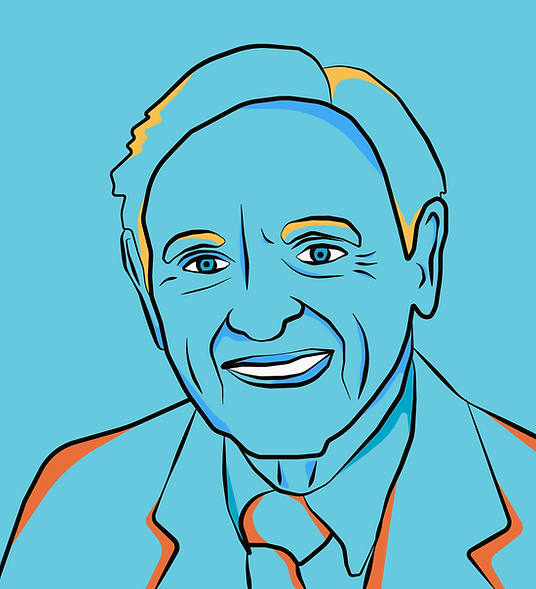
DR. JOHN B. GOODENOUGH
Lithium-ion Batteries
Episode 57
April 22, 2026
From laptops to cell phones to electric cars, our modern world runs on lithium-ion batteries. Aarati tells the story of one of the scientists who won the Nobel Prize in Chemistry for creating lightweight, rechargeable, batteries.
Listen


Episode
Transcript
Aarati Asundi (00:13) Hi everyone, and welcome back to the Smart Tea Podcast where we talk about the lives of scientists and innovators who shaped the world. I'm Aarati. Jyoti Asundi (00:22) I'm her mom, Jyoti. Aarati Asundi (00:23) Are you ready for a pop quiz? Jyoti Asundi (00:27) No, I'm never ready. Alright, alright, alright, hit me and everybody can see how stupid I am. Go for it. Aarati Asundi (00:28) No, no this is the definition of pop quiz. You're not supposed to be ready. it's only a one question pop quiz. When do you think that electric cars with a rechargeable battery was invented? Give me a year. Jyoti Asundi (00:50) Rechargeable battery... I would say maybe like 1970, the concept might have started And then we finally got something after 2000. Yeah. Aarati Asundi (01:02) That's what I would have estimated too. I would have guessed 1960, 1970 at the earliest and then it took a while. Jyoti Asundi (01:09) Yeah, because the concept, for the concept, I mean, and then after that, to come out of the laboratory and then for things to actually happen would have been much longer. Aarati Asundi (01:21) Well, I shocked to learn that the real answer is 1880s. Jyoti Asundi (01:29) No way! Aarati Asundi (01:30) Yes. Jyoti Asundi (01:30) It took more than a century after the concept was hit upon to actually execute it? Aarati Asundi (01:36) Yeah, so in 1859, there was a French physicist named Gaston Planté, who developed the first lead acid battery, which was technically the first rechargeable battery. And the 1880s, people started using that lead acid battery to build electric cars, rechargeable electric cars. Jyoti Asundi (01:58) Okay. Aarati Asundi (01:58) So actually, electric cars were built in the 1830s. Jyoti Asundi (02:04) Oh no! Electric cars, electric... Aarati Asundi (02:07) Electric cars that had a battery but it wasn't rechargeable. Jyoti Asundi (02:11) This is incredible. Alright. Aarati Asundi (02:14) Yeah, so this to me begged the question of why, why the heck did it take so long? The answer is largely because the batteries that were created in the 1880s were very heavy. And the furthest you could travel was about 50 miles before you had to recharge them. And it would take hours and hours to recharge. Meanwhile, gas was cheaper and more energy dense, so you could go further with just a little bit of it. Jyoti Asundi (02:43) Yes. Aarati Asundi (02:43) And then in 1908, the Ford company came out with the Model T car, which was the first car that was really built to be affordable for the middle class. Jyoti Asundi (02:53) Yes. Aarati Asundi (02:53) And it made everyday transportation more accessible. It was easy to maintain. And it also used gas instead of electric. And so electric cars kind of fell by the wayside as more infrastructure more technology around gas was being built, gas engines. Jyoti Asundi (03:11) I see. I see. Aarati Asundi (03:13) And so the biggest breakthrough that has made electric cars, rechargeable electric cars, more accessible today is the invention of the lithium ion battery, which did happen in the 1980s. Jyoti Asundi (03:28) I see. Got it. So that was the transformative point for the other side the electric car because they could store more energy so the car could run longer and the recharging wouldn't take that long. Interesting. Aarati Asundi (03:43) Yes, they were lighter, you could drive further, they charge way faster. And so that's what made it more accessible for electric cars to be introduced to the market now. Jyoti Asundi (03:54) Oh this is you're setting us up for a very nice story. I can tell. Aarati Asundi (04:01) Well, considering that this episode is coming out on Earth Day, I thought it was very appropriate that we should talk about the story of the scientist who ultimately won the Nobel Prize in Chemistry for inventing the lithium ion battery. And his name is Dr. John Bannister Goodenough. Jyoti Asundi (04:22) Goodenough! Goodenough. I like that. I'd like to be "good enough" at something. Aarati Asundi (04:25) Yes. I'm sure there were so many jokes about his last name. You won the Nobel Prize. Are you "good enough" now? Yeah. Jyoti Asundi (04:35) I can see the name itself to humor. Aarati Asundi (04:41) Yes, yes. And he's a funny guy too. I was listening to some interviews with him and he just has a very easygoing, carefree. He has the greatest laugh, he has this kind of like, "hahaha" kind of laugh that he does and it's just so fun to listen to him. Jyoti Asundi (04:57) I am excited. Aarati Asundi (04:58) So let's start with his childhood as we always do on this podcast. Jyoti Asundi (05:00) Yes, yes, it's interesting. It is absolutely crucial, actually, to sketch out the entire life because you see where they came from, the challenges and traumas and advantages that they carried over from childhood to adulthood, Aarati Asundi (05:16) Yeah, and you know, considering he became and how easygoing his nature is, you wouldn't think of it, but he kind of had a bit of a rough childhood. Jyoti Asundi (05:27) Oh. Aarati Asundi (05:28) So John was born in Jena, Germany on July 25th, 1922. Both of his parents, Erwin and Helen, were Americans, but his father was at Oxford University finishing up his PhD in the history of religion. But during the summers, he liked to take trips to Germany and Rome, and so John was born presumably on one of these trips. Jyoti Asundi (05:53) Ah I see. Aarati Asundi (05:54) However, it kind of sounded like Helen did not want to have John. And Erwin kind of insisted that she go through with the pregnancy. And so because of that, he was kind of this unwanted child, that both the parents never really bonded with very much. ⁓ Jyoti Asundi (06:14) That is sad actually. That feeling of being rejected by their own mom. Aarati Asundi (06:20) And it wasn't just John. I think both of his parents were kind of aloof in nature, they weren't very nurturing of their kids. So it wasn't just John, but John particularly was kind of not very wanted and not able to bond with his parents. Jyoti Asundi (06:36) Very sad. Everybody should not procreate just because they can. There should be some kind of parental classes required and some kind of assessment that you need to pass. Can I be a good parent? That would solve a lot of problems in this world. Aarati Asundi (06:55) It was a bit unfortunate. Once his father graduated, the little family, which now consisted of his parents, Erwin and Helen, then John and his older brother Ward, all moved back to the United States. Erwin got a position at Yale University, and so the family settled down in Woodbridge, Connecticut. And John got two more younger siblings, a younger brother named James and a sister named Hester. Jyoti Asundi (07:21) So he is number two out of four. Aarati Asundi (07:24) Correct. Jyoti Asundi (07:25) And yet the parents did not want... it was only they did not want him or they just did not want children. Aarati Asundi (07:32) From what I read, the parents themselves were very mismatched. And so was a lot of friction within their own relationship. Jyoti Asundi (07:39) And yet they managed to make four kids. Aarati Asundi (07:42) Yes, but then they never really took care of their kids. They were not very nurturing. And I think ultimately they did end up getting a divorce after 20 years or something. Jyoti Asundi (07:53) After making four kids and putting them through the torture, they said "we'll actually behave like adults now and divorce from each other." Ok. Aarati Asundi (07:59) And get a divorce. So John didn't really talk about his parents much, but he did say about his childhood, "My older brother Ward and I shared the north bedroom. Ward was the leader. I was the tag along when he would tolerate me." Jyoti Asundi (08:17) So sweet. Aarati Asundi (08:18) "My world was my dog, Mack. In the nearby meadows and woodlands, there was so much life to discover and so much wonder to experience. I like collecting trophies, whether it was butterflies, seashells, or animal skins." Jyoti Asundi (08:33) So he made a little world for And he found way to connect to his own inner happiness. Isn't that such a lovely and resilient way of looking at life? You have to find your way to your own inner happiness, irrespective of what's outside in the world. And that's precisely what he did. It's like, my inner happiness and peace does not depend on an external being or an external object or another person. It's within me and I'm going to connect to it. Aarati Asundi (09:04) Yes. He was a very resilient kid. The other major struggle that he had though as a child was dyslexia. And that was not well understood at the time and it went undiagnosed. His teachers called him a backwards student. And so he had to struggle a lot in school because of that. Ultimately, though, he went through a lot of hard work. He taught himself how to read and write well enough to take the entrance exam for Groton School, which was a private boarding school in Massachusetts where his older brother Ward went to go study. And he passed and he got a scholarship. And again, he struggled there a lot due to his dyslexia. And because of that, he ended tending to prefer to study math more than English and history and the subjects where have to read and write, which makes a lot of sense. Jyoti Asundi (9:59) Absolutely. He is conquering it all. Aarati Asundi (10:03) Yeah, he's making the best of it. And he does work very hard at it. He, you know, works his dyslexia. But it's so tough that they didn't know what it was and he had to give himself his own tools, you know? There was no one to teach him what to do and how to learn. It's tough. I can't imagine. Jyoti Asundi (10:24) There is a Hindi movie, called Taare Zameen Par and the English translation of that title is Stars on Earth. And basically it deals with the story of a dyslexic kid who father is constantly berating because he does not seem to understand at all anything. And this... that kid also is exactly like this. Seeing the beauty of nature through his own perspective. Aarati Asundi (10:53) Wasn't he like a brilliant artist or something that kid ended up being like this... Jyoti Asundi (10:56) Exactly, exactly. He was an amazing artist but his teachers and his parents could not understand him until finally somebody comes into his life to dyslexia and all that. So if a person doesn't have to closely deal with dyslexia, yes, that child does, look like he might be stupid or not caring enough. So I am thinking about that kind of struggle that John had to probably deal with, especially when even the term dyslexia was probably unknown at that time and he just had to fight it all by himself. There was no psychologist or no teacher to come to his rescue to say, yes, this is what you're dealing with. This is a known thing. There are others who are like you. You're not stupid because of that. Aarati Asundi (11:46) Yeah. And there are tools to help you succeed. Jyoti Asundi (11:48) He had to invent his own tools, had to find his own path, had to basically forge his own way. Aarati Asundi (11:54) But he did. Groton overall was very good for him because it gave his life a lot of structure. And he worked very hard and slowly his grades improved. And eventually he graduated magna cum laude at the top of his class. Jyoti Asundi (12:09) That's quite a trajectory. This is turning out to be a beautiful story. So inspirational. Aarati Asundi (12:17) Yes, already. In 1940, John enrolled as an undergraduate Yale University with a major in math. He vowed never to rely on his parents for money again. And although he did have some financial aid, he also spent his summers earning money by tutoring to pay for his living expenses. Jyoti Asundi (12:35) So when you say that, it makes me think there was quite a bit of problems right there. When you say something like, he vowed never to rely on his parents ever again for money. Aarati Asundi (12:47) I think he was just like they never gave me anything. They never, you know, nurtured me. They didn't help me study. They didn't, care really about me. So I don't I don't need these people in my life. So, okay. Jyoti Asundi (12:57) That's fine. Okay. Got it. Aarati Asundi (13:01) John's time at Yale was influenced a lot by World War II. Here's a very deep quote for you to unpack. He said, "I began to understand that any meaning to life is not to be king of a castle, but the significance and permanence of what we serve. Is service to ourselves, our tribe (ethnic group or family) or to our country, the highest service. In a time of war against evil, service to the cause of a more just world and therefore to our war effort was meaningful. But the destructive means of war is always an appalling waste on all sides. I struggled to find a meaningful calling beyond the war. Perhaps it would be in science. So for my sophomore year, I decided to enroll in the philosophy of science and in physics." Jyoti Asundi (13:54) Wow. This again harks back to what is taught over and over again in our culture. And that is when all means of peace have been tried and they have failed, then for the sake of righteousness, war must happen. However, war is the greatest crime against humanity. Because it leads to hunger and famine and the youngest and the oldest are left there in a state of vulnerability because that's what war leaves behind. But unfortunately for the sake of righteousness, when you have tried everything else, we have to go to war sometimes. Aarati Asundi (14:41) And I also found it deep already that he's thinking about what is my purpose here? What is my duty on earth? What should I be doing? Jyoti Asundi (14:50) Yes, what should I be aligned with? Is it my tribe? Is it my country? Or is it righteousness? So there's three levels there already that he's evaluating. Aarati Asundi (15:02) Yeah. And so he ultimately lands on science. Science is why I've been put here on this earth. Jyoti Asundi (15:10) Because science is truth and that's the most closely aligned to righteousness. Aarati Asundi (15:15) And it's what can help humanity the best in his view. Jyoti Asundi (15:19) He's a very, very evolved soul actually. Aarati Asundi (15:22) He really is. Already as a sophomore in college. Jyoti Asundi (15:25) Some people are ancient souls. He has understood where to align right away, very early on. I wish there were more people like that, especially during these times when we seem to go to war willy-nilly for all sorts odd purposes, especially... I think many of the wars started today for ego stroking rather than anything else. Aarati Asundi (15:47) Oh yeah, ego power trips, that's all they are. Jyoti Asundi (15:50) Yes, yeah. And that feels really so sad when you think about it in the context of how deeply John thought about it. Aarati Asundi (15:57) Mm-hmm. Yeah, because I think he really understood how appalling it is and how much human life is wasted. Jyoti Asundi (16:04) Because really, actually, if you think about it, When you create an atmosphere of uncertainty and disharmony, human beings are not able to function at their highest level because all their brain power goes towards those surviving bad times. Aarati Asundi (16:20) Yeah, and then rebuilding instead of just moving forward. Jyoti Asundi (16:22) Correct. Yeah, so the best of all human beings comes out when we have peace and harmony But instead of that, we are devolving to the point where we are like animals trying to survive through a crisis. And in that survival, a lot of the good human traits are lost Aarati Asundi (16:43) And so John is like, I am not going to get caught up in this. I'm going to try and stay away from this war and try to go into science. And he decided that if he ever had the opportunity to go to graduate school, he would study physics. Jyoti Asundi (17:00) Nice. Aarati Asundi (17:01) He was also heavily influenced by one of his math professors, Dr. Egbert Miles. After the attack on Pearl Harbor, many of John's friends were leaving the university to sign up for the Marines. But Dr. Miles advised him to sign up for the meteorology department at the U.S. Army Air Corps instead. By doing this, it allowed John to stay at Yale for one more year, during which time he was able to finish his degree. So he got his BA in math. And if you calculated it took him two and a half years to do that. Yeah. So... Jyoti Asundi (17:37) A dyslexic kid is turning out to have that level. Oh lovely, fantastic. Aarati Asundi (17:44) Yeah. It just shows like... dyslexia has nothing to do with your intelligence. You know? Jyoti Asundi (17:48) Absolutely. Aarati Asundi (17:48) He's a brilliant guy. Jyoti Asundi (17:50) He found the tools, he figured it out and moved forward. Aarati Asundi (17:54) So then in February 1943, John was called for active duty. After a few months of orientation and training, he was sent to a weather station in Houlton, Maine, where he was put in charge of making weather forecasts to clear planes for their journeys. By the time the war had worked his way up to being a captain. Then in the spring of 1946, he gets a telex, which is kind of like an old timey email. And it contained orders that he was to go to Washington, DC. So it turned out that the army had discovered some unspent money and decided to use that budget to send 21 army officers through graduate school in physics or math. And that same math professor, Egbert Miles, had put in John's name up for consideration for the scholarship. Jyoti Asundi (18:45) Wow. Nice. Aarati Asundi (18:47) Yeah. So that professor is really taking care of John. Jyoti Asundi (18:50) Yes he must have recognized this guy is brilliant. He should be given every opportunity Aarati Asundi (18:56) So as part of this program, John was sent to the University of Chicago and he fulfilled his dream of signing up for physics. Jyoti Asundi (19:04) Fantastic. Aarati Asundi (19:06) When he enrolled, apparently one professor said to him, "I don't understand you veterans. Don't you know that anyone who has ever done anything significant in physics has already done it by the time he was your age? And you want to begin?" But as you will see is a theme with John's life. For him, it is never too late to do anything. Jyoti Asundi (19:29) I like that. But at this point, I'm thinking still, give me a second, how old is he at this point? Aarati Asundi (19:36) So 1946, so he's 24. Jyoti Asundi (19:40) So he's, at this point he's 24 years old and his professor is saying that whoever has done anything in physics has already accomplished it by the age of 24. Aarati Asundi (19:52) Yeah, so I mean, if you look at it, I think it was kind of true. We did a story... Arpita, my co-host before, she did a story about Ettore Majorana who like, you know, disappeared in his mid-20s, but he was already like studying under Enrico Fermi. He had made all of these, you know, leaps in particle physics. So I think there was a precedent for very young people to be making these big breakthroughs in physics at the time. Jyoti Asundi (20:21) I do understand that. I do understand that there were young people making great breakthroughs, but it feels unfair to tell a young 24 year old... At 24, I did not even know what I wanted to do with my life. Aarati Asundi (20:35) Oh yeah, me neither. Yeah. Jyoti Asundi (20:35) Forget about... yeah so I'm still trying to figure it out at this age. To be told at the age of 24 that you should have already accomplished whatever you wanted in this field is little too much, I think. Aarati Asundi (20:50) Yeah, I think so too. Jyoti Asundi (20:50) But let's move forward. Yes, that just hung me up. I'm sorry. Let's go forward. Aarati Asundi (20:54) I mean, it is ridiculous. It's kind of ridiculous. Jyoti Asundi (20:56) It's really does feel ridiculous, Aarati Asundi (20:58) And I'm really glad that John did not let that dissuade him. Jyoti Asundi (21:01) Yes! Aarati Asundi (21:03) And also I was like, there was a war dude. Like, did you not... Jyoti Asundi (21:06) Yes, yeah, it's funny. Aarati Asundi (21:07) Did you miss the whole war that like half the young men went to go serve in the war? Like, yeah. Jyoti Asundi (21:13) And didn't come back and he's now back and trying to go forward in graduate school. For somebody to tell a 24 year old young man that they should have already accomplished what they wanted to and they are too late already, that whole concept offends me a bit. Aarati Asundi (21:28) But that didn't deter him. And actually, if you think about it, John didn't have that strong of a background in physics. But luckily, the University of Chicago's program accepted students from all sorts of backgrounds, including international students who often had had a different curriculum than the one that was taught in the US. And so because of that, the first couple of years of the program, John was being taught the fundamentals, making sure that everyone's on the same page. And he was being taught by some of the greatest physicists in the field, including Edward Teller, who was the father of the hydrogen bomb, and Enrico Fermi, who won the Nobel Prize in 1938 for his work in nuclear and particle physics. So really big names. Jyoti Asundi (22:24) These are his teachers and guides and mentors. Aarati Asundi (22:15) Yes. Jyoti Asundi (22:16) Good environment. Aarati Asundi (22:17) After four years, the graduate students had to sit for a 32-hour exam that took place over four days to determine whether they would be allowed to continue for a PhD. So basically a four-day qualifying exam. Jyoti Asundi (22:32) Hmmm... rigorous. Aarati Asundi (22:32) Yeah, I think my qualifying exam was like two hours. So it's, yeah... Jyoti Asundi (22:38) Yeah. Aarati Asundi (22:39) I was just like, oh my god, 32 hour exam? Jyoti Asundi (22:42) Yeah but think about it. It was probably all scrunched up into those four days, I think, because you did give a lot of examinations also. It was just kind of spread a bit. Aarati Asundi (22:52) I don't know how, but anyway. In 1951, John took the exam and he did well enough to earn his master's degree, but not well enough to go on for a PhD. Six months later, he was allowed to try again and it was so difficult that he almost gave up after the third day. But then he took a break, he played a game of softball, relaxed a bit and he figured, nothing to lose if I go through with the last day of exams. And to his shock, he was ultimately given the right to go ahead and pursue his PhD. Jyoti Asundi (23:27) What a gift for mankind that they did not truncate his education there. Aarati Asundi (23:31) But I love this. I was like, you know, look, He didn't pass it on his first try with flying colors. You know, like this is the story that so often we hear and it's like, no, he struggled, man. He kind of failed the first time. And he persisted and he, took a break. He thought he was going to fail, but then he took a break, relaxed his brain, you know. I like this kind of story where it's like, not this brilliant, he just flew through it, no problem. Jyoti Asundi (23:58) It's not only your brilliance that gets you through sometimes it is just sometimes your dogged determination as well. Aarati Asundi (24:06) Yes. In graduate school, he also met his wife, Irene Wiseman, who was also a graduate student. She was studying psychology and children's cognitive development. When asked how they met in an interview, John said, "I was living in the International House and she was living in the International House and the girls lived on one side and the boys in another. And we met in the dining room table in between." And then he gives that like tickled laugh that he does, you know, just thrilled that we met in between the two in the dining room table. Jyoti Asundi (24:44) So sweet. Aarati Asundi (24:45) And then he says, "She didn't blow me over because she was glamorous. She wasn't glamorous. She was just herself. She was very comfortable with herself. And so it was very easy for me to make a friend. You see, love has to do with friendship." Jyoti Asundi (25:01) Nice. Love started with friendship. That's the best kind, the most enduring and the lasting kind. Aarati Asundi (25:07) Yeah. In his final year of graduate school, John's thesis advisor, Professor Clarence Zenner, had moved to the Westinghouse Research Lab in Pittsburgh. And so John spent his final year in Pittsburgh as a research assistant while he was writing up his dissertation. Jyoti Asundi (25:24) Okay. Aarati Asundi (25:25) He successfully defended and got his PhD in 1952. And then he applied to different university positions. And many of the positions were offered to him, but the one that most appealed to him was a position as a research engineer at MIT at the Lincoln Laboratory, which was funded by the Air Force to build America's first air defense system using computers. Jyoti Asundi (25:50) Hmmmm the computers are making their way in now. Aarati Asundi (25:54) Yes. Jyoti Asundi (25:55) This the time when each computer was about as big as one room. Aarati Asundi (25:58) Exactly. Huge, huge computers. So off to MIT he goes and he starts working on computer memory storage. So we aren't computer scientists, but I'm going to make a brief detour into computer science and hope I don't butcher this. So let me know. Jyoti Asundi (26:17) If somebody figures whatever mistakes you have made, we very much welcome input. Aarati Asundi (26:22) Yes, leave us a comment. But as far as I understand it, computers store information in binary, which is made up of zeros and ones. In very early stage computers, the way this information was physically stored was on paper punch cards or large rotating drums. But that meant that if you wanted to access one little bit of data, you had to go through this laborious process of scanning through a bunch of paper punch cards, or you had to wait until the drum looped back around before you could access the one little piece of data that you actually needed. And so it made it incredibly slow and it made rewriting the code very difficult. Jyoti Asundi (27:07) I can see that. Aarati Asundi (27:09) So then a guy named Jay Forrester at MIT came up with the idea for magnetic core memory, which was one of the earliest versions of random access memory or RAM. Jyoti Asundi (27:22) RAM, yes. Aarati Asundi (27:23) So basically what it was was a bunch of tiny magnets in the shape of rings called ferrite cores. And these were arranged in a grid. Each core had a wire looped through it. And depending on the direction that you flowed electricity through, you could flip the direction of the magnetic state of the ferrite core. So flow electricity through the magnet clockwise, for example, that might correspond with zero. And if you reverse the flow of electricity, you flip the polarity and that would correspond with one. And because it's arranged in this flat grid, it's very easy to access any random bit of data that you want. And you can easily rewrite the code by just flipping one magnet in the opposite direction switch it from a zero to a one or vice versa. And you can do that without upsetting any of the other magnets around it. So when John got to MIT, he started working with Jay Forrester, who had now progressed to, instead of using this grid, he started using a thin strip of magnetic tape that was split into tiny sections. But Jay was frustrated at how long it took for the magnetization to flip direction, which made the computer slower and less reliable and harder to program. Jyoti Asundi (28:48) Okay. Aarati Asundi (28:49) So John started studying transition metal oxides, which are compounds made of oxygen bound to a transition metal. So that chunk of metal elements in the middle of the periodic table. Those are transition metals. Jyoti Asundi (29:06) Okay. Aarati Asundi (29:10) And you bind them to oxygen, you get transition-metal oxides. And these were very promising for computer memory storage because they were very good at switching magnetic states. And they're also very good electric insulators. So in the metal oxides that he was studying that had magnetic properties, the metal atoms are actually ions, meaning that they have an unpaired electron that can interact with each other. Jyoti Asundi (29:34) Yes. Aarati Asundi (29:35) So the metal oxide will consist of magnetic ions and oxygen atoms bonded together in some sort of geometric 3D lattice shape. And scientists were working on the assumption that the interactions between the magnetic ions would determine the strength of the material as a magnet overall. Jyoti Asundi (29:56) Yes, Aarati Asundi (29:56) So they were assuming if you have magnetic ions in this metal oxide that interacted very strongly, you would have a strong magnet and vice versa. But sometimes this didn't seem to make sense because based on the structure of the metal oxide, they would see that the magnetic ions were very far apart, which should mean that the interaction would be weak and the material would be a weak magnet. But then they would look at it and find that's not the case. Actually, it's a really strong magnet. But how is that possible? Yeah. Jyoti Asundi (30:29) So why? Correct. Okay. Why is that happening? Aarati Asundi (30:32) So John studied this and he found that actually the magnetic ions were interacting through the oxygen atom that's in this structure. And this interaction is called a super exchange. So rather than how far apart the magnetic ions were, it was more important how they were arranged in the lattice. So whether they were arranged in straight lines or whether they were at 90 degree angles. And then how many unpaired electrons they had was also important. Jyoti Asundi (31:03) Got it. Aarati Asundi (31:04) And so based on this information, you could predict the magnetic properties of the material lot more accurately. Jyoti Asundi (31:10) So the relative position of the free metal ion with respect to the oxygen that was also more important. The arrangement was equally important, not just distance, but also the arrangement of ions and also how far they are from the oxygen. All that is also playing a role. Aarati Asundi (31:30) Yeah, so distance didn't really seem to make a difference. The more important difference was whether the metal ions were arranged in rows in 180-degree or if they were at 90-degree angles, and how many unpaired electrons they had. But how far away they were from each other didn't really seem to matter because they were interacting through the oxygen. Jyoti Asundi (31:54) Got it. Aarati Asundi (31:55) So that's why it's called this super exchange, that it's going through this oxygen. And so distance doesn't really matter. The oxygen is facilitating this interaction. Jyoti Asundi (32:05) Okay. Aarati Asundi (32:06) This set of rules is now called the Goodenough-Kanamori rules after himself and a Japanese physicist Junjuiro Kanamori, who mathematically justified John's rules. And this work was foundational for building computers with faster, more reliable memory for about two decades until semiconductors took over. Jyoti Asundi (32:31) Wow. Okay. Aarati Asundi (32:32) So he really helped the field. Jyoti Asundi (32:34) Yeah. Aarati Asundi (32:36) In 1961, he published his first book, Magnetism and the Chemical Bond. In the mid-1960s, John transferred to the Solid State Division, where he started studying magnetic properties of metal oxides under high pressure. But in 1970, Congress put a new law into effect, saying that all the research that was government-funded, had to have some application for the government. There had to be some benefit. Jyoti Asundi (33:04) I see. Aarati Asundi (33:04) So he was working in the Lincoln Lab, which is funded by the Air Force. But the work that he was doing of metal oxides under high pressure and their magnetic properties, that was more fundamental research. It didn't have any direct Air Force applications. And so he was forced to let go of that project. So he's now casting around for like, what else can I do? And he landed on the new hot topic, which was renewable energy. _______________________________________________________________________________________ Aarati Asundi (33:40) Hi everyone, Aarati here. I hope you're enjoying the podcast. If so, and you wish someone would tell your science story, I founded a science communications company called Sykom, that's S-Y-K-O-M, that can help. Sykom blends creativity with scientific accuracy to create all types of science, communications, content, including explainer videos, slide presentations, science, writing, and more. We work with academic researchers, tech companies, nonprofits, or really any scientists. To help simplify your science, check us out at sykommer.com. That's S-Y-K-O-M-M-E-R.com. Back to the story. _______________________________________________________________________________________ Aarati Asundi (34:27) So in 1970, so this is now more than 50 years ago. Again, we're coming to that like, how is it taking so long for people to do anything in this space? So in 1970, it was already clear that our reliance on oil was a problem, not only from an environmental point of view, but also in 1973, the Arab oil embargo where the Arab countries cut off oil exports to the US caused a huge crisis and made the US realize how dependent we are on foreign countries for oil. Jyoti Asundi (35:03) So the highest argument that you can make the best argument not relying on fossil fuels is good for the entire environment and therefore the planet and all the biodiversity that we share the earth with. But if that is too intangible for you and you are more concerned about personal welfare, then here is yet another argument: that your country's dependence on fossil fuels makes the country reliant on another power, a foreign entity for its energy resources. And yet 50 years later, are still caught in the same wheel. We'd rather start some weird wars and destabilize that whole area instead of... Aarati Asundi (35:51) Yeah, so the problem is that oil is a very reliable, energy-dense, stable form of energy. You can store it for months, you can transport it very easily, but with renewable energy like solar or wind, you run into the problem of intermittency. So during the day, for example, with solar, when the sun is out, it's very easy to capture the energy and use it. But when the sun goes down at nighttime, you're out of luck. And same thing with wind. When wind stops, power is gone. So one possible solution then is to capture that solar energy or wind energy and store it as chemical energy in a battery. Jyoti Asundi (36:35) Yes. Aarati Asundi (36:36) But that technology hadn't really been worked on. And so that's why we were still so heavily dependent on and still are so heavily dependent on fuel. And now we're just maybe starting to see a transition. Jyoti Asundi (36:50) I think if you funding and resources into that kind research, there will be development there, and we are seeing that slowly. But ⁓ it's always the same story. You something that is working very well for now, so kick that more difficult option down the road. We don't want to deal with it. Let the next generation deal with it. Aarati Asundi (37:12) Yeah. So that's why it took so long. But now in the 1970s, when John is casting around for another project, he lands on renewable energy, in part because people are making this realization that, hey, we need to fund alternative forms of energy. But also around this time, the idea of electric cars making a revival. In 1966, Ford came out with a batter which had a sulfur cathode, which is the positive end of a battery, and a sodium anode, which is the negative end. And this battery was much lighter and more energy dense than the lead acid batteries from the 1880s that we were talking about at the beginning of this episode. Jyoti Asundi (37:55) Yes. Aarati Asundi (37:56) So there was some promise that, hey we have this lighter battery. We could use it maybe for cars. The problem was it ran at super high temperatures. So while combustion engines operated at around 90 degrees Celsius, the sulfur sodium batteries operated at 300 degrees Celsius. Jyoti Asundi (38:14) That creates a dangerous condition. Aarati Asundi (38:17) Yes, and even more dangerous is that when sodium gets this hot, it can catch fire if it comes into contact with the air. So really not great for putting under your hood and driving around. Yeah. Jyoti Asundi (38:28) Absolutely, makes sense, makes sense, yeah. Aarati Asundi (38:31) But still, this idea, the marketing kind of took off about this idea of electric cars. And then that in combination with the Arab oil embargo meant that batteries were making this resurgence. They're sexy again. And so John is like, this seems like a great new direction to pursue. The only hitch was that despite all the real world applications this work would have, it still had no benefit for the Air Force. They were like, this is energy research. This is not Air Force related research. Jyoti Asundi (39:04) A very narrow tunnel vision here, because really once you have something the fundamental level, the applications can be humongous. There can be so many diverse applications, not just the Air Force, but everywhere it would be applied. But okay. Aarati Asundi (39:20) And at this junction in his life, he was like, politics, messing with science, it's not a good combination. Jyoti Asundi (39:28) Never, never a good combination. Aarati Asundi (39:30) So although he didn't really want to leave, he realized that if he was going to study renewable energy and batteries, he had to leave the Lincoln lab. And he actually ended up leaving the US altogether for some time. He got a position at the University of Oxford as head of the inorganic chemistry lab. Around the same time that John is making this move, another scientist at Stanford named Stan Whittingham announced that he had discovered how to make the first rechargeable lithium ion battery. Jyoti Asundi (40:03) Okay. Aarati Asundi (40:04) So this battery had lithium aluminum as the anode and titanium disulfide as the cathode. Jyoti Asundi (40:11) Okay. Aarati Asundi (40:13) At the molecular level, titanium disulfide has a layered structure. And so when the battery was being discharged, lithium ions would travel from the anode and get stored in between the layers of the titanium disulfide cathode. So I was imagining it kind of like a parking garage that has many levels and the lithium ions are like the cars that are coming in and parking in between in each level. Jyoti Asundi (40:41) That's a nice analogy, yes. Aarati Asundi (40:43) Stan Whittingham coined this as intercalation. So the ions are being intercalated into the titanium disulfide. When the battery was being charged, the lithium ions would leave the layers and go back to be deposited on the lithium aluminum metal anode. Jyoti Asundi (41:03) okay. Aarati Asundi (41:04) This was a huge breakthrough and attracted worldwide attention. These batteries were very light and worked at room temperature. So it had great promise for lighter, smaller electronics, electric cars, the field was opening up. There was a fatal flaw though, in Whittingham's design. When the lithium ions moved back to the lithium aluminum anode when the battery was recharging... Jyoti Asundi (41:32) Right? Aarati Asundi (41:33) ...it wouldn't deposit evenly. And so that meant that over time, these spikes called dendrites would start to form on the lithium anode. And over time, the spikes would pierce through the separator in the battery, causing it to short circuit. Jyoti Asundi (41:48) Yes. Yes, that makes very good sense. Got it. Yeah, we are not able to control the deposition back. Aarati Asundi (41:56) This also caused the battery to catch fire or explode sometimes. And if they tried to substitute the lithium aluminum anode with another lithium metal alloy, it would quickly degrade with all the repeated discharging and recharging. So it's like, he's got a great idea. We're on the cusp of something. How do you perfect it? It's not quite as good as it could be. Jyoti Asundi (42:20) Yes. Aarati Asundi (42:21) And this is where John comes in. So as we know from his time at MIT, he is an expert in metal oxides. Jyoti Asundi (42:29) Yes. Aarati Asundi (42:30) And he knows that metal oxides form a lattice crystal structure that are perfect for storing and releasing lithium ions, just like the titanium disulfide cathode in Stan Wittingham's battery. Jyoti Asundi (42:43) Yeah. Aarati Asundi (42:44) But unlike titanium disulfide, they have the potential to be more stable and work at higher voltages. So he and some of his post-docs at Oxford go through all the possible metal oxides and their properties to see which one would work the best. And they land on cobalt oxide. Jyoti Asundi (43:02) Okay. Aarati Asundi (43:03) It's very structurally stable. And so it could give up and take back lithium ions many times without collapsing or degrading. And it would operate at higher voltages than titanium disulfide, which means more power can be delivered to devices. Jyoti Asundi (43:18) Okay. But the lithium side is remain. Aarati Asundi (43:21) Correct, yes. Jyoti Asundi (43:21) You're switching out the cathode side you are not switching out the anode side yet. Okay. Aarati Asundi (43:25) Yes, and so that is a key problem or point because when he published this work in 1980, people didn't recognize how brilliant it actually was. And I think part of that is because he had just developed a better cathode or a better parking garage. He hadn't dealt with the problem of the dendrite spikes being formed. Jyoti Asundi (43:45) The redeposition. Yes. Aarati Asundi (44:48) And so when he published it, people were like, what's the point of making a better cathode? Jyoti Asundi (44:52) What's the point in a different garage? Our problem is that when they leave and go back, that's where the problem is. Aarati Asundi (43:58) Yeah. And so even though the cathode is better, first of all, that wasn't our problem to begin with. But second of all, you were to build a battery with that kind of cathode, it would already be holding lithium. And so the battery would start out discharged, so with no power. Jyoti Asundi (44:17) Yes. Aarati Asundi (44:17) So if you made some device with this kind of battery, you would have to charge it before you could even use it for the first time. And people had a major problem with that for whatever reason. I feel like now it's very, like, who cares? Duh obvious, you know? Like, whatever. Jyoti Asundi (44:30) Obvious. yeah. It's like you before you start, please charge the battery. Yeah, yeah. Aarati Asundi (44:35) Yeah. But back then it was a big problem. I think people were like, well, what if you can't... Jyoti Asundi (44:40) No, when I want, when I get it, it has to be working. Aarati Asundi (44:43) Yeah and what if you can't get the lithium out and then the whole thing is useless? So there was just a lot of trust issues, I think, around this idea. Jyoti Asundi (44:52) Yeah the field is just starting out. Aarati Asundi (44:55) Yeah. And so Oxford at the time wasn't interested patenting intellectual property of its professors. So they didn't really do anything to protect this. And ultimately, John ended up signing away all his royalty rights to a UK government lab called Atomic Energy Research. Because I think in the end, he was like, this is a really good cathode. And I feel like it has potential to change the market or be used in the market. I just want to get it out. Jyoti Asundi (45:24) Yeah he wanted to improve renewable energy as a field and have humanity use it rather than. "This is mine and how can I benefit from it." Aarati Asundi (45:34) And I think he himself also didn't realize at the time just how huge the market for rechargeable lithium ion batteries would be. Jyoti Asundi (45:43) Yes. Aarati Asundi (45:43) So he was like, "OK." you know? So the Atomic Energy Research Lab ultimately ended up licensing the patent to the Sony Corporation, where a Japanese scientist named Akira Yoshino realized that if he used the lithium cobalt oxide cathode that John had created, along with a graphite anode, he could create a discharged battery. Jyoti Asundi (46:07) Aha! Aarati Asundi (46:10) So basically, the graphite anode is also just like another parking garage and the cars are moving back and forth between these two. Jyoti Asundi (46:15) That's right. So it's just the lithium going back and forth creating energy. Aarati Asundi (46:21) Correct. Jyoti Asundi (46:22) Got it. Aarati Asundi (46:22) So you get rid of that deposition problem. Jyoti Asundi (46:25) Yes, absolutely. Yes, yes, yes. Aarati Asundi (46:28) And so yes, you had to charge the battery first before it could be used. But then after that, they proved that it could be reliably discharged and charged... Jyoti Asundi (46:38) Over and over without all those problems. Aarati Asundi (46:39) Over and over hundreds of times. Yeah. Jyoti Asundi (46:40) Without all those problems. Yeah without all the problems of the dendrites interspersing into the area and therefore creating fires. None of that. Aarati Asundi (46:50) And both the graphite and the cobalt oxide willingly gave up or took up lithium ions. Jyoti Asundi (46:56) Yes, they are very stable parking garages, both of them. Aarati Asundi (46:59) Yes. So they're like, you can leave, you can come, no problem. By the early 1990s, the Sony Corporation started commercializing this technology, creating the first sleek handheld video cameras and cell phones. And that kickstarted a revolution in portable rechargeable electronics. Jyoti Asundi (47:19) Yes. Now people are seeing it. Aarati Asundi (47:22) And people are seeing how huge this market can get because now people are starting to see you can make lighter electronics, handheld, portable, and it can be used for everything. I mean, if you think about it, we have laptops and cell phones, obviously, but there are so many other random things that we have that are using these rechargeable batteries to power them. Yeah. Jyoti Asundi (47:44) I do not know- I do not know how I lived my life before all those devices and gadgets and gizmos that use these rechargeable batteries. How did I even do anything? Aarati Asundi (47:57) All our things like AirPods, Kyro has a light up collar for when we go out at night. Jyoti Asundi (48:02) Yes, it's incredible. It's incredible. Aarati Asundi (48:02) We have like a flameless candle lighter that you have to charge. Yeah. Jyoti Asundi (48:06) Yes, that's right. Yeah. Hand warmers. Aarati Asundi (48:10) My e-reader. My little Kobo for reading books, like. Jyoti Asundi (48:13) Yes. How did we live life before that? Aarati Asundi (48:15) Yeah. But unfortunately though, John didn't get any royalties from any of it. He had signed away everything. Jyoti Asundi (48:19) Yeah, yeah, he had signed away everything, yeah. Aarati Asundi (48:23) In 1986, John was 64, and so Oxford began making preparations for John's retirement. But John was like, I'm not ready to retire yet. You kidding? Like I still have so much energy. Jyoti Asundi (48:36) Yes. Aarati Asundi (48:37) So he made the move back to the US where retirement at a certain age was no longer a thing. He accepted a position at the University of Texas at Austin as a professor of material science and engineering. And here he continued to work on improving batteries. But batteries now had become a very hot commodity. And so everyone's jumping on the bandwagon, trying to outdo each other and create the better battery for their products. And so John's work was constantly being monitored and targeted by these companies who are trying to get a leg up. Jyoti Asundi (49:14) Yes. Aarati Asundi (49:15) For example, one of his post-docs at Austin named Akshaya Padhi was working on a new cathode shape called a spinel, which would allow lithium ions to move in and out faster so that charging and discharging would be quicker. In 1993, a Japanese scientist Shigeto Okada from the Nippon Telegraph and Telephone Company or NTT came to the lab saying he wanted to work in John's lab and NTT would pay for it. Jyoti Asundi (49:46) Okay Aarati Asundi (49:46) So John agreed and provided Okada with all the confidentiality forms. And then he ended up partnering him with Akshaya Padhi. And these two working together got some promising results on this spinel structure for a cathode. So as soon as they got these results, Okada secretly sent them to the NTT company who started developing it on their end. So he broke his confidentiality agreements. Jyoti Asundi (50:12) Yes, got it. Aarati Asundi (50:15) In 1995, NTT filed for a patent on a new lithium iron phosphate cathode that was in that spinel shape. And that's when John heard about it for the first time and realized, you know, retroactively what had happened. Jyoti Asundi (50:30) Yeah, what is happening. Very sad. Aarati Asundi (50:33) Yes. So University of Texas filed a lawsuit against NTT and John and Akshaya Padhi had to produce lab notebooks and evidence to show that they had come up with the idea first. In the end, UT Austin settled with NTT for $30 million plus a share of the profits from the Japanese patents. Jyoti Asundi (50:53) So at least they got some justice there. Aarati Asundi (50:57) Yes. Jyoti Asundi (50:57) This is hard to hear. This is difficult. Aarati Asundi (50:59) It gets worse, because at the same time, an MIT professor named Yet Ming Chiang heard of this lithium iron phosphate battery idea and he started fiddling with it. And he also filed for some patents claiming that the new tweaks he made, made it a new idea. managed to found a company called A123 to sell these batteries for power tools and cars. In 2009 that company raised $587 million in its IPO, which made pretty much everyone involved super rich, except for John Goodenough. In a little bit of justice, it didn't last long. A123 filed for bankruptcy just three years later, but it kind of became a free-for-all with lithium iron phosphate batteries showing up randomly without John's knowledge or approval. An article in Quartz said, "Goodenough still regarded the outcome of the iron phosphate dispute as a travesty. The university hired lawyer was a mere big talker. A naif out of his depth against cunning shysters." Jyoti Asundi (52:07) Yeah, it does sound really bad actually. Just this "Might is right", you know. It's really bad. Aarati Asundi (52:15) But John ended up getting his accolades from the scientific community, at least. In 2001, John received the Japan Prize for, "his discoveries of the materials critical in the development of lightweight, high-energy density rechargeable lithium batteries." In 2013, Barack Obama presented him with the National Medal of Science. Jyoti Asundi (52:38) Nice. Aarati Asundi (52:39) He also received the Copley Medal from the Royal Society, which is the UK's most prestigious award for achievements in science. Jyoti Asundi (52:47) Nice. Aarati Asundi (52:48) And so actually on, October 9th, 2019, John was in London to take part in the ceremony to receive the Copley Medal when news broke that he, Stan Whittingham from Stanford who had come up with the lithium ion battery in the first place... Jyoti Asundi (53:05) The original concept which had the dendrites. Ok, mm-hmm. Aarati Asundi (53:08) Yeah, yeah. And then Akira Yoshino, who had come up with the idea for the graphite anode. Jyoti Asundi (53:15) uh-huh the graphite anode part of it. Aarati Asundi (53:18) So all three of them had jointly been awarded the Nobel Prize in Chemistry. Jyoti Asundi (53:24) Wonderful. Three people who made significant contribution to developing the lithium ion batteries as they stand today. It's like practically like passing the baton and each one... Aarati Asundi (53:36) Yeah. Jyoti Asundi (53:37) ...develops one piece and brings it to that beautiful high level complexity that is required. Aarati Asundi (53:43) Yeah, it's almost like a battery has three parts. You have the cathode, the anode, and the ions that move in between, and each of them contributed one part of the battery. Jyoti Asundi (53:54) Something to something. Yes, yes very nice. And actually this makes very good poetic justice. I understand that John probably didn't become a multimillionaire out of it, but mindset had never been that. Right when he was in college, he was always thinking about, let me align myself with science and truth and now he's being rewarded by science. Aarati Asundi (54:17) And so many of these awards do come with some monetary award, like the Nobel Prize.... Jyoti Asundi (54:22) Yes, but it's the scale is going to be very different. Aarati Asundi (54:26) Yeah, the scale will be very different. But even when he did win some money, he would just turn it into a scholarship or something or use it to fund more research in some way or another. Jyoti Asundi (54:34) Correct correct. Yeah, money was never his driving force. Science itself for the sake of science was his driving force. Because let us say just for the sake of argument it was flipped around and he got all the money in the world but the scientific glory went somewhere else. That would not have stood nicely at all. This is better. Aarati Asundi (54:53) And I mean, that's why we're talking about the A123 company that like made millions on its IPO, but then, you know, it's not in a favorable light because they basically stole technology. Jyoti Asundi (55:04) Correct. Aarati Asundi (55:05) So history does not remember people like that kindly. Jyoti Asundi (55:08) Yeah. It was a flash in the pan. Yes. A whole bunch of people made a bunch of money out of it. But where does it stand today? I don't know. John, he will, he will hang around. His name will hang around. Aarati Asundi (55:20) Yeah, so to draw your attention back to the dates, this was in 2019, which meant that John was 97 years old when he won the Nobel Prize, making him the oldest ever recipient of the Nobel Prize. Jyoti Asundi (55:39) Oh, so touching. Aarati Asundi (55:41) Yeah. Jyoti Asundi (55:42) Oh, that's beautiful. I mean, yeah, it's a little late, but hey. I mean, he was there for it. And obviously he was in fairly good health to be able to travel to London to receive the Copley Award. Aarati Asundi (55:56) Yeah. Still kicking around and, you know, running his lab. When Adam Smith, who is the chief scientific officer of the Nobel Prize, called John to congratulate on winning, he asked, "Have you any secret to impart for a long life and research?" Jyoti Asundi (56:12) Yes. Aarati Asundi (56:12) And John's very, I think, pragmatic answer was "No. I just say don't retire too early." and then he gave that kind of laugh. Tickled himself. Jyoti Asundi (56:24) Fantastic! Sounds like a fun guy. He has a good sense of humor. Fantastic! Aarati Asundi (56:30) Yes. If you don't retire too early, you can have a long, long life and research. Jyoti Asundi (56:34) That's right. That's right. Aarati Asundi (56:36) Makes a lot of sense. Jyoti Asundi (56:37) Makes a lot of sense. Aarati Asundi (56:39) John continued to work at UT Austin on battery technology until he was 98 years old. He kept on hoping that he would make another breakthrough in battery technology. He died on June 25th, 2023 just one month before what would have been his 101st birthday. Jyoti Asundi (57:00) Oooh nice. Nice long run. Aarati Asundi (57:04) So that's the story of John Goodenough and the lithium ion battery. Jyoti Asundi (57:08) Very inspiring. This is a very apt story for Earth Day, reminding us of the importance of renewable energy focusing on putting resources into these kinds of research. Aarati Asundi (57:23) I thought you would like this story. Jyoti Asundi (57:25) I loved it. Aarati Asundi (57:26) If you don't retire, then you can keep working. So there you go Jyoti Asundi (57:31) That's a sentiment right after my own heart. Aarati Asundi (58:12) Thanks for listening! If you have a suggestion for a story we should cover or thoughts you want to share about an episode, reach out to us at smartteapodcast.com. You can follow us on Instagram, TikTok, and Bluesky @smartteapodcast and listen to us on Spotify, YouTube, or wherever you get your podcasts. And leave us a rating or comment. It helps us grow! New episodes are released every other Wednesday. See you next time!

Sources for this Episode
1. John B. Goodenough. The Nobel Prize
2. Mc. Fadden, Robert D. John B. Goodenough, 100, Dies; Nobel-Winning Creator of the Lithium-Ion Battery. The New York Times. June 26, 2023.
3. LeVine, Steve. The man who brought us the lithium-ion battery at the age of 57 has an idea for a new one at 92. Quartz. July 20, 2022.
4. John B. Goodenough, Nobel Prize in Chemistry 2019: Official interview. The Nobel Prize.
