Support the show with a monthly or one-time donation!


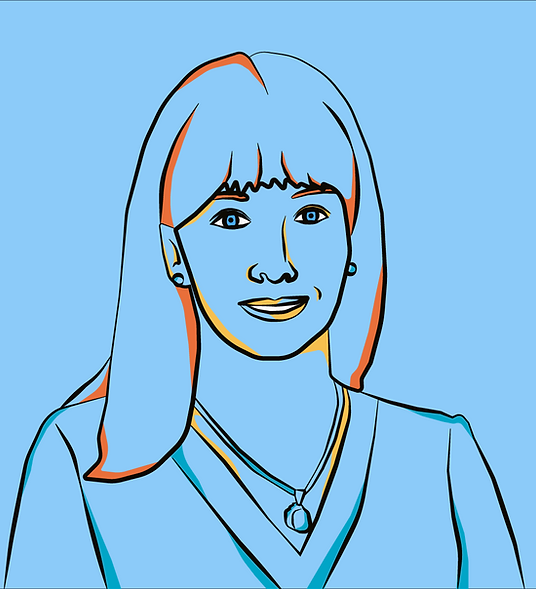
LYNN CONWAY
The Computer Chip Designer
Episode 63
July 15, 2026
The Silicon Valley boom in the early 2000s was only possible when computers could execute orders more efficiently and computer chip design became more accessible. Special guest, Maria Sisneroz tells the story of Lynn Conway, a pioneer in computer engineering and trans activism.
Listen


Episode
Transcript
Aarati Asundi (00:12) Hi everyone, and welcome back to the Smart Tea Podcast, where we talk about the lives of scientists and innovators who shape the world. I'm Aarati. Jyoti Asundi (00:20) And I'm her mom Jyoti. Aarati Asundi (00:22) And today we have a very special guest telling the story. Welcome back to the podcast to Maria. Maria Sisneroz (00:30) Hey, I'm back! Aarati Asundi (00:31) Yes, my best friend who did a couple episodes a while back last year, before my mom took over. How have you been, Maria? Maria Sisneroz (00:40) Been pretty good. Aarati Asundi (00:42) You had a very busy year last year, which is why you had to kinda duck out from the podcast for a bit, but I'm so glad you're back with the story to contribute. Maria Sisneroz (00:51) Yeah, I mean, I- I think this podcast is awesome. And so it was sad that I couldn't continue participating. Last year was like probably the most busy year of my life. So the timing was not ideal. So I was hoping to at least help out a little bit, contribute a little bit to a podcast I care about that's made by people that I care about even more than that. So I'm happy to participate. Jyoti Asundi (01:12) Oh you're- you're too lovely. Thanks. Aarati Asundi (01:18) And I super appreciate it. I get a break from researching and can just focus on editing and production. So that's nice 'cause usually I do everything, so I love having a break. So who do you have or which story are you gonna tell us today? Whose story? Maria Sisneroz (01:34) So today- and apologies to the listeners because I am not as seasoned at telling stories as Aarati is. So I'll try to make this as interesting as possible. And, so... Aarati Asundi (01:43) I- I also I also need help with my stories all the time. I learned everything I know from my mom. She's actually the storyteller of the family, so... Jyoti Asundi (01:53) And it's ironic that I haven't contributed a single story yet. Just because I... Aarati Asundi (01:57) Yeah, still waiting on that mom. Jyoti Asundi (01:59) I'll step up. I'll step up to the plate at some point and it'll happen. It'll happen. Maria Sisneroz (02:06) So today I will be speaking about Lynn Ann Conway. Do either of you know who she is? Jyoti Asundi (02:13) No. Aarati Asundi (02:13) Never heard of her, no. Maria Sisneroz (02:15) Ah! So she was a major pioneer in like computer architecture as well as interestingly, semiconductor design and like how people approach semiconductor design in the 80s. Actually sorry, the 70s. Aarati Asundi (02:29) Oh my goodness. Maria Sisneroz (02:29) So it's a very, very interesting story. She had two major contributions, which is kind of crazy. And what's even crazier about her story is she ended up doing her second contribution after having to start completely from scratch and I'll kind of have to explain how that works, but it like literally from scratch, like rebuilding her entire identity. Aarati Asundi (02:51) Wow my gosh. Jyoti Asundi (02:52) Wow. Maria Sisneroz (02:52) Yeah. Pretty crazy. Aarati Asundi (02:53) I'm super excited because I've always wanted to do like a computer science or like semiconductor story, but I've never been brave enough because it's a whole different field. Maria Sisneroz (03:01) This one is an interesting one. Aarati Asundi (03:02) Yes, so I'm really excited. Yes. Maria Sisneroz (03:05) And like, obviously I'm an electrical engineer, so this stuff is like very interesting to me, especially as I was like researching. It was fascinating because I learned a bunch of this stuff in school. And I was like, dang. Like I had no idea who was actually like creating these methodologies or what the process was in terms of like them kind of getting to that boom because we live well do you do people know where we live? Do you do people know where you live? Aarati Asundi (03:30) Well, I think they might know we live in California, the Bay Area. Mhm. Maria Sisneroz (03:33) Okay, cool. But I saying like being from the Silicon Valley, this is very, very pertinent. Cause she actually ended up working later in like Palo Alto and areas very close to where we're from. So yeah. Aarati Asundi (03:44) Oh nice. Yeah. Bay area baby! Yeah. Jyoti Asundi (03:46) Lovely. Exciting, exciting. Maria Sisneroz (03:49) So Lynn Ann Conway was born on January 2nd, 1938, in Mount Vermont, New York. And she, interestingly, was assigned male at birth. She was raised under the name Robert Savage. So, with that being said, out of respect to her true identity, I won't refer to her using her dead name anymore, but I wanted to at least provide the information to make her background as complete as possible. Aarati Asundi (04:14) Yes, I did the same thing with Alan Hart in his episode. Yeah. Jyoti Asundi (04:18) Yes. And I do admit it became confusing for me because I'm still of the older generation, but I'll keep up. I'm- I'm a good learner. Maria Sisneroz (04:26) Yeah, and I will say that her story is gonna be a little probably easier for you to follow because... Jyoti Asundi (04:31) Okay. Maria Sisneroz (04:32) Spoiler alert, when she transitions, she actually hides her identity. So everyone, when she reinvents herself, never even knew that she transitioned. So they didn't even know about her first life or anything, like the first half of her life. And so I'll pretty much just be referring to her as a she. So hopefully that's like very not confusing. Yeah. Aarati Asundi (04:51) Yes. Jyoti Asundi (04:52) That'll be good. That'll be good. Yes. Got it. Okay. Mm-hmm. Maria Sisneroz (04:56) So she had one younger brother, who was born in 1941, and his name was Blair. We don't know a ton about him later in life. And we actually don't know a ton about her personal history in general. So just know that as I tell the story, some of that is going to be a little bit sparse, intentionally. So as she started to share her story later in life, she made a conscious decision to keep her personal life personal, to protect her relationships, because she already had had so much hardship throughout her life at that point that she wanted to protect what she had. Aarati Asundi (05:25) Again like Alan Hart. Yeah. Jyoti Asundi (05:26) Yeah, it's the same thing. And even for Alan Hart, I still remember, even though he did everything to protect himself, they still dredged up these stories and misgendered him. Even after death, so I don't blame them for protecting themselves. Maria Sisneroz (05:43) Yeah, and I mean 'cause like so she was born in 1938. So she lived through like the end of World War Two, the Cold War. So there's a l a little bit more understanding by the time that Lynn was older, in terms of like social understanding and medical understanding. At least a little bit. Jyoti Asundi (05:59) Yeah, we don't have enough understanding today. Maria Sisneroz (06:02) Even now, yeah. Oh a hundred percent. Jyoti Asundi (06:04) Even now we are far behind where we need to be. Maria Sisneroz (06:08) I think that's why they called it funny enough, like I was doing a bunch of research on her. She lived in what was called stealth mode. Aarati Asundi (06:15) Oh nice. Cute. Jyoti Asundi (06:15) Yes. Maria Sisneroz (06:15) So she intentionally kept her history completely private so no one ever questioned that she was a woman. Jyoti Asundi (06:22) Excellent. Aarati Asundi (06:22) Wow, amazing. Maria Sisneroz (06:24) Yeah. She just lived as a woman and then she was a woman. And then she never told anyone that she had transitioned because she was who she was. Jyoti Asundi (06:30) Great. I love that it was drama free for her. Maria Sisneroz (06:33) But yeah, I mean like just consider the timing. So like Alan Turing, I think that was like 1952 when he was convicted for homosexuality. He ended up dying in 1954 after his like chemical castration. And then during the 50s in general, that was the time when there was like a bunch of the lavender scares, when like government employees were losing their jobs for being LGBT. So that was the time when she was like in her late 20s, early 30s. So all of this stuff is like very scary, right? Especially when you are kind of building your career and like trying to figure out who you are, how you fit in in the world. And so she had to deal with a lot of that. Aarati Asundi (07:08) Oh my gosh. Amazing. Maria Sisneroz (07:09) Anyway, we're kind of getting ahead, so let me just get back into my script. Aarati Asundi (07:12) Yes. Yeah. Go back to the story. Yeah, go back go back to your story. Jyoti Asundi (07:10) Please yes, yes. Maria Sisneroz (07:16) Okay, so her father, Rufus Savage, was a chemical engineer, and her mother, Christine Alice Savage, was a kindergarten teacher. And so, because of their professional backgrounds, she always credited her parents with encouraging curiosity and creativity when she was young. And so she kind of talks about how that led to her later success because that was fostered. So as a child and as a young adult, she was very curious and interested in learning about topics in math and science. But what kind of set her apart was she was super interested in hands-on activities, like applying the science that she learned by building devices and gadgets. So like when she was a teenager, she built a six-inch reflecting telescope all by herself. Aarati Asundi (07:54) Oh my goodness. Wow! Jyoti Asundi (07:55) Wonderful, wonderful. Maria Sisneroz (07:56) Which is insane. Cause like, you know, nowadays it's not as I mean it's still impressive, but it's not as impressive because we have kits for everything. So like I can go on Amazon and like buy the components, it's not a big deal. But this was like in the 40s. Aarati Asundi (08:08) And we have the internet too, you know, and ChatGPT. We can type into Chat GPT, like tell me how to... Maria Sisneroz (08:12) How do I- tell me what to do. Aarati Asundi (08:14) Yeah, yeah, exactly. And it'll walk you through it step by step. Jyoti Asundi (08:17) She had to do it from scratch. Maria Sisneroz (08:19) Exactly. So she had to understand optics, she had to understand mechanical construction, complex geometry alignments, all those things she had to understand in order to do that. At a very young age. Jyoti Asundi (08:28) Super smart. Maria Sisneroz (08:29) Same thing, she was into building radios. Which again, we didn't have kits back then, so she had to understand integrated circuits. She had to understand general circuit design, the components that go into circuit design, which would have been very challenging at the time. Jyoti Asundi (08:43) Yes. Wow. Maria Sisneroz (08:43) And so a lot of that really foreshadowed her ability to think about and understand really complex systems, which is what she contributed to computer architecture and semiconductor design later. So in interviews and in her own writings, she described experiencing gender dysphoria and knowing that she identified as a girl from a very young age. And so it's interesting for this reason she would later refer to herself prior to transition as "the boy I was raised as". Jyoti Asundi (09:11) It's almost like a dissociation technique that- you know. Maria Sisneroz (09:14) A hundred percent. Yeah. Imagine being trapped in a body that doesn't feel like it's yours. And so that's why she refers to herself in that way. Aarati Asundi (09:23) And this is so interesting too, because like the things you're saying that she's interested in, like electronics and, you know, building telescopes, I feel like canonically, especially at that time, that would have been a very, like little boy type of activity to do, you know? And so I think people wouldn't... Maria Sisneroz (09:38) It's a man's world. Aarati Asundi (09:40) Yeah, and people wouldn't have batted an eye at a little boy building radios and, you know, telescopes. They would like, That's totally normal. And yet she's still identifying as a girl and saying, No, this doesn't feel right. So it just shows you how separate those two things are. Maria Sisneroz (09:54) Oh 100%. And like honestly, not only did she choose a harder path in terms of life, she also chose a harder path in terms of career. Because at that time and even sometimes now, being a woman in any type of engineering field is like very difficult because it very much is a man's world, like being real. Aarati Asundi (10:09) Mm-hmm. Yes. Jyoti Asundi (10:09) Yes, absolutely. Yes. Aarati Asundi (10:13) Yeah, still is. Maria Sisneroz (10:15) So, these feelings were like especially difficult because of the time that she was growing up in. And so at that time, there was not really a great understanding of what it meant to be transgender from both a medical and a social perspective. Again, we kind of stated this earlier, we still have issues with that today. Looking at the political climate, even now, we're restricting freedom for folks who are transgender because we don't have a good understanding and then some people are very scared of things they don't understand, but she dealt with that at an even larger scale at that time because there was at least like at that point, there was really no understanding of what it meant to be transgender, have a transgender identity. And so because of those struggles from a very early age, engineering really provided her with something to focus her attention on. So in 1955, when she was 17, Conway graduated from White Plains High School and enrolled at the Massachusetts Institute of Technology. So she went to MIT to study electrical engineering. Aarati Asundi (11:11) Very smart. Maria Sisneroz (11:12) Yeah, super, super smart. You're gonna see she's really smart. That is not a question at all. Aarati Asundi (11:18) Yeah. I'm getting that sense already. Oh my goodness. Maria Sisneroz (11:22) Yeah, so MIT in the 1950s was overwhelmingly male, and intensely competitive, which would stress any person in college. But because of her struggles with gender dysmorphia, she was also struggling with feelings of depression, social isolation, and a pressure to conform to traditional gender roles. Jyoti Asundi (11:40) Okay. Maria Sisneroz (11:40) And because of all of her struggles with all of this, in 1957, while she was still a student, she actually decided to attempt a gender transition. Aarati Asundi (11:48) Really? Oh my goodness. Jyoti Asundi (11:49) That early! Maria Sisneroz (11:51) She knew. I mean she knew from a very young age. So she wanted to do this, but she was unsuccessful at that time because there were no established medical protocols at that point. And she had virtually no social support to get her through it. Jyoti Asundi (12:04) She's still a teen at this point. Maria Sisneroz (12:06) Yeah, she's nineteen. Jyoti Asundi (12:08) Correct. Aarati Asundi (12:08) Oh my goodness. Maria Sisneroz (12:09) Yeah. And so at that point she noted that she kind of felt like she didn't really have a choice but to abandon the transition, just because of the fact that she didn't know the right doctors at that point. She'd she had no one to support her and I she didn't feel ready. Jyoti Asundi (12:23) It's not feasible. It's- Aarati Asundi (12:24) Yeah, who are you gonna talk to about that and be like, Hey, I'm looking for a doctor to help me transition? Like nobody knows anybody like that. Jyoti Asundi (12:33) There is nobody like that? Forget about nobody knows. Aarati Asundi (12:34) yeah, there is nobody like that. Yeah, there wasn't anybody, yeah. Jyoti Asundi (12:36) Forget about talking. There isn't anybody Maria Sisneroz (12:33) Yeah, and there's a book called The Transsexual Phenomenon, which was written by a physician named Harry Benjamin. That wasn't even published until 1966. And that's actually the physician she ended up working with later. But just for context, that book wasn't even published for another nine years. Aarati Asundi (12:57) Wow. Jyoti Asundi (12:57) Yes, these are early days. Maria Sisneroz (12:59) Yeah, super early days. But she knew. She knew who she was. And she knew the turmoil that it was causing her. And so she wanted to do something about it. But then she really- she really couldn't. Aarati Asundi (13:10) She couldn't. Yeah. Jyoti Asundi (13:10) Yes. Maria Sisneroz (13:11) Yeah. So through all of the continued turmoil, in 1959, Lynn chose to withdraw from MIT without receiving a degree. yeah. Aarati Asundi (13:18) Oh no! Maria Sisneroz (13:20) Yeah. I think it was just it was too much for her, all of the stuff that she was going through. She kind of had to get her head on straight. And so with very little direction, severe depression, and no clear path to being able to transition, as well as like an immense perceived societal pressure to conform to social norms, like she just decided, "I can't do this. I need to leave. I need to kind of I need to regroup." Jyoti Asundi (13:42) Unbelievable the mental toll that these kind of situations take on a person. Aarati Asundi (13:47) Yeah. Maria Sisneroz (13:47) Yeah, so like imagine... she is twenty-one, a college dropout, no degree. And I wanna frame it that way because what she accomplishes later becomes even more amazing. So from 1959 to 1961, she worked as like an electronics engineer, kind of like a tech. And then in 1961, she decided to go back and complete her degree. So she attended Columbia University, which is... Aarati Asundi (14:13) Amazing. Again. Maria Sisneroz (14:14) ...also an amazing school. Jyoti Asundi (14:14) Yes, yes, yes. Aarati Asundi (14:15) Yes, amazing. Maria Sisneroz (14:16) And she finished her BS in electrical engineering in 1962, and then her master's in electrical engineering in 1963, which is very fast. Aarati Asundi (14:24) Also from Colombia? Maria Sisneroz (14:25) Also from Columbia. Aarati Asundi (14:27) Wow. Maria Sisneroz (14:28) Also in 1963, she married Mary Elizabeth Conway, who she ended up having two daughters with over the next few years. Jyoti Asundi (14:36) Okay, so she is trying to conform to the traditional expected role. Wow. Okay. Maria Sisneroz (14:39) She is. Mm-hmm. So she really tried. So she dedicated herself to trying to conform to that. Jyoti Asundi (14:47) This speaks to it, right? Like people- they do try and they go to the full extent of actually having a marriage and children and everything. And yet internally she's still feeling like a woman, obviously. That should speak to what people are talking about today about sending somebody off to a camp to reformat them basically. It's terrible what we put our young ones through. Maria Sisneroz (15:12) Yeah, and I mean conversion camps, first of all, are... I could go off on a diatribe on that. But I won't. Jyoti Asundi (15:17) Yes, I shouldn't I shouldn't have brought that up. Aarati Asundi (15:17) Yeah. Yes. Shouldn't have brought that up. Maria Sisneroz (15:20) But for sure, like those kinds of ignorant approaches toward dealing with this and treating people's sexuality, sexual identity, gender identity as mental health issues is so wrong on many levels because a lot of this is about who a person is. And who are we to question that? Jyoti Asundi (15:39) Correct. And you brought up a good word just now, ignorance. Ignorance is the mother of both fear and hatred. And fear and hatred are the two sides of the same coin. Maria Sisneroz (15:50) And they lead to the dark side. Sorry. Sorry. Aarati Asundi (15:52) Mm. Yes. You're sounding like Yoda a little bit, Mom. Maria Sisneroz (15:57) Anyway, continue, sorry. Jyoti Asundi (15:59) Fear and hatred are the two sides of the same coin, and they both stem from ignorance, but more an unwillingness to learn more, and this absolute complacency that I do know everything that I need to know. Maria Sisneroz (16:14) And I know better than you yourself, which is... Aarati Asundi (16:16) Yes. Yes, which is insane. Maria Sisneroz (16:18) The hubris in that is insane. Aarati Asundi (16:20) Insane. I would never. I would never claim to understand I barely understand myself what I'm feeling. Like how do how do I know what you're feeling? Yeah. Jyoti Asundi (16:30) And for me, the other very frustrating thing is all these conversion therapies and all of these are very often conducted by people who are very religious and truly believe in God and God's work and God's will and God's way and all of that. So if you have such strong belief in a higher, more supreme power, then why don't you trust in that higher supreme power that God made this person the way they are? Leave them be. Maria Sisneroz (17:03) Yeah, it's- it's a very like heavy topic because also I mean obviously I'm gay. Surprise. Aarati Asundi (17:09) Mm-hmm. Yeah. In case people didn't know. Maria Sisneroz (17:12) Surprise! Jyoti Asundi (17:12) What? Maria? What? I did not know this. Yeah, what a shocker. Maria Sisneroz (17:15) I know I'm married to a woman, but I know you didn't know. Even being gay like is hard for people to swallow, right? It's like the fact that I choose to live my life as a woman with a woman is very like challenging for people. And like actually, interesting story about me, kind of connecting to what you said, like when I came out to my mom, I assumed she would be like totally fine with it because her best friends were gay. Aarati Asundi (17:40) Okay. Maria Sisneroz (17:41) And so I grew up around her friends who were gay. And I'm like, I'm gonna tell her it's gonna be no big deal. She cried, and the first thing she said was, This isn't you. I know who you are, this isn't who you are. And I mean, she obviously came around, she's not like that anymore. But that initial thought of like people believing that they know you and can change you to be what they think you should be, is so prevalent within the entire LGBT community, and I think it's even harder for someone who is transgender because now you're adding in this other component of saying, "My body isn't my body". Jyoti Asundi (18:16) Yes, yes. Aarati Asundi (18:16) Yes. Maria Sisneroz (18:17) And so if someone can't even understand someone being gay, like imagine adding the transgender piece. And I think that's one of the reasons why they have to deal with so much hatred, and prejudice. And it's really sad. So aI said, she married Mary Elizabeth Conway in 1963. They had two daughters, but there aren't actually any records of the exact dates, and she kept this private. In later accounts of her life, Lynn noted that she hoped that if she lived her life according to social standards and got married, had children, and achieved success in her career, that she would find happiness and be able to live comfortably. However, this was not the case, and we'll see that later in this story. So during her time at Columbia, she met and impressed Professor Herbert Schorr, who ended up recruiting her to work for IBM after graduation in 1964. She didn't have to apply, she got recruited. Aarati Asundi (19:11) Important distinction, wow. Maria Sisneroz (19:13) Yeah. And because of her exceptional talent, not only was she recruited to IBM, she was actually recruited into the Advanced Computing System or ACS project at IBM in Yorktown, New York. Jyoti Asundi (19:24) Creme de la crème. Maria Sisneroz (19:25) Yeah, which is one of the most prestigious computer architecture teams in the world, or it was at that time. Aarati Asundi (19:31) Wow. Maria Sisneroz (19:31) And then interestingly, several members of that team actually ended up winning the ACM Turing Award later in life, which is something that they give for like computer science. Aarati Asundi (19:39) After Alan Turing. Maria Sisneroz (19:41) Yeah. So those are the people she was working with and that was- those were her peers. So that's how intelligent she was. Jyoti Asundi (19:48) Yes. Maria Sisneroz (19:49) Yeah, and so ACS, they had a goal of designing computers that were faster than any that currently existed. And so a lot of the questions that they were answering were surrounding like, how do we execute multiple instructions efficiently? How do we keep expensive hardware from sitting idle? How do we increase throughput without simply increasing clock speed? So, like these are like really important questions at that time. Cause I don't know how much you guys know about like how computers work, but like there's an instruction that has to be processed by the central processing unit. And so at that time, everything was serial. There was not really parallel computation or processing. And so because of that, it was like super inefficient. let's say you wanted to do something in the order of A, B, C, D. If A was taking like 20 minutes to get ready, even if B and C and D were ready, you couldn't jump to those to those tasks or instructions. Jyoti Asundi (20:41) Yes. Yes. Aarati Asundi (20:41) I see, I see. You had to go in order. This reminds me of like a you know Starbucks or a restaurant or something where somebody has a super complicated order with like, you know, like a mocha frap with whipped cream, low fat, with sprinkles, you know, and caramel drizzle. Jyoti Asundi (20:57) Exactly one point seven five shots of espresso. Aarati Asundi (21:01) Yeah. And the other person's just like, "Can I have like a cup of hot tea, please?" And it's like, well the other person came first, so I have to get theirs ready first. And so, you know The person who just wants a hot tea is having to wait around forever and ever. Maria Sisneroz (21:13) Oh my gosh. Aarati, it's like overcooked. Aarati Asundi (21:17) Oh my gosh, yes! Maria Sisneroz (21:17) It's like overcooked. It's a game. Aarati Asundi (21:18) Oh my god. Yes. There's- there's yeah... there's all these games like overcooked where you're in a restaurant basically, and you're the chef and you have customers coming in ordering all sorts of food, and you kind of have to decide, okay, that person wants like three things that you know, are gonna take twenty minutes to cook and that person just wants one thing that's gonna take five minutes to cook. So for the person who wants three things, I'll get them on the stove and I'll start doing that. And while that's going, I'm gonna go fulfill the other person's order that'll only take five minutes, you know, and then send them on their way so they're happy. And then in the meantime, the 20 minutes person has already been cooking for that time. And so they get on their way faster. Jyoti Asundi (22:02) Makes sense. Aarati Asundi (22:04) Yeah. Maria Sisneroz (22:04) Yeah. Jyoti Asundi (22:04) Yeah. Go ahead. Go ahead. Maria Sisneroz (22:04) So that's actually exactly how it is. In like the most basic explanation for that. So she conceived and designed a dynamic instruction scheduling mechanism for ACS that allowed processors to execute instructions when they were ready rather than strictly in programming order. Aarati Asundi (22:21) Oh nice. Jyoti Asundi (22:22) No waiting in line. Just as soon as the first person is ready, you jump to the top of the line, you go ahead, get that task done and out of the way. The rest of the computer can then be dedicated to what needs to be done. Maria Sisneroz (22:33) Exactly. And so, like a couple things that she recognized. It's interesting because she tried to abstract the problem rather than being like, well, how can we make the components better? And so she would kind of take a step back and take kind of more of a systems engineering view at the problem and be like, well yeah, we can make these components better, but like what's actually happening throughout the system and how can we find efficiencies within the system? Like she would ask questions... Jyoti Asundi (22:56) Yes. So more like she's looking more- instead of being buried in the weeds and trying to fix small problems here and there to make the whole process better, she's stepping back and taking this eagle's view of the whole system and saying... Maria Sisneroz (23:10) Exactly. Jyoti Asundi (23:10) "Oh, that's a problem there, that's a problem there. I can fix that." Yes, I got it. Maria Sisneroz (23:15) And so what she recognized the processor should do instead of like what it was already doing is number one, processor itself should look ahead into the instruction stream. It should determine which instructions were ready rather than the human trying to kind of figure it out ahead of time. It should be able to execute those instructions out of order and it should still produce the correct program behavior. So those are kind of like the things that she thought a processor should be able to do, and they're the things that they do today. Aarati Asundi (23:42) Oh nice. Jyoti Asundi (23:42) That is the beginning of artificial intelligence because... Maria Sisneroz (23:45) It is! Jyoti Asundi (23:45) ...somebody else, it's not a human component deciding what's ready and looking at this whole system and saying, you are ready, you are executable, let me go ahead and execute it. That requires artificial intelligence. So she's basically the mother of AI then. Maria Sisneroz (24:01) Yeah, and I mean, so the cool thing about all of this is, you know, she started to really think about how can we leverage the hardware to do what it's supposed to do. Rather than having a human control all of these components and essentially micromanaging all of this, how can we have the processor use its capabilities to do things on its own? So like making the hardware examine what future instructions were. Have the hardware execute in the reordered order automatically. Jyoti Asundi (24:31) Yes, Which is a huge load off. If you can automate these systems, the whole process becomes faster. Maria Sisneroz (24:37) Exactly. Because a human can't think as fast as like a processor. Jyoti Asundi (24:40) Huge leap, huge leap in the whole processing system. Maria Sisneroz (24:44) And it's kinda cool because you're also capturing the fact that like there are dependencies, right? So one of the concerns was like, well, like what if B relies on A? We can't do B at any time. And so you also train the processor to recognize, like, I can't do B unless A is done, but I can still do C. And so it's like, you might have to wait for the lettuce to get chopped for the burger. So you can't do that. But like I can definitely get that tea. So essentially. Jyoti Asundi (25:08) That's right. Got it. Aarati Asundi (25:09) Yes. Yeah. Maria Sisneroz (25:11) Essentially dynamic instruction scheduling is just one round of Overcooked. Aarati Asundi (25:16) Yes, nice. Very nice. Yeah. Jyoti Asundi (25:16) Nice, nice, nice, nice. No, that's- that's an excellent analogy. Yes, thank you. Maria Sisneroz (25:22) So Conway's architecture anticipated many of the ideas that underpin today's out-of-order superscalar processors and is the foundation for modern CPU performance. In case any listeners know a lot about dynamic scheduling, it should be noted that Conway developed this independently alongside Robert Tomasulo's concurrent work on the IBM System/360 Model 91. So he actually also worked a little bit on dynamic instruction scheduling, but in a slightly different way. but she did come up with what I described on her own. Aarati Asundi (25:52) Mm-hmm. Nice. Maria Sisneroz (25:53) So at this point, it's super important to highlight that despite her outward success academically, personally, and professionally, she recognized through those years that her gender dysphoria would not go away regardless of what she achieved. And so, over many years of forcing herself to embody the identity expected of her, she recognized that it was not sustainable to continue living her life incongruent with her true identity. And in later writing she stated, "We each have only one life to live, and I knew in my heart that I would be vastly more comfortable, fulfilled, and happier as a woman." So in 1967, she decided to undergo a gender transition for the second time. Aarati Asundi (26:36) And now that guy's written his book. Maria Sisneroz (26:38) He has. So she met Harry Benjamin, who specialized in the care of transgender patients. And he guided her through psychological evaluation, hormone therapy, and then later gender-affirming surgery. So she started that process in 1967. And then in 1968, she informed IBM that she was planning to undergo a gender transition. At which point, IBM let her go with no other reason than her transgender identity. They just like fully fired. Aarati Asundi (27:05) Oh my goodness! Maria Sisneroz (27:07) Yeah. Aarati Asundi (27:07) For zero reason. Like she's amazing professionally. She's figured out this whole dynamic scheduling thing and they're just like, "Oh, but you're a woman now? Never mind. Bye." That's insane. Maria Sisneroz (27:17) Mm-hmm. Yeah. So for that reason, unfortunately, her contribution to the ACS project remained largely unrecognized, because she was fired before the project was completed and ACS was later canceled. Aarati Asundi (27:30) Oh so they just wiped her out of everything? Maria Sisneroz (27:33) Yep. Aarati Asundi (27:33) They didn't even try to give her credit under her dead name? Maria Sisneroz (27:37) Nope. Aarati Asundi (27:37) Oh my god. That is crazy. Maria Sisneroz (27:40) Yeah, I know, it's crazy. So the discovery was kept internal to IBM and it was used to shape processors for years to come without her getting any credit. Aarati Asundi (27:50) That's so frustrating. That's so frustrating. Jyoti Asundi (27:51) Such, such, such injustice, such injustice. Maria Sisneroz (27:55) But I'll tell you now so you don't feel sad. She ends up getting credit later. So it's fine. Aarati Asundi (27:59) Okay, good. Jyoti Asundi (27:59) Okay, okay, okay. Maria Sisneroz (28:02) There's something that happens at the very end. You guys are gonna feel really happy. I'll tell you that. Aarati Asundi (28:06) Okay. We'll wait for it. Jyoti Asundi (27:06) Okay, okay. You know, I really like your storytelling style, Maria, because I am always on tender hooks about happy endings. And I- Aarati knows this. Any story, anything that comes out I cannot watch without going to Wikipedia and... Aarati Asundi (28:24) Knowing the ending. Jyoti Asundi (28:24) ...figuring out the ending first. Maria Sisneroz (28:26) I do the same thing. I feel better about that. Jyoti Asundi (28:27) Yes, I can't. It's very painful to me. It gives me stomach cramps to not to go to go through something... Maria Sisneroz (28:34) No, same. It makes me anxious. I'm like- I'm like, I need to know. Otherwise, I'm gonna be thinking about the whole time I can't enjoy this if I don't know. Jyoti Asundi (28:39) Yes, I can't enjoy the story at all. And if I have to push myself through a story without actually knowing the ending, I end up having to watch it again to really understand properly because... Maria Sisneroz (28:47) Exactly. Jyoti Asundi (28:48) ...I was just waiting on tender hooks, waiting, waiting, waiting, waiting, waiting for the ending. Maria Sisneroz (28:52) I feel that. Yeah, continue to enjoy. This is a actually a very happy story. So... Aarati Asundi (28:56) Well just so you know, I'm editing all of this out because I don't like spoilers. So... just kidding. But go on. Jyoti Asundi (29:07) She's the ultimate arbiter. Maria Sisneroz (29:09) Where was I? Hold on, I need to figure out where I was in my script. Ah! Jyoti Asundi (29:12) IBM has just fired her. Maria Sisneroz (29:15) So in the same year, which was 1968, her marriage ended and she lost regular contact with her two daughters. Which again makes sense in terms of like the social understanding or social kind of climate of the time. Jyoti Asundi (29:31) Yes. Yes. Aarati Asundi (29:31) Yeah. That's so hard. Jyoti Asundi (29:33) I can easily picture the wife almost being treated like a grieving widow. It's like you lost your husband, poor thing, oh how horrible for you, how tragic for you, how sad for these young girls. I can easily imagine this society rallying around the grieving, widow, quote unquote. Maria Sisneroz (29:52) Yeah, for sure. And it's very interesting because in a lot of her writings, she doesn't necessarily like sound bitter because a lot of times people will kind of speak about how "everyone left me" and like "all of this bad stuff happened to me" but she often speaks about people's reactions to her transition as a byproduct of just the climate of the time. People didn't have the tools to process what she was going through. Aarati Asundi (30:19) I was gonna say I think as sad as it is, she must have had some understanding that that was most likely gonna happen, you know, that she was going to lose her job and she would lose her family, just knowing the times that she lived in and she made that decision anyway. Maria Sisneroz (30:33) Oh a hundred percent. She was very intelligent. She she did not... Aarati Asundi (30:36) Yes, she would have known. Jyoti Asundi (30:37) This must have been a very calculated decision. And she must have sat there and made this calculation and said, yes, I'm going to lose this, this, this. But losing myself is much harder. Maria Sisneroz (30:50) Yeah, and I mean- I mean, on top of that, you have to think about how impressively brave that was of her. Because like she fully understood. Like there's a difference between choosing something like that and like not having the full understanding of what could happen. But she was very calculated. She was a systems engineer at heart. Jyoti Asundi (31:09) Absolutely. Maria Sisneroz (31:09) And so she could see the system, what would happen, what the ramifications were. Aarati Asundi (31:12) Yeah, if I do A, B's gonna happen. Maria Sisneroz (31:15) Yep. And like it's super brave to make that that choice for yourself. Aarati Asundi (31:19) Man, that's still so hard though, to lose your family. I can't imagine. Maria Sisneroz (31:24) And it's again, kind of going back to her what she's written about, she often would kind of emphasize the fact that she lost her family and friends, but like many of them who loved her, they were just living within kind of cultural assumptions of that time. I mean, obviously there's still responsibility on the part of the people who love you to make a good decision and support you and still be there for you, but like it's very interesting to hear her take that like they're just a byproduct too of kind of the social norms of the time. She also transitioned to living as Lynn Conway full time that year. And according to Lynn, this is a direct quote, "It was a very lonely and often terribly frightening journey. Fortunately, I succeeded." Aarati Asundi (32:06) That's the other thing I didn't think about. Like today, you know, if you are trans or gay, or any type of queer, even if your family didn't support you and your friends didn't support you, you have the internet and you can find people to reach out to. Maria Sisneroz (32:18) There's forums. Aarati Asundi (32:20) Yeah, there's forums, there's places that you can go and kind of be yourself and you can find a support group to help you, like you can find friends, you can find someone who's gone through something similar to you and who will help you and support you. She didn't have any of that. She had nobody who could be like, "I identify with what you're going through and I can be there for you and I can support you." Jyoti Asundi (32:44) No resources, no resources. Maria Sisneroz (32:47) Yeah, 'cause like now people just essentially search for their found family, right? And then you find your found family and then they're there. Also, I mean, soapbox moment: I am a huge advocate of representation in media for this reason as well. So having access to media that shows that like who you are is not wrong, who you are is valid, who you are exists in this world is so important as people are struggling through these types of situations where they don't have the social support or general support that they should have. Jyoti Asundi (33:23) I was alluding to this actually with the Alan Hart story where I mentioned how our ancient scriptures which are presented as stories, they have the story of this person who is born gender fluid. Even though born as female gender, they identify as male very early on, and then they go through the transition and then they end up being a great war hero. So I grew up with things like this. I grew up accepting this as part of life. So that kind of normalcy is lent to these kind of situations. So that really helps out actually. Maria Sisneroz (33:59) It's interesting that you bring that up because in her early life, one of the things I found was like, yeah, she was interested in math and science, but she also was a very avid reader and she really liked to read like her mom's anthropology books. And she actually specifically noted that different cultures helped her to understand her gender and identity a little bit differently. And like I have a quote here that I ended up not talking about because my script was so long, but she specifically said, "People in other cultures had found different ways to deal with what I knew I was feeling." And so it's very interesting because she really did look into like, is there any place that has an answer for me to have a better understanding of what I'm feeling, what I'm going through, to help me feel like again, like she's valid. Aarati Asundi (34:47) Amazing. I love that. That she broke out of Western society a little bit and was like, let's- let's look at other cultures. That's great. _______________________________________________________________________________________ Grow Everything Podcast Advertisement Aarati Asundi (35:29) Hi everyone, Aarati here. I hope you're enjoying the podcast. If so, and you wish someone would tell your science story, I founded a science communications company called Sykom, that's S-Y-K-O-M, that can help. Sykom blends creativity with scientific accuracy to create all types of science, communications, content, including explainer videos, slide presentations, science, writing, and more. We work with academic researchers, tech companies, nonprofits, or really any scientists. To help simplify your science, check us out at sykommer.com. That's S-Y-K-O-M-M-E-R.com. Back to the story. _______________________________________________________________________________________ Maria Sisneroz (36:17) So after her transition, she moved to the West Coast to rebuild her life. So she went from the East Coast to New York all the way the West Coast to the Silicon Valley. And I wanna kind of clarify here too, at this point she is living as Lynn Ann Conway. And when she moves all the way across the country, nobody knows anything about her background. Jyoti Asundi (36:36) Got it. Got it. Maria Sisneroz (36:36) So she moved to the West Coast, and between 1969 and 1973, she worked for Memorex in Santa Clara, California, as a computer architect and systems designer with a focus on high-performance computing. So during this time and throughout the coming years, she did not disclose the fact that she had transitioned and nobody knew about her previous work at IBM. That actually didn't happen until the late 1990s, nearly 30 years later. Aarati Asundi (37:01) That again is like super hard. It's like you've moved over and you can't even tell people like, yeah, I graduated from Columbia. Here's my credentials. I worked at IBM on this like super amazing project. here's a reference from my boss or whatever. Like she doesn't have... Jyoti Asundi (37:15) This is what I've done... Yeah this is what I've done before. Maria Sisneroz (37:17) Yeah, her reputation had to be fully rebuilt. Yeah. Aarati Asundi (37:20) Oh my god. Jyoti Asundi (37:20) Yeah, basically start from scratch again. Maria Sisneroz (37:23) Yeah, so she did not disclose information about her previous work and accomplishments. And so she really had to build her entire life back up from scratch. So therefore, her time at Memorex was really largely used as a career building period for her. And it was a time for her to like recreate her professional identity on her own terms after being rejected by IBM and then also on the social side because she had been rejected by her family and friends. Jyoti Asundi (37:45) Yes, yes. Maria Sisneroz (37:48) In 1973, she started working at Xerox Park in Palo Alto, California, which has been called one of the most innovative computer labs ever created. During the 70s, they were credited for either inventing or advancing the following technologies: so GUIs or graphical user interfaces, ethernet networking, laser printing, object-oriented programming, personal computing, and more. So it was like a... Aarati Asundi (38:14) Wow. Maria Sisneroz (38:14) It a very large hub for a lot of advancements in technology. And so she was hired as a computer architect to consider future computer systems and how personal computers could be designed to be better. She kind of identified that hardware generally was an issue and through her work at Xerox, she identified that chip design was a challenge because it took a ton of time and expertise. So, to this point in history, we're at 1974-ish, probably, chips were built from transistors. And like when people would look at building a chip, they would really look at it on the transistor level. So, where do we put a chip? What's the spacing? Where do the wires go? What connections do I have to have? And that's really how they looked at a chip, which made the process very manual. Any change in any part of the spec, like if you want to change one transistor length, you would have to redesign and redraw the entire thing. And many of these chips had like thousands of components. So imagine the amount of time it took to build a chip. So it was like nearly impossible for people to like really make this more efficient. Jyoti Asundi (39:19) It's like having a huge jigsaw puzzle of a thousand pieces and you want to change one small thing somewhere, and it's like, okay, pull apart the whole thing and start from scratch again. Maria Sisneroz (39:31) That's literally what it was. Sounds pretty miserable. Aarati Asundi (39:33) Oh my god, that sounds terrible. Maria Sisneroz (39:36) At that time, huge teams were required to design a chip and even small changes, even a tiny change, like you said, would require knowledge of chip fabrication rules and limitations, as well as a very specialized knowledge of like chip manufacturing, and all of that, which is- it it's near- essentially it was impossible for people to learn how to do unless they worked for that specific company. And people couldn't really be educated in it because it was like it just was too much. You can't cover that in a college class, right? Aarati Asundi (40:02) Mm-hmm, yes. Maria Sisneroz (40:04) But in order to have a boom in a silicon chip, something had to change. So during her time, she started to collaborate with a fellow named Carver Mead. Carver Mead's expertise was in semiconductor physics. So from a chip design perspective, he understood all of the components, manufacturing limitations, fabrication, and technology scalability. And then Conway's expertise was looking at processes through a systems engineering lens, abstraction of problems, computer architecture and breaking down problems into modular components. So really Meade understood how chips were built and then Conway tried to understand how can we get humans to design chips easier. Jyoti Asundi (40:45) Yes. Aarati Asundi (40:46) Okay. Maria Sisneroz (40:46) So in working together, they came up with what was called the Mead-Conway Very Large Scalable Integration, which is VLSI design methodology. So the Mead-Conway Design Methodology, which enabled complex chip design that we all find in our computers today. It was developed between 1974 and 1977 through collaborations with California Institute of Technology. So they realized that the process could be simplified by looking at chip design on a higher level. So kind of breaking it down into higher level building blocks versus small components. And so in that way you could look at each building block, where each could be scaled relative to one another. So an example of this kind of like to make it easy to understand is- so imagine you want to build a house. So rather than looking at like, well I need 5,000 nails, I need this many pieces of wood, I need laminate, I need glue, I need wires and all of these things. Instead you would say, okay, I know that this house needs a kitchen, a living room, two bedrooms, two bathrooms. And so she kind of like pulled it back. And rather than kind of trying to design based on each individual component, they were like, why don't we just look at it based on like functional blocks? Jyoti Asundi (42:03) Yes. Aarati Asundi (42:04) Interesting. Maria Sisneroz (42:04) Which we talk about that now, and it sounds like obvious, but like at that time this was revolutionary. So rather than being like, yeah, we're gonna drive every single transistor or like every single little component here, it's like, no, we need an adder here, or we need you know, we just need these specific components to build this chip. and then that's it. Jyoti Asundi (42:26) Perfect. Maria Sisneroz (42:26) And then each of the components were essentially a known quantity, like a prefab home. Aarati Asundi (42:31) So previously it was like if we have a two bedroom house with a kitchen and a living room, that's our chip. That's what we're building, and then someone comes along and says, actually I want a third bedroom and everyone would kind of groan and be like, oh god, we have to like redesign the entire house now. Like we need to... Maria Sisneroz (42:48) We have to tear it all down. Aarati Asundi (42:51) Yeah, we have to scrap everything and we have to start again from scratch and like... Jyoti Asundi (42:57) From the foundation because now the foundation is wrong also. Aarati Asundi (42:58) Yeah, from the foundation. Yeah. And she's coming in and is like, "No, you just have to add like an extra room." Like, you know, we know what a bedroom is, we know what it requires. It you know, you have a door, you have a closet, you have a bed. Just take that room and add it onto the house and done. Maria Sisneroz (43:17) Exactly. Aarati Asundi (43:18) You know, and if somebody says, okay, but I don't want this bathroom here, then it's like, Okay, then just take it out. You don't have to scrap the entire house and rebuild the entire house without that one bathroom now. Amazing. Maria Sisneroz (43:31) Exactly. And then kind of continuing on that. So the reason you'd want to do that- so let's say you have a foundational footprint, which is the size of a chip, if someone is like, you know what, I want a better house, which is a more powerful chip, I need more bedrooms. What can happen here is like you run out of space. That that tends to be the problem. So another thing that she contributed to this is the concept of- it's it was called Lambda-based design rules, which is making each of those components scalable. So now imagine if you want 10 bedrooms instead of two, you can take what you know to be a bedroom and then make it smaller. It would be uncomfortable, but it would be efficient. And so you could make all of those components smaller because you know exactly what it is and what components are required for it, make them smaller and then place them on that foundational footprint. Jyoti Asundi (44:21) Yes, got it. Maria Sisneroz (44:22) So not only did she make it modular, her and Mead worked to recreate how people even looked at like, sizing and scaling. Because at that time they're like, "Well, this piece needs to be two microns". But then if technology improved and now that piece could get as small as one micron, now you have to redesign everything. But instead they're like, no, we can talk about it in terms of lambda, which is just the constant. And so now instead of 0.1 microns, it would be 0.1 lambda. And then lambda can be whatever you want it to be. Jyoti Asundi (44:54) Yeah. That's right. Maria Sisneroz (44:55) An easy way to think about this is a shirt design. So imagine that you have a shirt design, and this is the first version of the shirt, and you know that the arm is a specific length. So you might state the arm needs to be five inches long and the torso needs to be 20 inches long. However, if you wanted to make this smaller or larger, you'd have to go through every single dimension of that shirt to have like the same relative dimension, right? However, you could just state instead, I want 25% of the torso length to be the length of the arm. And so this is like another way to look at it where it's like, everything is relative to one another. So if you just make this relative to some known value, which is our lambda, now you can have any size you want, because like as long as you know the torso length that you want, it will automatically scale. Aarati Asundi (45:48) Everything scales proportionally, yeah. Jyoti Asundi (45:49) Everything scales proportionately. That makes a lot of sense. Got it. Maria Sisneroz (45:53) Yeah. So this allows flexibility while maintaining the same general pattern for each of these blocks. That's the general science behind it. It's very oversimplified, but I think that that's probably an appropriate level. Aarati Asundi (46:02) Well, we need that for us to understand. Yes. Jyoti Asundi (46:05) Yeah, you got- You made me understand. I like your level of simplification very much. Maria Sisneroz (46:10) And so obviously you end up being restricted by what technology can do, because like components can only be so small. Aarati Asundi (46:16) Yes. Yes. Jyoti Asundi (46:16) Correct. But they are getting smaller. Maria Sisneroz (46:20) Exactly. Jyoti Asundi (46:20) They are getting smaller every day. Maria Sisneroz (46:22) So having lambda allows you to essentially be ready for any technological advancement. Because now once the technology gets better and you do have smaller components, now you know exactly how to scale each of your components because it's by it's lambda. So you just change that lambda value. Does that make sense? Jyoti Asundi (46:38) Brilliant. You just change the way you think about it. Aarati Asundi (46:41) Yeah amazing. Maria Sisneroz (46:43) So Lambda just became a reference unit of measurement, so that again, if there were manufacturing improvements to allow for scaling down of a specific component, the entire design would scale in the same way versus just every single transistor, which would be a nightmare. Jyoti Asundi (46:56) Correct. Maria Sisneroz (46:57) So yeah, so those were like the two main contributions that are the easiest to explain related to VLSI. It's obviously way more than that, but I think those are the two most important key components of VLSI that you need to understand is that they brought it from like a microscopic component level to like a building block or larger component level. And they started to define these components and the subcomponents in terms of a lambda, which is really just a constant that could allow for scalability of each of these components so that you can create something really small. So the introduction of these concepts allowed for standardization in chip design and holding the designs to a specific set of rules. At that time, the companies that did this, there weren't many. They kind of all did their own thing. They did it however they wanted to, that made sense for them. But this provided a framework for people to start looking at chip design and to standardize the processes so that multiple people could work together. Jyoti Asundi (47:55) Yes. Maria Sisneroz (47:55) So all of a sudden, with Conway and Mead's work in VLSI design, there is this ability to actually teach chip design, to automate it, to scale it, and to improve manufacturing. And so this actually allowed less specialized engineers to start learning chip design as well as integrated circuit design. So this actually helped to support research in this area. And specifically, it allowed universities to teach students chip design, which was a huge factor in the explosion of semiconductor technology maturation since that time. And that's like the Silicon Valley boom because silicon is on chips, right? Aarati Asundi (48:28) Yes. Jyoti Asundi (48:28) Yes. So she is responsible partly for the Silicon Valley boom. Wow. That is crazy. Aarati Asundi (48:35) Amazing. And I've never heard of her. This is crazy. Maria Sisneroz (48:38) So I want to say for reference, thousands of transistors could fit on a chip in the 1970s, and it was very difficult because each transistor had to be accounted for. But now with- using that methodology, today Apple's M4 processor has tens of billions of transistors on it. Aarati Asundi (48:55) Oh my god, wow! Maria Sisneroz (48:56) Isn't that wild? Jyoti Asundi (48:58) This I can't even compute the scalability. Aarati Asundi (48:58) That's crazy. Maria Sisneroz (49:01) Crazy. Aarati Asundi (49:01) That's- that's insane. Is that- is that why computers used to be so huge in in the seventies and now we have these little laptops and phones that are... Maria Sisneroz (49:09) Yeah, because we- 'cause the processes are just so much smaller. And you don't need as much too, because like of the her first discovery, which is that you don't need as much process to be running serially, like you can have things running in parallel. So like it's crazy all the things that she contributed to all of this. Jyoti Asundi (49:25) Yes. Aarati Asundi (49:25) Yes. Maria Sisneroz (49:26) In 1979, Meade and Conway published a book called Introduction to VLSI Systems, which became one of the most influential engineering textbooks ever written as it opened the door to teaching students that they could create their own chips and was what many of the biggest names in Silicon Valley learned VLSI design, like, using. That textbook. It was intentionally written so that it could be easily understood by undergraduate and graduate students to educate as many engineers as possible. So that was actually the goal. Like, let's spread this as much as possible. Aarati Asundi (49:55) The science communications, yes. Jyoti Asundi (49:58) Yes. Maria Sisneroz (49:58) Yeah someone described her as an "educational evangelist"... Aarati Asundi (50:02) Okay. Nice. Maria Sisneroz (50:02) ...for like VLSI because like she went out and tried to spread this so that people could learn. Aarati Asundi (50:07) I love that she wasn't hoarding the knowledge too. She's like, Let's... Maria Sisneroz (50:10) No, yeah. Spread the love. Aarati Asundi (50:11) ...get this out to everybody. Yeah. She understood how big this could be for computers and just was like, "Everybody get on this. This amazing." Maria Sisneroz (50:21) Yeah, and so within a few years, dozens of universities had already adopted the curriculum and like I said, Conway was actually behind the educational movement and she would set up workshops to teach instructors how to teach students, and then those instructors would go and teach it at universities. So there were like thousands of people within a few years who were already kind of starting to get their feet wet in chip design, which is really, really neat. Because at that point, I had described it earlier, like it took an entire group of people to even like get a large chip completed. But again, this like made it more accessible. So now more minds could think about this problem. And again, that's why there was such a boom because now people could look at the problem at a higher level and start thinking about how to make chips more efficiently. Aarati Asundi (51:04) So amazing. Maria Sisneroz (50:05) I know it's really cool. Going back to Lynn's life, like her personal life, it's important to recognize that this second contribution is exceptionally impressive considering that at age 30, she essentially lost everything. So this is only eleven years later, which is... Aarati Asundi (51:20) Oh my goodness. Yeah, yeah. Jyoti Asundi (51:22) Wow, wow. Maria Sisneroz (51:23) And so, like, at age 30, she essentially lost everything: Her marriage, most contact with her children, her friends, a career that she built and enjoyed, a reputation as a brilliant engineer. But rather than giving up, she created her identity from scratch to continue making a huge impact on the computer industry. Aarati Asundi (51:42) That's amazing. Maria Sisneroz (51:23) So most people would throw on the towel, but she did not. And she continued to contribute. Aarati Asundi (51:44) Yes, I know I would. Aarati Asundi (51:48) That's amazing. my goodness, what an inspiration. Jyoti Asundi (51:52) And not just a small contribution. She's responsible for the Silicon Valley boom. Come on. Come on. That is... Maria Sisneroz (51:58) I know. That's huge. Aarati Asundi (52:01) Life as we know it. Oh my goodness. Jyoti Asundi (52:03) Yes, her life as she knew it changed. And therefore she ended up changing the life of everybody else as they knew it. Aarati Asundi (52:12) Yeah. Maria Sisneroz (52:13) The number of lives that she has touched and they don't even realize is pretty amazing. Jyoti Asundi (52:17) Brilliant. This is a brilliant story. Amazing. Maria Sisneroz (52:22) We're not done yet. Aarati Asundi (52:26) Yeah, 'cause she's still only in her mid forties, yeah. Jyoti Asundi (52:28) Yes, yes, no no no I know I know. I'm just I'm just so amazed. Maria Sisneroz (52:32) So between 1980 to 1984, Conway taught workshops, consulted with universities and industry, and helped to establish education standards related to VLSI. Conway, like I noted earlier, she guarded her private life very closely. But it's known that she rebuilt her family, developed a long-term partnership with another engineer named Charlie Rogers, and she established a stable life in California. She never really talked about how her relationship began. There's some understanding that they might have been married, but it's not clear. But she had like a very full life, and she actually at some point during this time re-established a relationship with her adult daughters. Aarati Asundi (53:15) Oh good. Maria Sisneroz (53:15) Though again, the details of that were fairly private, so I don't have a ton of detail, but that's a that's very happy, right? She ended up finding her happy ending. Aarati Asundi (53:19) Yes, that's good. Yes. Jyoti Asundi (53:23) Absolutely, absolutely. No, she deserves her privacy. Come on, we can't, we can't... Maria Sisneroz (53:27) Oh yeah, 100%. Let's not be parasocial. Aarati Asundi (53:28) Yeah. Yes. Jyoti Asundi (53:31) She has suffered enough, yeah. Aarati Asundi (53:33) Yeah, yeah. Maria Sisneroz (53:33) Yeah. So yeah, like she ended up living the life that she wanted to live, which is everything you'd want for her and in general for anyone. Jyoti Asundi (53:40) Yeah, she's living life on her own terms now. Aarati Asundi (53:42) I love that so much that she didn't become like a you know, a victim and she didn't wallow in despair and is like, everything has been taken from me. She's like, Okay, let's pick myself up and start again and get to where I wanna be. Maria Sisneroz (53:56) Imagine how I mean, this is not an episode about mental health issues, but... Aarati Asundi (54:01) Yes. Maria Sisneroz (54:02) I mean, even in the stories that we did together, there are a lot of folks who deal with a lot of mental health issues. I think there might have even been situations where you discussed someone, attempting to... Jyoti Asundi (54:11) Taking their life and everything. Maria Sisneroz (54:13) ...to end their life or something like that. Aarati Asundi (54:15) Or self harm. Maria Sisneroz (54:15) I mean, obviously we don't know all of the information about her, but it didn't seem like she lived her life in that way, which is inspiring. Cause it's hard. Aarati Asundi (54:21) Yes. Very amazing. It's so hard, yeah. Like I wouldn't blame her if she had some dark thoughts, but you know, it's really amazing that if she did she was able to overcome them. Maria Sisneroz (54:33) Yeah. And like without a lot of support, because again, there wasn't from a medical standpoint, there wasn't a really good understanding of the support that she would need. So like, for example, I do therapy and that's what helps me get through my life, right? And so I encourage people to do therapy because it's really helpful in like processing how you feel and like becoming a well-adjusted person. Aarati Asundi (54:56) Yes. Yes! Jyoti Asundi (54:56) Yes. Maria Sisneroz (54:58) Even if you aren't having like significant struggles, it's just nice to have someone to talk to and to kind of work through the things that you want to get better at. And I'm assuming at that time with the stigma of mental health it probably was hard to find someone who would really understand her. Jyoti Asundi (55:15) Yes. Maria Sisneroz (55:15) Because like I even see a psychologist who specializes in in LGBT issues. Aarati Asundi (55:20) Yes. Maria Sisneroz (55:20) So like I doubt at that time there was a psychologist who specialized in transgender identity and things like that. Jyoti Asundi (55:26) Absolutely, yes. Aarati Asundi (55:27) Yeah. Maria Sisneroz (55:28) And so she didn't even have that support. And if she did, it was fairly new. and so getting through all of that and having like a very full life, it's really an inspiration. Aarati Asundi (55:41) Really amazing. Jyoti Asundi (55:41) Absolutely. Maria Sisneroz (55:43) In 1985 she moved to Ann Arbor, Michigan to work as a professor at the University of Michigan. She was a professor in electrical engineering and computer science, and then she later became the associate dean of engineering. Aarati Asundi (55:55) Wow. Jyoti Asundi (55:55) Wow, nice. Maria Sisneroz (55:56) At this point, many people had no idea that she had started at IBM, which is really funny. But in 1998, at age 60, she retired from University of Michigan. And between 1999 and 2004, she decided to actually share her story. Part of it was because people were starting to dig up information about it, but I think she also just felt like it was time. She was retired, she was just kind of ready to share. And at that point she became an advocate for transgender rights. And actually, interesting tidbit, her website, like her personal website, became one of the earliest comprehensive resources for transgender folks and their families. Aarati Asundi (56:34) Oh my god, that's amazing. Maria Sisneroz (56:35) Cause she shared a lot about like her experience and like... yep. Jyoti Asundi (56:35) So yet another, yet another major contribution. Maria Sisneroz (56:39) Yep. Aarati Asundi (56:40) Yes, yes. Jyoti Asundi (56:42) Wow, she's just like the giving tree, keeps on giving. Maria Sisneroz (56:46) I know. Jyoti Asundi (56:46) Doesn't matter what form and what stage of life, she has something to offer to society all the time. What a wonderful, wonderful person. Maria Sisneroz (56:56) Yeah, and so she continued that throughout her life. And she continued obviously consulting and things like that, I think, throughout her life. So coming full circle, this is for you, Jyoti, on November 19th, 2020, IBM formally apologized for firing her in 1968 Aarati Asundi (57:13) Ha yes. Maria Sisneroz (57:14) And presented her with the IBM Lifetime Achievement Award, which she noted felt like closure of a difficult part of her life. Jyoti Asundi (57:23) Oh good! This is a really good.... Aarati Asundi (57:24) Good for her. Maria Sisneroz (57:25) So she finally got justice. Aarati Asundi (57:27) Amazing. Yes. Jyoti Asundi (57:27) Yes! Yes. I would not have expected that of IBM. Aarati Asundi (57:31) This is after she told her story, yeah? Like after she... Maria Sisneroz (57:34) Correct. Yeah. Aarati Asundi (57:35) Yes, so I'm- I'm sure they were getting a lot of flack for that. Maria Sisneroz (57:39) But that was like sixteen years like she started telling her story in 1999 to 2004. But in 2020 they decided to formally apologize, which good on them. Aarati Asundi (57:47) Yeah, it took that long for society to come around, for them to come around. Yeah, but Jyoti Asundi (57:48) Yes, good on them. It's okay. It's okay. Maria Sisneroz (57:51) But it happened though. Aarati Asundi (57:53) It happened, yeah. It finally happened. Jyoti Asundi (57:55) Justice deferred but not denied. Maria Sisneroz (57:57) Not denied. She passed away at age 86 on June 9th, 2024, leaving an incredible legacy behind. Aarati Asundi (58:04) Oh! Very recent. Maria Sisneroz (58:05) Yeah, very, very recent. Leaving an incredible legacy behind in computer architecture, semiconductor design and methodology, and in the fight for transgender rights. And it's interesting, I I'm not sure if it was during her eulogy or at some point when she retired. I think it was after she passed. University of Michigan noted that like one of her guiding principles was "Why not question everything?" And I think that that's like really appropriate for her because it really captures and encapsulates everything about her career. Like looking at her first kind of discovery, she questioned why processors have to execute instructions in a specific order? With the chips, she asked, why do we have to think about things in terms of transistors? Why can't we think about things in terms of systems? Like why don't we think about chips at a higher level? And then she also questioned in her identity like why does society insist that we can't live an authentic life? And she- she kind of challenged that norm and lived her life the way she did and like look at everything she accomplished. So pretty awesome story. Aarati Asundi (59:10) Amazing. Jyoti Asundi (59:12) Yes. Aarati Asundi (59:12) Really an amazing story. Jyoti Asundi (59:13) Very inspiration- true inspiration. And- and just see what happens when you reimagine the way you look at things. It's amazing what can be accomplished. Aarati Asundi (59:24) Such a great story and you are a born storyteller. You did it. Amazing. Jyoti Asundi (59:27) Very good. Very good. Maria Sisneroz (59:31) We got through, we got through. Jyoti Asundi (59:33) Excellent. Thank you. Thank you, Maria. This was amazing. Aarati Asundi (59:36) amazing story. Thank you so much for sharing it. Maria Sisneroz (59:39) Yeah, you're welcome. Jyoti Asundi (59:39) Thank you. Aarati Asundi (59:40) And come back anytime you want. Jyoti Asundi (59:42) Yes. Maria Sisneroz (59:42) Yeah. I have more But this one was I thought this one was a really cool story. I thought it was like very... Jyoti Asundi (59:47) Fantastic. I yeah, Aarati Asundi (59:48) This was a really good story, yes. It really was amazing. and like I said, I'm so glad it was like in semiconductors and computers, because I'm very lacking in that area. And so I think I would have found... I- I've- I had not heard of her at all, but I think even if I had seen her name, I would have been like, "Oh no, I don't understand any of this. I-" And even though her like personal story is very inspiring, I would have been scared to do her just because I'd been like, "Oh my god, I have to learn about computers." Like, I don't know. So I'm so glad that you took that on and really did it justice and helped us understand more about it. So thank you. Jyoti Asundi (1:00:25) Absolutely. Maria Sisneroz (1:00:26) You're welcome. Jyoti Asundi (1:00:26) Thank you. Aarati Asundi (1:00:28) Thanks for listening. If you have a suggestion for a story we should cover or thoughts you want to share about an episode, reach out to us at smartteapodcast.com. You can follow us on Instagram, TikTok, and Blue Sky @smartteapodcast and listen to us on Spotify, Apple Podcasts, YouTube, or wherever you get your podcasts. And leave us a rating or comment. It helps us grow. New episodes are released every other Wednesday. See you next time!

Sources for this Episode
2. Moore, Nicole Casal. The legacy of Lynn Conway, chip design pioneer and transgender-rights activist. June 11, 2024. Michigan Engineering.
3. Lynn Conway. Wikipedia.
