Support the show with a monthly or one-time donation!


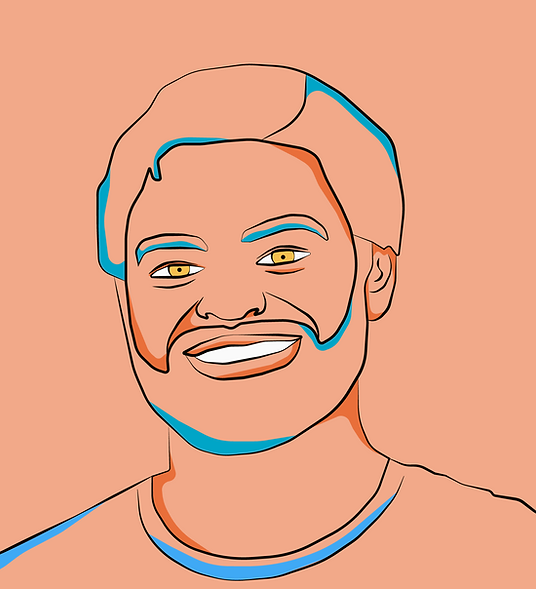
ANDREW ROBERTSON
The Ant Researcher
Episode 51
January 28, 2026
Ants may not be very big, but we have a lot to learn from these tiny creatures! Andrew Robertson, a PhD candidate at Georgia Tech and winner of Galactic Polymath Education Studio's 2025 #MySciJourney competition talks about his work on ants and other social insects.
Listen


Episode
Transcript
Aarati Asundi (00:12) Hi everyone, and welcome back to the Smart Tea Podcast where we talk about the lives of scientists and innovators who shape the world. I'm Aarati. Jyoti Asundi (00:20) I'm her mom, Jyoti. Aarati Asundi (00:22) And today we have with us a very special guest, Andrew Robertson, who is a PhD candidate at Georgia Tech and also one of the winners of the 2025 #MySciJourney Challenge that was put on by Galactic Polymath Education Studio. So welcome, Andrew. Jyoti Asundi (00:39) Congratulations, Andrew. Andrew Robertson (00:41) Thank you. Thanks so much. Yeah, it was an excellent opportunity and I was really grateful for all the people that helped me get there. Aarati Asundi (00:50) Yeah, you made a fantastic video and I'm definitely going to link it on the of the Smart Tea Podcast so that our listeners can also check it out. But yeah, it made me really curious to learn more about you and how you got into your research studying ants. That's your big claim to fame right now. So I'm really excited to hear more about it. Andrew Robertson (01:13) Yeah, it wasn't always what I thought I would be doing, but now that I'm in it, it's been extremely fascinating and I don't see myself changing topics anytime soon. Aarati Asundi (01:27) Awesome. Jyoti Asundi (01:28) But we really do want to see the journey as well of how you became the scientist that you are. So please start from the beginning. Aarati Asundi (01:38) Yeah, so maybe why don't we start with you were born and what was your childhood like? Andrew Robertson (01:45) So I was born in Mobile, Alabama, right near the Gulf Coast. And we moved around a little bit as a kid, but stayed mostly in the same area. And for much of my childhood, we were in a sort of rural area, kind of out in the woods near a river. And so we were surrounded by wildlife. And I always had such a good time looking for turtles or alligators, catching snakes, that sort of thing. Aarati Asundi (02:12) Classic. Jyoti Asundi (02:13) Wow, that is fantastic. That sounds idyllic, actually. Aarati Asundi (02:18) Classic scientific explorer. Jyoti Asundi (02:23) Were you at all close to the ocean? Was this more inland or were you more about freshwater creatures and all that? Andrew Robertson (02:31) So I kind of had a mix. We weren't that far from the Gulf of Mexico. So where I was growing up, we were kind of at the north part of Mobile Bay. And then to the south of Mobile Bay is the Gulf of Mexico. So I was in more of a river delta area. But we would frequently make trips to the beach. Aarati Asundi (02:50) And when you say we, who's we? Who's in your family? Andrew Robertson (02:54) So I'm the youngest of five children. I have three older sisters and an older brother. Jyoti Asundi (03:00) Were you the one picked on or were you babied? Andrew Robertson (03:04) I was definitely and probably sometimes still am seen as the baby. Jyoti Asundi (03:11) Even though you're a PhD candidate. Andrew Robertson (03:15) Yeah, I think some things change slowly or sometimes not at all. Aarati Asundi (03:22) And what about your parents and your siblings? Are any of them into science at all? Or are you the only one who's kind of forging this path? Andrew Robertson (03:30) It seems like everyone went off in different directions. I'm the only scientist but we have musicians, computer scientist, my dad's an attorney. My mom worked at a bank. We were just kind of all over the place. Jyoti Asundi (03:46) So then what was the driving force, mostly the nature around you or was it some person who was guiding you towards science? Aarati Asundi (03:54) Yeah, what got you into science? Andrew Robertson (03:57) I was always a little bit stronger, I think, in math and science going through elementary guess into middle school. And so I kind of gravitated toward my strengths. My parents were always very supportive for us pursuing whatever goals we had. So I didn't have to fight any obstacles getting closer and closer. And I think by high school, I had taken a much better appreciation for the biodiversity of the area. Alabama has a huge wealth of biodiversity and we did have to fight some uphill battles against things like the BP oil spill or ⁓ harsh hurricanes that came through from time to time. So the sort of struggle and the need perform more research on the wildlife around, I think, really started to set in by high school. Jyoti Asundi (04:51) Oh wow, that BP oil spill, I do remember about. Aarati Asundi (04:56) Yeah, I remember seeing all those horrible images online of birds and fish all this type of wildlife just covered in oil and not able to move and function properly. It was terrible. Andrew Robertson (05:10) Yeah, and it definitely lingered, I think, longer than the broadcast put on, you know, Aarati Asundi (05:16) Of course. Andrew Robertson (05:16) Even a year or so later. I remember one year we were having Easter with one of my relatives and they had a house on the water and we were enjoying ourselves and then a tar ball floated by and, you know, kind of killed the mood. Aarati Asundi (05:30) Oh no. Andrew Robertson (05:30) And that was well after the incident. So it's definitely remediated to a much better point now, but I think that was just kind of a very, I guess, salient point that kind of made me realize we need to take good care of what we have and first of all, know what we have in the first place. Jyoti Asundi (05:52) What did you see when that happened? Did the community come together to mitigate everything? Was the focus more on what people were losing in terms being a financial disaster or was it more about, oh no, look at what we as humanity have done to the other species and the biodiversity and what can we do to mitigate it? What was the overall community response at that point? Andrew Robertson (06:15) I think it varied from person to person. There were definitely economic interests, but I most of the emotional drive came from the wildlife. We have sea turtle nesting areas on our beaches. It's pretty common to see dolphins and sharks if you go out onto the state pier. So it's a really almost magical kind of place. And so the people who are familiar with it really knew what was at stake. Aarati Asundi (06:44) So you're interested in science and ecology in high school. So after that, what did you do? What was your next step? Andrew Robertson (06:51) After that, I went to the University of Southern Mississippi after graduation and I majored in biology. I didn't have a very specific plan of where I wanted to place that. It's very easy for me to become interested in anything, especially in the field of biology. And while I made my, I guess, degree emphasis in environmental management, I took a few different courses. So I some sort of fish biology. I took some plant ecology courses. My interests were extremely variable, but I think it really settled in when I was taking entomology and learning about the just absurd variety of insects in the world. Aarati Asundi (07:38) Yeah, I don't think we think about it that often, but once I do start to think about how many different types of insects there are, it's- it is absolutely mind boggling how many different types of insects have evolved all the different types of things that they can do. It's crazy. Jyoti Asundi (07:56) Plus the biodiversity of the region. Don't forget that. The tropical versus temperate. Aarati Asundi (08:01) Oh yeah. Andrew Robertson (08:04) Yeah, it's really interesting, especially the climate's getting warmer. There are certain insect species that just lived in Florida and South Texas, and they're seeing their ranges kind of meeting at the northern Gulf of Mexico, in Alabama, Mississippi, Louisiana. So it's interesting watching them kind of move further north and then kind of meet up. These different populations. So there is definitely a change of biodiversity going on. Jyoti Asundi (08:34) Yes, where they migrate because things are getting more hot in the northern areas as well. Andrew Robertson (08:41) Right, I wouldn't say we're full on tropical yet. I know last winter we actually had snow, which probably only happens once every 10 or 20 years. But there have definitely been December's about 75 degrees. Aarati Asundi (08:58) Yeah, the climate is changing. It's not global warming in the way that temperature is always increasing, but climate is changing in the way that things are getting more extreme. And I think also it helps that, or not helps is maybe not the right word, but like you were mentioning with the insects moving or changing their regions that they're native to, I've heard the same things with you know, farmers struggling to plant the same crops that been planting for the last 20, 30 years, they're not doing as well anymore because the climate is changing. And so, you know, they're having to shift their farmlands upwards or the same crops that were growing well in regions more south are now having to move more northwards because those crops aren't able to survive in the hotter temperatures. So yeah, it's- I didn't realize that insects were also doing that. I mean, it totally makes sense now that I think about it, that animals and insects would also kind of be migrating towards temperatures that they're more accustomed to and changing the regions. And that has huge implications for the environment and how our environment is changing because you know the insects that were native to certain areas are no longer going to be there and they're going to be moving into those areas that they weren't there before and completely changing everything. Andrew Robertson (10:20) Yeah, that's a great point. There's a professor here at Georgia Tech, Ben Freeman, who looks specifically at how tropical birds are changing their habitat use as the climate continues to change. And there are certain very rare kinds of climates, especially at mountaintops. And as climate changes and those mountaintops change, there's nowhere left for those birds to go, at least at those specific mountains. Aarati Asundi (10:47) Oh no. Andrew Robertson (10:47) So we can actually see this on a time scale of only a few decades instead of what we would consider to normally take thousands of years. Aarati Asundi (10:57) Yeah, that's the other thing. I think people don't realize that this is all happening so fast compared to what it used to like in the 1800s, what was happening. The timeline on this is just incredibly fast. Andrew Robertson (11:09) Absolutely. Aarati Asundi (11:10) But getting back you and your interest in entomology. So what got you specifically interested in ants? Andrew Robertson (11:21) So my entomology course was really fascinating, but trying to cover that much material in one semester is pretty daunting. So we didn't spend as much time as maybe I would like on ants and the other social insects. But I think what really captured me was watching a nature documentary narrated by David Attenborough. Aarati Asundi (11:45) Ah the great. The Great David Attenborough. Jyoti Asundi (11:48) You can't just say David Attenborough. David Attenborough, The Great. Andrew Robertson (11:53) Yes sir David Attenborough. Jyoti Asundi (11:55) I listen to documentaries. Right now I'm into his narrations of orca. They are a fascinating species. But yeah, every time my family sees me, I'm hung up... Aarati Asundi (12:06) Yeah my mom has phases. She went through a lion phase. Now she's in her orca phase. Jyoti Asundi (12:11) I'm now in my orca phase. I can't believe how clever they are, how smart, but sorry, I don't want to derail this. I'm so sorry. David Attenborough just brought out this in me. Andrew Robertson (12:25) No, that's an excellent point. I think learning about how intelligent certain animals are can really draw fascination. And I think that's what kind of drew me towards ants. Insects are capable of a variety of really interesting things. But feel like I was underestimating them. And this segment on the tropical leafcutter ants really opened my mind to what they are capable of and the varieties of tasks that they have separated by certain workers where some will collect leaves, others will process it into food, some are soldiers, others are nurses. Just how detailed and variable they can be in just a single colony was mind-blowing. Jyoti Asundi (13:21) Yes. Aarati Asundi (13:21) They have their own society, everybody has their own expertise. And I think we think of that as a very human thing, that everyone has a job, you go to work, you do your job, and that's how society functions. And so that's so cool that ants have the same thing. Andrew Robertson (13:36) Yeah, yeah, they focus on, they call it the division of labor. And at its most fundamental, you have the queen that lays eggs and the workers that don't lay eggs. But they kind of take that several steps further. And now it's not just a worker that takes many jobs. It's this one very specialized worker. In the same way that I don't know how to put a roof on my house. I need other humans that are specialized in that task to do that for me and I'll study ants for them. Aarati Asundi (14:08) Oh that's so cool. You have like little trade school ants and then you have these university PhD ants. You have the politician ants. You have all the different types that you need for a society. The military, you know, you have everything. Andrew Robertson (14:21) Yeah absolutely. Jyoti Asundi (14:22) But they all work together in kind of a very symbiotic way, helping each other. And I find that to be very fascinating. Like they are a community, just like a human community. But then each ant's driving force is not what's in this for me. It's the protection of the entire community, the entire ant hill or, and I don't know if we can call it a hive. I think hive is the wrong word, correct? Andrew Robertson (14:51) I think they're pretty interchangeable. Aarati Asundi (14:52) Colony? Andrew Robertson (14:54) Yeah, colony, nest. Jyoti Asundi (14:57) Yes, so each ant is working towards the greater good of the nest rather than what's in it for themselves. Andrew Robertson (15:06) Yeah, there's some interesting research and it's been ongoing for decades at this point. Are the ants being selfish because having a healthy colony is good for them and they just want a healthy colony? Or are they being altruistic and putting themselves in harm's way doing extra the good of their sisters? Aarati Asundi (15:29) Oh wow. These are some deep existential questions. ⁓ Jyoti Asundi (15:32) Yes. Andrew Robertson (15:33) Yeah, and it makes it a lot easier to put that on an insect than to ask that of our own societies. Aarati Asundi (15:40) Yes. Andrew Robertson (15:41) So you can get very analytical with ants in a way that you couldn't other primates. Jyoti Asundi (15:46) They seem to really have that big picture in mind. It sort of seems to be imprinted into them rather than... it's not- I don't even know if it's a conscious thought process. It's just that's what's imprinted into them and that's what they do. That's how I look at it. I don't know if that is correct. Aarati Asundi (16:03) Well, we had a whole episode on this with Donald Griffin, who is the bat scientist who would argue that animals do have consciousness do know what they're doing. And that's been proven in some species like octopus and dogs and things like that. Jyoti Asundi (16:21) And orcas! Aarati Asundi (16:21) I wonder if it's been proven in ants, probably orcas. Yes. Yeah. Jyoti Asundi (16:25) Sorry, sorry couldn't resist. Aarati Asundi (16:29) Yeah. That's so cool though. So you watched this documentary in undergrad, it blew your mind. Did you start working on ants right away then or did you have to wait a little bit until after you graduated? Andrew Robertson (16:44) So I didn't start hard research in that sense in undergrad. I did start, I guess, what you might consider a literature review, just looking whether there were documentaries or YouTube channels. There are some really interesting books by Walter Tschinkel and Ed Wilson that I started reading. And the more I learned, the more curious I became. And I think that thread continued throughout the end of my undergraduate process. Aarati Asundi (17:17) So then after your undergraduate, what was your next step? Andrew Robertson (17:20) So I applied for a few different positions mostly at the PhD level. And since I didn't have any research experience and I didn't really have a clear, I guess, idea of what the research I would want to be doing was, I unfortunately did not get in. So for the next couple of months after that, I was working at the Gulf State Park back in Alabama. And I was working half at the nature center and half at the pier, so I would give maybe a guided tour in the morning and then rent out fishing poles in the afternoon. Aarati Asundi (17:55) Oh nice. Andrew Robertson (17:56) So I still got to enjoy nature and continue learning about the things I enjoyed. Aarati Asundi (18:02) I'm assuming that you were talking like kids and adults and just like people from all walks of life who came to the nature center. Is that right? Andrew Robertson (18:10) Yeah, that's exactly right. We are open to I guess, the general public. I think park admission was only, I want to say around $2 then. Aarati Asundi (18:21) Oh wow. Andrew Robertson (18:21) Sometimes field trips would come through. We had... I want to say around 100 campsites for people to come stay in. So especially in the summers, we were always really busy and people would want to come see the nature center and learn about the wildlife. So sometimes I was talking to other adults, sometimes they were teenagers or even elementary school kids. Jyoti Asundi (18:48) Wow. With your deep love and respect for all the diverse species, I wonder how many young minds you have inspired already. It's beautiful. Andrew Robertson (18:58) Yeah, who knows? Maybe one day they'll end up in my classroom. Jyoti Asundi (19:03) Yes. Aarati Asundi (19:04) So then how did you make the shift then from that to graduate studies? Andrew Robertson (19:10) So I didn't, I guess, count my losses there. I continued applying in the meantime, and a position opened up. It was sent to me by a friend of mine looking for a native bee ecologist to be a master's student at Southeastern Louisiana University, or SELU. And so I applied to this position at SELU and there were three openings and I think I was the third one in. Jyoti Asundi (19:42) Nice. Aarati Asundi (19:42) Nice. Andrew Robertson (19:42) So I managed to just barely make it for this two-year program. Jyoti Asundi (19:48) Perfect. Aarati Asundi (19:48) Did you say it was like on bees? It was a bee position? Andrew Robertson (19:52) So that's what the advertisement was for. Aarati Asundi (19:55) Okay. Andrew Robertson (19:55) Ants and bees are somewhat closely related. They're both descendants of wasps, generally speaking. Aarati Asundi (20:02) Oh! I didn't know that. Andrew Robertson (20:05) Yeah, so they have a lot of common ground where you might have a queen ant or a queen bee, where the workers don't reproduce. So they have some common ground. I was looking forward to at least getting into that field of social insects. You know, if I couldn't study ants, I would study their cousins. Jyoti Asundi (20:24) Yes. Aarati Asundi (20:25) That's so interesting. I've never realized that, I think. I never realized that bees and ants, like, it makes total sense now that you say it because I do know about Queen Bee and a queen ant and then all the workers in the hive and all the workers in the colony. And so they have this, like, they're very social insects. They're very similar in that way. But then I just never realized that they were actually related in that, like so closely that they have like a common wasp ancestor. That is so cool. Andrew Robertson (20:55) Yeah, it's interesting all the ways that they overlap and then how different they can be. It's always interesting kind of looking at the evolutionary context of it. Aarati Asundi (21:05) And so for the- your master's program, were you focused on bees then? Is that what you started doing? Andrew Robertson (21:12) So although there were three positions open, only two of them were related to that grant. So being the third one, I kind of had an open field of what I wanted to research under the sort of umbrella of ecology and insects. And my advisor was really helpful in kind of fostering this curiosity, focusing me towards things that might be reasonable to accomplish in a two-year master's program and things that might be better suited for a longer research time. Aarati Asundi (21:49) Yes. Jyoti Asundi (21:49) Makes sense. Yeah, practical considerations have to be thought of. Yes. Aarati Asundi (21:54) That's so nice that you had thesis advisor who actually thought about those things because I think a lot of times many scientists just fall into that the curiosity trap of just like, yes, I want to know about that too. I want to know about that too. And they don't take into consideration things like I have to graduate, you know? You know, do we have the budget for this? Or like, how long is this going to take? Do I have the time to, you know, I'm going to be doing my master's for 10 years if I pursue this project, which is not what anyone wants. So that's, that's fantastic that you had a mentor who kind of kept track of those very practical things also. Jyoti Asundi (22:34) very mundane, but got to be done. Andrew Robertson (22:37) Yes. Aarati Asundi (22:37) Yeah. So what did you end up focusing on then for your masters? Andrew Robertson (22:42) So I wanted to stick with ants. By this point, I was already in love. Aarati Asundi (22:48) Mm-hmm. Andrew Robertson (22:48) And I was looking at the different kinds that might be found in the area. And there was one that was pretty interesting to me. It was the Florida Harvester ant. And it has a range that historically went from Florida west to Louisiana and up the Atlantic coast into the Carolinas. And I didn't recognize it, but it should have been all around the Gulf Coast where I was working at the Nature Center near where I grew up and I had never seen this animal or heard of it before. And I was searching around near the SELU campus and I couldn't find where this ant was living. And my advisor suggested that I reach out to the Mississippi Entomological Museum. They have a ton of really smart people there. And I got in touch with one who said that he had found a few scattered populations in Mississippi. At this I mostly just wanted to find the animal. I didn't even know what I was gonna study once I found it. Aarati Asundi (23:54) Yeah. Jyoti Asundi (23:55) Yeah. Aarati Asundi (23:56) Sorry. This is such a great example of how science just gets waylaid. You have this idea of what you want to do and then something totally random comes in and screws up your plans like.... Jyoti Asundi (24:06) Yeah, it's like I can't even find it. ⁓ How am I going to study it if I can't find it? Yes. Andrew Robertson (24:12) Yeah. Aarati Asundi (24:12) Yeah. It's like you have this whole trajectory and then it's like this random problem comes in and that you didn't anticipate at all. And it's like, wait, What? And now you have to pivot. Jyoti Asundi (24:22) Search for it. Yeah. Aarati Asundi (24:23) Yeah, something that you didn't even think that you had to do in the first place. Jyoti Asundi (24:26) It's supposed to be native, it's supposed to be practically present all over and you're not even able to see it. Andrew Robertson (24:35) That's right. You know, plenty of ants can kind of go unnoticed, but these were pretty large sized and their nests were very large and sprawling. They often decorate them with little pieces of charcoal. And so they're very noticeable. This is not an ant colony that would sneak into your garage or something like that. Jyoti Asundi (24:53) Hide. Yeah. Right. So then reached out to the experts in Mississippi and then what happened? Andrew Robertson (25:03) So they recommended a few places that I go look for them. And when I couldn't find them, we were continuing the dialogue. And it was mentioned that oftentimes fire ants were found where the harvesters once were. And fire ants ⁓ have been invasive in this of the United States several decades now, getting close to a century. And they were actually introduced through my hometown. So I know a lot about, or at least I had encountered fire ants a lot by that point. They get their name because of their sting, they're always very happy to show off. Aarati Asundi (25:45) Another relation to bees and how the wasp and the bees and the ants are all related. Andrew Robertson (25:48) That's right. Jyoti Asundi (25:52) No, hang on. Okay, so the fire ants have taken over. And why did you say they were introduced from your hometown? Andrew Robertson (26:00) So it was an accidental introduction. We think it was most likely stowed away in a shipment from either Argentina or southern Brazil. And once they got settled in the warm and humid area that is the Mobile Delta, they spread rapidly. Aarati Asundi (26:25) They came and they were like, hey, we like this. This is nice. Let's take over. Jyoti Asundi (26:29) Wow. Andrew Robertson (26:30) Yeah, they are more abundant now in the southeastern US than they are in South America. Aarati Asundi (26:36) Oh my gosh! Andrew Robertson (26:36) So they really like it here. Jyoti Asundi (26:39) No way! Andrew Robertson (26:40) And we've done a great job making how they like. So they like open, sunny spaces with plenty of water. So a front lawn is the nicest place you could make for a fire ant. Aarati Asundi (26:54) Oh my God. Jyoti Asundi (26:55) Oh my God. Okay. Aarati Asundi (26:57) And so they just come in and they just like take over the harvester ants territory basically? Andrew Robertson (27:03) We accidentally helped the fire ants out, I think. it's unclear if the fire ants were able to out-compete these native species on their own. When we realized that the fire ants were spreading, the United States government wanted to try and contain and eliminate it. And so in a few different attempts, we broadcasted poison all across the area. Aarati Asundi (27:31) Oh my gosh. Andrew Robertson (27:31) And it had some unintended consequences where wasn't very targeted to fire ants and all of the ants were essentially exposed to this and so all of their populations went down but the fire ants are very hardy and they're very fast growing and so they rebounded much more quickly than a lot of our native species. Jyoti Asundi & Aarati Asundi (27:53) Oh no. Andrew Robertson (27:54) So they essentially had some more free real estate to take up. Aarati Asundi (28:01) Oh no, my god, so they could expand even faster. Jyoti Asundi (28:01) Oh my God. They became even stronger with our half baked knowledge, we went in guns blazing basically, and then help, helped the enemy. Aarati Asundi (28:12) Do know when this was like decade-wise or anything? Andrew Robertson (28:17) Yeah, so we knew fire ants were in the area around the like mid to late 40s, but the full-scale war started in the later 50s with congressional approval. They used retired bombers actually to broadcast this. So this was a full on war waged against fire ants. Aarati Asundi (28:38) Oh my goodness. Jyoti Asundi (28:38) And we ended up helping them. Andrew Robertson (28:41) Yes, they've never been stronger. Jyoti Asundi (28:41) That is brilliant. my God, that's horrible. Aarati Asundi (28:46) Yeah, because I was just thinking this is exactly what we do with cancer therapies, right? We try to create something very targeted to cancer cells because the cancer cells are so similar to our own cells. And so when we you know, immunotherapy or cancer therapy, we want to only target the cancer cells and not our own cells, if possible. And that's what makes so many therapies so toxic to us and so difficult because there are so many therapies that do attack our own cells as well as our cancer cells. Jyoti Asundi (29:22) As in healthy, when you say own, what you mean is the healthy ones. Aarati Asundi (28:24) Yeah, our own healthy cells, yeah. Jyoti Asundi (29:26) Because cancer actually is ours also. Aarati Asundi (29:31) Yes, you're correct. And so because of nowadays, we create these drugs that are very, very targeted and very specific to the cancer cells and don't attack the healthy normal cells. And so I was wondering, you know, wouldn't they do the same thing for the ants? Because it's almost like these fire ants are this invasive cancer that has come in. If you're going to try and eliminate them, you would want to create a poison or drug that specifically the targets the fire ants, but I didn't understand that or they didn't realize that or something. Andrew Robertson (30:03) think it was what you just said, in addition to the urgency of the matter, how quickly it was spreading. And it was definitely overplayed, the destructive nature of these animals, thinking that they would destroy crops, they would attack know, nobody was safe. There was a lot of reactionary opinion on fire ants. I'm not trying to defend them. Jyoti Asundi (30:32) It's a fear-driven response. Okay. Andrew Robertson (30:35) Absolutely. Jyoti Asundi (30:36) Emotional fear-driven response. That is why it was so bad. Aarati Asundi (30:40) Yeah. And you see it in those movies where depicting medieval, like torture scenarios, where they like bury the person up to their head and these like fire ants come and sting them to death or something. Like, I can totally imagine that fear being extrapolated and being like, these are the things that are taking over our land. You want these fire ants to come invade your home and like sting you to death. We need to get rid of them. Andrew Robertson (31:03) Yeah, and it was easy to sell because even if your only interaction with the fire ant was getting stung, you know, they're no friend to you anymore. So yeah, get them out of here. Jyoti Asundi (31:13) So what's the long-term consequence of this that we are living with? I can see at least that the biodiversity of ants has been reduced because of that effort. But did we kind of recalibrate things a bit or... Aarati Asundi (31:31) Well now you're saying that the fire ants are still prevalent, right? Even now you're saying you couldn't find the harvester ants. So it sounds like the fire ants have kind of taken over. Andrew Robertson (31:42) Yeah, it's very murky because there was a lot going on between the competition between many species, the broadcasted poison, and even my own inability to find the harvester ants in Louisiana and Mississippi. So it does seem like there is some degree of competition. Whereas the harvester ants get their name because they like to eat seeds, fire ants are a little more, I guess, targeted toward insect food. And so you may not expect them to be direct competitors, but when we look at the abundance of one versus the abundance of the other, do see lots and lots of fire ants and not very many harvester ants. Aarati Asundi (32:30) And has that changed the environment at all that you can tell because, you know, ecosystem is so integrated. So have you seen or read any papers about widespread ecological effects that, this shift has had? Andrew Robertson (32:46) So there aren't any direct studies that I'm aware of, but I do know that harvester ants have been implicated as ecosystem engineers where they play a direct role in the biodiversity of the plants in the area. Aarati Asundi (33:05) Mmm. Andrew Robertson (33:06) So one example is that they like to move their nests pretty frequently. They'll pack everything up and go maybe a meter in one direction and dig an entirely new nest. And they found that the one that they left behind is loaded with nutrients. It's been aerated. So any plants that are growing in that old nest basically have a nice packet of fertilizer and nice soft soil to grow in. Jyoti Asundi (33:34) And that has been lost. Andrew Robertson (33:37) Yeah they seem to have a pretty good effect on the plants in the areas that they live. So it may be possible to look at, I guess, in a plant ecology sense, the diversity in one habitat that has them versus a habitat that no longer does, how that diversity might be shifting. That's something I'm really interested in finding out, but I'm not aware of that yet. __________________________ Aarati Asundi (34:10) Hi everyone, Aarati here. I hope you're enjoying the podcast. If so, and you wish someone would tell your science story, I founded a science communications company called Sykom, that's S-Y-K-O-M, that can help. Sykom blends creativity with scientific accuracy to create all types of science, communications, content, including explainer videos, slide presentations, science, writing, and more. We work with academic researchers, tech companies, nonprofits, or really any scientists. To help simplify your science, check us out at sykommer.com. That's S-Y-K-O-M-M-E-R.com. Back to the story. ________________________________________________________________________________________________________________ Aarati Asundi (34:56) That's quite a lot of work that you did then for your Masters. How long did that take? Andrew Robertson (35:00) So it went two years almost exactly. So I started August of 2019 and finished August of 21. Aarati Asundi (35:11) So right through COVID then. Andrew Robertson (35:13) That's right. It worked out for me in a strange way where to find the harvester ants eventually, I did have to go the Panhandle of Florida, which was about a four hour drive from my university, only about two hours from my home in Alabama. So... Aarati Asundi (35:35) Okay. Jyoti Asundi (35:35) Nice. Andrew Robertson (35:36) In those first couple of months during lockdown, I was able to, I guess, cut my commute to my field site down about in half. So it definitely helped in some ways in allowing me to get out there more frequently. Aarati Asundi (35:52) That's awesome. And so then how did you then transition to your PhD? Andrew Robertson (35:58) Yeah, it was very similar to my transition from undergrad. So I had applied for a few different positions- some state positions, some at nonprofits- but I mostly wanted to stay around my hometown. Unfortunately, those didn't line up in the way that I wanted. And ended up just finding jobs around town to help, first at a restaurant and then later I worked at an urgent care clinic that my roommate was working at, at the time. Aarati Asundi (36:32) Okay. That's amazing though. I feel like the fact that you stuck with it and you kept on applying and you kept on saying like, no, this is what I want to do. I want to go into research. I want to do my PhD. And even you had to take a gap year and you were forced to kind of work in these jobs that weren't really related to exactly what you wanted to do, the fact that you stuck with it is very inspiring because I think for me, I personally would have been like, okay, well, I guess that's the end of my hopes and dreams, you know, but I love that you stuck with it. Jyoti Asundi (37:06) Very, very nice. Andrew Robertson (37:08) It didn't, I guess, feel that way at first because I wouldn't say I continued to apply nonstop. I definitely needed my break to just kind of collect myself. And I was still applying for different jobs in the area, but typically people get into these sorts of positions and it's not common for them to leave. So I guess in the year that I was working at the clinic, had time to, I guess, remember what I really wanted to do. And once that kind of clicked back, I began looking for researchers who study ants and have PhD labs. So just started emailing professors and asking about their research and telling them about what I had done and that I would be interested to work under them. Aarati Asundi (38:05) That's amazing. I read a lot of the stories for this podcast when I'm researching. A lot of the stories that I cover are like, you know, in the early 1900s or 1800s. And that's usually the path that those scientists follow is that they are super interested in a topic. And then for their graduate studies, connect with the experts in their field and then somehow get a position. And I just feel like we don't hear that story as often today. Now it's very much more sterile. It's a lot more apply to the graduate program, hope you get in. And then at some point you'll figure out what professor you're going to work under and what topic you're going to pursue. And it kind of has flipped the other way around where you apply to the school or you apply to the program and then you figure out what you're going to research later. And I actually feel like your way makes a lot more sense. Like, you know, you, you found something that you really enjoy doing. So target the people who are doing that and, get in that way. That makes a lot more sense actually. Andrew Robertson (39:13) Yeah, and I guess what I'm studying is kind of niche. And I think the best way to kind of sell that is to go to my target audience. And that would be the other specialists. so I can kind of showcase, here are some things I've done. This is what I'm really passionate about. And in my case, it worked out. One of the professors I had emailed didn't have space in his lab, but directed me to another researcher not too far away in Atlanta. And we got in contact, we had some interviews and Dr. Goodisman was happy to hire me on. Aarati Asundi (39:53) Nice. I feel like your passion for it really must have shown because it's not every day you meet somebody who's super interested in ants. And so it's like, Jyoti Asundi (40:01) It's very niche, so really nice. It's good combination, yes. Aarati Asundi (40:03) It's very niche. Yeah. And the fact that you were able to show that you've done your masters in this and that you've, you know, had this long standing fascination. I think it really must've come through in the email and just been like, yeah, this guy, we found another one, one of us. One of us, one of us. That must have been amazing. So what are you researching now in grad school? Or for your PhD thesis, I should say. Andrew Robertson (40:33) My thesis continues to revolve around fire ants. So I'm looking a lot at their behavior. I've kind of stepped away from ecology, at least for right now. And I'm looking at collective behavior and epigenetics. Jyoti Asundi (40:48) Oh nice. Aarati Asundi (40:49) So the study of changes that happen to your DNA in terms of like, adding methyl groups or adding different types of chemical groups that change gene expression. So your genes aren't changing, your gene expression is changing. Andrew Robertson (41:06) That's exactly right. One of my lab mates put it in a really great analogy where you're not changing anything in the cookbook you're using, but you might add a sticky note that says to leave it in for an extra five minutes or to use a certain tool for that step. So it doesn't change what is in your genetic code, but it might change the way that it's expressed. Aarati Asundi (41:30) I love that. That's such a great analogy. We all do that, right? Add an extra handful of chocolate chips in. Yeah, it makes it better. What questions are you kind of asking now around epigenetics and ants? Andrew Robertson (41:48) The project on that is looking at their different colony structures. So this species is really unique in it can have either a single queen who is mother to all the ants in the colony, or they can have this other social organization where they tolerate multiple unrelated queens. And that entire shift in social organization is controlled by a single super gene. And we are curious to know how that might affect or if there's change in the epigenetic modifications based on that presence or absence of the super gene. Jyoti Asundi (42:33) That's fascinating. That is really fascinating because we see parallels in our human world as well where we have transitioned from like a single pole of power to a multi-polarization of power. So this multiple queen ants, it sounds like that, they all live together in harmony in the same colony or in the same structure. Andrew Robertson (43:00) Yeah, it's really fascinating and they're finding that even though they are tolerant of each other in the same colony, there still can be conflicts that show up within the colony where certain ants might feed their relatives more than strangers that live in the same colony. Aarati Asundi (43:21) Oh interesting! Andrew Robertson (43:22) So it's finding these kind of similarities that pop up and hugely divergent, you know, evolutionarily speaking kinds of animals. Again, it's like going back to that nature documentary with the leaf cutter ants. I never would have guessed that form of complexity could be present in a creature I thought was so simple. Aarati Asundi (43:48) Yeah. Do you know if this super gene is present in other species, like especially bees or wasps? Is there any indication that those might tolerate more than one queen? Andrew Robertson (44:00) Yeah, social organization is really fascinating. And there are situations where there are certain bees, example, in Australia, that sometimes are solitary and sometimes social, on different contexts. You can even see in certain populations of birds, sometimes they nest on their own and other times they have what are called "helpers" that might provision food for one relative so that they can rear offspring. So we do see these kind of flexible social patterns in other animals too. And we do find super genes that might control of something like social behavior, it might control the shape and color of a butterfly's wing. So... Aarati Asundi (44:50) Oh wow. Andrew Robertson (44:51) The two things aren't always connected, it's just a very, I guess, serendipitous occasion that there is both a super gene and a controlled social behavior. Aarati Asundi (44:03) That's fascinating. Jyoti Asundi (45:05) Amazing. That is, there's so much to learn. Aarati Asundi (45:09) Yeah. Jyoti Asundi (45:10) It makes me realize how ignorant we are. What would be the one lesson that you would want humans to learn from ants? Andrew Robertson (45:22) Um, I guess I would say if there's something we could take away from that... I guess first is not to underestimate something just because it's different. I continually underestimate what ants are capable of, and it seems like every year or even more frequently I'm finding out something more that they can do, whether that's retaining memories, identifying themselves in a mirror, having certain tool use behaviors, things that I just never thought they were capable of. And not just for ants, but also as you're learning with orcas, they have these very distinct family groups, they have different behaviors or foods they might like to eat, things that we might think are uniquely human but we can find in other places if we look hard enough. Jyoti Asundi (46:14) That is beautiful yeah that Aarati Asundi (46:14) Yeah. This really is like that episode on Donald Griffin where so many scientists were saying that these kinds of things are uniquely human and that animals are just like these, almost like NPCs that just kind of exist and populate our world, but they don't actually have any feelings or emotions or they can't strategize or create plans for the future kind of thing. And slowly, Professor Donald Griffin showed that that was not true, that there are very clear examples. And I think we've seen that in higher mammals first, where like, of course, apes and elephants, and then slowly became dolphins and then octopus. And now it's like, even ants! So it's like, I don't think there's a line really that you can draw and say, only higher mammals have this or, you know, only these types of, animals that have kind of a higher brain level or, you know, whatever these kinds of characteristics. It's like, no, even, even ants, even bees, even the smallest little insects that you don't really even think about have these very complex behaviors that, point to consciousness and point to individuality. That's so cool. Andrew Robertson (47:30) Yeah, it's definitely a lesson I keep learning over and over again. And I'm always happy when I do. Jyoti Asundi (47:38) As a human being, I sometimes think we are a very selfish species, always thinking about what's in it for me. So with that in mind, I wanted to ask, what would you say to a person as to why he should respect the ant and make sure that we don't exterminate all ants? What's in it for a human being to have ants around? Andrew Robertson (48:03) So I think it was Ed Wilson who first said, or who first called them the little creatures that run the world. They incredibly efficient when it comes to extracting resources. They move lots and lots of biomass. So those leaf cutters, for example, trim leaves off of a huge variety of plants. I think in one study they had over 50 % of the plants and the tropics, which we know are super biodiverse, can be grazed on by these ants, which is a much greater diversity than most herbivores would be able to eat. And so we're looking at these specific ways that they can interact as removing resources from an area, but they also have very complicated ecological roles. There's an excellent example of that in Africa, where an invasive ant species came in and disrupted the whole environment, even ended up changing how lions were chasing after their prey, because the native ants protected native plants that they lived in. And so the native plants weren't being grazed down by large animals like elephants. So when the native ants were repelled by the invasive ones, the plants were grazed down and the lions didn't have as much cover to hide in. And so we see these huge interactions from these seemingly insignificant little animals. Jyoti Asundi (49:41) Ecosystem shifts because of ants. Wow! That's amazing! Aarati Asundi (49:44) Yeah, they're so important. Jyoti Asundi (49:46) Truly fascinating! Aarati Asundi (49:47) Yeah, so in our last few minutes, do you have any advice that you want to give to maybe a younger scientist who's also thinking about going into environmental biology or ecology? Or do you have anything that you want to plug maybe, like some work that's coming out that you're really excited about that you want people to go read? Anything like that? Andrew Robertson (50:10) Yeah, we're hoping that early next year we can publish some fire ant behavior that I've been working on for a couple of years. It has to do with the ways that they survive floods and the things that are important for that. Aarati Asundi (50:25) Nice. Andrew Robertson (50:26) If you're in the Atlanta area, we'll have a booth at the Atlanta Science Festival. It's free. Come check that out if you can. Aarati Asundi (50:34) When is that? Andrew Robertson (50:36) That's going to be March 21st right in Piedmont Park in the middle of Midtown Atlanta. And there's plenty of cool interactive booths there for anybody in the area. But as far as advice, I would say some of the best advice I've gotten is if you feel like you're weak in an area, you don't have to panic too hard. It's okay to ask for help. Try and collaborate with someone who knows a whole lot about that. For example, I thought I was being smart by avoiding math classes and then that came back to haunt me. So I'm still trying to improve my abilities, but I know I can definitely cover some blind spots by working alongside people who might be proficient in that area. We've all got our blind spots and that's okay. Aarati Asundi (51:27) Yeah, that's something I struggle with too. Asking for help a big skill to learn. So that's really great advice. And most people are really thrilled actually when you ask them for help, they're like, yeah, I get to show off and show you how cool I am. Andrew Robertson (51:42) Oh I get so excited when someone asks me a question about an ant or another insect or something. It makes my day. Aarati Asundi (51:51) Yeah, people love it. Again, back to Donald Griffin, who was trying to understand how bats were able to make sounds. And he had to collaborate with a physics professor. And he had a C in physics. And he was like, "Oh no, I have to go talk to this physics professor and ask if he can help me, you know, capture the sound waves of bats." But the physics professor was thrilled. He's like, "Yes, let's do it!" you know? So yeah, that's really fantastic advice. I love it. Well thank you so much for being on the show. Your story is great. And again, I'm going to link your video that you made on the website so people can go check it out. But thank you so much for joining us. Andrew Robertson (52:33) Absolutely, thanks for having me. This has been great. Jyoti Asundi (52:36) Awesome. Aarati Asundi (52:37) We're excited to see what happens next with you and your trajectory. So good luck with everything after your PhD. Any idea what you're going to do next? Andrew Robertson (52:50) Well, I guess I'm getting a little bit homesick. I'd like to stay in academia, hopefully somewhere around the Gulf Coast plenty of fire ants down there for me to continue working on as well dozens of other species that are equally interesting. Jyoti Asundi (53:06) And young minds to fire up too! Aarati Asundi (53:08) Yeah. Andrew Robertson (53:08) Of course! Yeah, teaching is a big part of why I want to stay in academia. Jyoti Asundi (53:14) Yes. Aarati Asundi (53:14) Yes, nice. All right, well, thank you so much. Thanks for listening. If you have a suggestion for a story we should cover or thoughts you want to share about an episode, reach out to us at smartteapodcast.com. You can follow us on Instagram, TikTok, and Blue Sky @smartteapodcast and listen to us on Spotify, Apple Podcasts, YouTube, or wherever you get your podcasts. And leave us a rating or comment. It helps us grow. New episodes are released every other Wednesday. See you next time.

Learn More
1. Lee, Taylor. The Intricate Science of Ants. The Mustang. November 22, 2019.
2. Read Andrew's publications on Google Scholar
